Add $12.00 to get Free Gift



Something feels off, and you can't quite shake it. You reach for them and they don't really reach back.
That gap between what you need and what you're getting? It's one of the loneliest feelings in the world, and it deserves a real conversation. Not platitudes. Not "just communicate more." Actual, useful insight into why this happens and what you can genuinely do about it.
Let's get into it.
Why Some Partners Struggle with Affection

Here's the thing nobody explains clearly: a lack of affection is almost never about a lack of love.
Most of the time, it comes down to how your partner learned to handle closeness. Attachment theory. the field of psychology that maps how early relationships shape adult bonding patterns, tells us that people raised in emotionally avoidant environments often grow up associating physical closeness with discomfort or vulnerability. They didn't learn that a hug is safe. They learned, somewhere along the way, that needing touch makes you weak or burdensome. That wiring doesn't disappear just because they love you.
Then there's the stress factor.
Chronic stress, work burnout, and anxiety are some of the most common affection-killers that couples rarely talk about. When someone's nervous system is constantly in overdrive, their brain literally prioritizes survival over connection. Touch becomes overstimulating rather than soothing. It's not rejection. It's a dysregulated body trying to cope.
And yes, sometimes there's a medication affecting your partner's desire for closeness in ways neither of you has connected yet. Antidepressants, beta-blockers, and hormonal treatments can all blunt the urge for physical intimacy without anyone realizing why.
Affection Languages: You Might Just Be Speaking Different Dialects

Dr. Gary Chapman's concept of love languages changed how a lot of people think about relationships, and for good reason.
If your partner shows love through acts of service (fixing things, planning logistics, remembering your coffee order) while you feel loved through touch and physical closeness, you can both be giving at 100% and still feel completely starved. Neither of you is wrong. You're just running on incompatible frequencies, and that's genuinely fixable once you both see it.
The fix isn't forcing them to become touchy-feely overnight.
It's building a shared vocabulary. Maybe they can't initiate a hug spontaneously, but they can agree to three deliberate moments of contact per day: a good morning squeeze, a quick shoulder touch before one of you leaves, a genuine goodnight. Small, consistent, negotiated. That structure actually works better than emotional pressure, which tends to make avoidant partners pull back further.
How to Talk About It Without Starting a Fight

Bringing up emotional needs is genuinely hard, and most people do it at the worst possible time.
Tired, frustrated, after a long day, mid-argument. Not great. The research consistently backs what most of us already know intuitively: conversations about emotional needs land better when both people feel calm, safe, and not cornered. Pick a neutral moment. Bring it as a curiosity rather than an accusation.
"I've been feeling a little disconnected lately" hits completely differently than "You never touch me anymore."
Both sentences are true. One opens a door; the other slams one. A study published in the Journal of Social and Personal Relationships found that affectionate behavior is positively correlated with relationship satisfaction. Which sounds obvious, but the kicker is this: the direction matters. Couples who explicitly named their affection needs to each other reported significantly higher satisfaction than those who silently hoped their partner would figure it out (Couples Therapy Melbourne, 2024).
You have to say the thing.
Conversation Starters That Actually Work
Think of these less as scripts and more as emotional entry points. Something like "I miss being close to you" frames the conversation around connection rather than complaint. "Can we try something small together this week?" invites collaboration. "I want to understand how you feel comfortable showing affection" signals genuine curiosity, and curiosity is disarming in the best way.
The goal isn't to win the conversation. It's to stay in it together.
When Closeness Needs to Be Rebuilt Slowly

Sometimes the distance didn't build overnight.
Years of small disconnections, unresolved conflicts, or simply never establishing a physical affection baseline can leave a couple feeling like polite roommates. Rebuilding that closeness takes patience. You can't sprint back to intimacy after a long drift, and trying to rush it usually backfires. What works is creating new, low-stakes rituals that slowly rebuild the habit of closeness without pressure attached.
Even ten minutes of undistracted presence. sitting together without phones, watching something silly, cooking side by side. starts rewiring the nervous system's association between "being near this person" and "feeling safe."
Physical intimacy and emotional intimacy are deeply linked. Your brain during arousal is doing far more complex emotional work than most people realize, and that complexity means the path back to desire often runs directly through safety and trust, not technique.
Touch as a Practice, Not a Performance
For some partners, affection needs to be depressurized before it can flow naturally again. That means separating touch from expectation. A hug that has to lead somewhere isn't a hug. It's a negotiation. When touch is allowed to just be touch, with no implied contract attached, avoidant partners often open up more than either person expected.
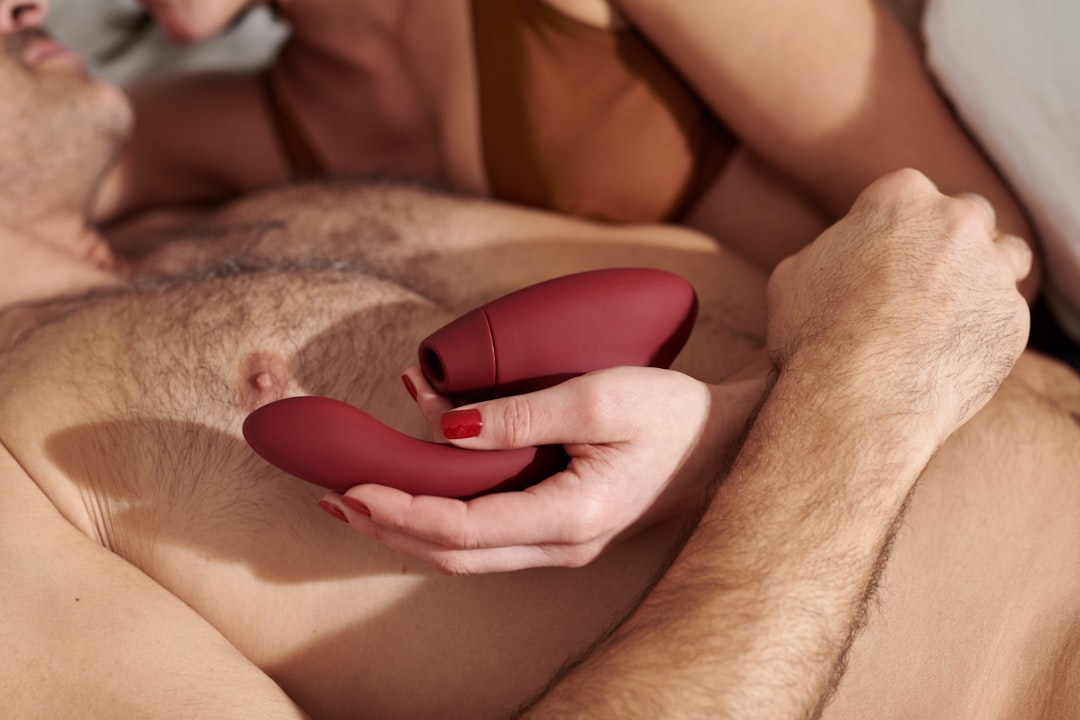
This is where intentional sensory connection can genuinely help. Think shared baths, massage exchanges, holding hands during a walk. Introducing couples toys as a playful, low-pressure way to reconnect around pleasure can also ease that tension, especially when the physical gap has made intimacy feel like a big production rather than a natural extension of closeness.
When the Problem Might Be Something Bigger

Not every affection gap is a communication problem with a tidy solution.
Sometimes one partner is dealing with unprocessed grief, depression, chronic pain, or a past trauma that genuinely makes physical closeness feel unsafe. That's not a relationship flaw. That's a human being who needs real support, not just a better conversation approach. If your partner seems consistently withdrawn across all areas of life, not just with you, that's worth noticing as a signal about their wellbeing rather than a statement about your relationship.
Couples therapy is not the nuclear option.
It's one of the most practical tools available for exactly this situation. A good therapist helps you both identify what's actually happening underneath the surface behavior, without either of you having to guess or defend. Seeking that out is a sign of care for the relationship, not a sign that it's failing. Similarly, if you're exploring your own physical needs and noticing how disconnection affects your desire, the physical signs of arousal your body already knows can help you understand what you're genuinely craving. and why.
Keeping Your Own Needs Fed in the Meantime
You can't pour from an empty cup, and waiting for your partner to change before you feel okay is a recipe for resentment.
While you're working on the relationship, also tend to yourself. This means maintaining your friendships (platonic touch and warmth are real and nourishing), pursuing things that make you feel alive, and being honest with yourself about where your personal floor is. What you need. What you can negotiate. What you genuinely cannot live without. Those are important distinctions that only you can draw.
Exploring solo pleasure is also completely legitimate.
Getting reacquainted with your own body and what feels good to you can actually reduce the urgency and desperation that sometimes puts extra pressure on a partner who already struggles with closeness. Clitoral vibrators and other vibrators for women are a genuine act of self-care, not a consolation prize. Your pleasure is yours regardless of what's happening in the relationship.
For something specifically designed for connection between partners, the Pixie remote-controlled panty vibrator lets one partner hold the literal controls. which can be a surprisingly playful way to reintroduce physical anticipation into a dynamic that's gone a little flat.

Your needs in this relationship are valid. Full stop.
Bottom Line
A partner who isn't affectionate is not automatically a partner who doesn't love you. But it is a real problem that deserves real attention. You don't have to choose between shrinking your needs and blowing up the relationship. There's a whole spectrum of approaches between silence and ultimatum, and most of them start with exactly the kind of honest, curious, non-blaming conversation that feels scary but usually goes better than expected.
Start small. Stay curious. And absolutely take care of yourself while you do the work.
Want to make your journey even more exciting? I've handpicked some amazing toys and goodies at Hello Nancy that'll add extra sparkle to your intimate moments. (Here's a little secret. use 'dirtytalk' for 10% off!)
Frequently Asked Questions
Why is my partner suddenly less affectionate than before?
Sudden shifts in affection usually point to something external: work stress, health issues, emotional overload, or an unresolved tension in the relationship that hasn't been spoken aloud yet. It's rarely a switch in feelings. It's almost always a symptom of something else going on internally for them.
Can a relationship survive without physical affection?
It depends entirely on what both partners need and whether those needs are being honestly communicated. Some people genuinely require less physical touch and thrive in relationships built on emotional closeness and shared activity. The problem arises when one partner's needs consistently go unmet without acknowledgment or effort. That's where real damage builds over time.
Is lack of affection a form of emotional neglect?
When one partner consistently withholds warmth, contact, or emotional responsiveness despite knowing it matters to their partner, and shows no willingness to address it, that can absolutely cross into emotional neglect. Intent matters, but impact matters more. Struggling with affection is human; refusing to engage with it is a pattern worth naming.
How do I ask my partner for more affection without it turning into an argument?
Timing and framing are everything. Choose a calm, neutral moment, not the middle of a conflict or right after a long day. Frame your request around what you miss and what you'd love, not around what they're failing to do. "I'd love more cuddle time" opens a completely different conversation than "You're never affectionate with me."
What if my partner has an avoidant attachment style and hates being touched?
Avoidant attachment doesn't mean your partner is incapable of affection. It means they need to feel unpressured and safe before closeness feels okay. Slow, consistent, low-stakes physical connection, paired with genuine patience and no punishing withdrawal of your own warmth, tends to gradually expand their comfort zone. A couples therapist who knows attachment theory can accelerate this significantly.
Can stress really cause a partner to become less affectionate?
Absolutely. Chronic stress activates the nervous system's threat response, which actively suppresses the neurological pathways associated with bonding and touch. A partner who's burnt out or overwhelmed may not even realize they've pulled back physically. Addressing the stress source often brings the warmth back without the relationship needing any direct intervention at all.
What are the signs that lack of affection means the relationship is ending?
Affection alone isn't a reliable ending signal. What matters more is whether your partner is still engaged: do they show up for difficult conversations, invest in shared plans, express care in other ways? Coldness paired with emotional withdrawal, contempt, or complete indifference to your wellbeing is more telling than the absence of hugs on its own.
How long should I wait before addressing a lack of affection with my partner?
Don't wait until you're resentful. That's already too long. If you've noticed a meaningful shift for more than a few weeks and it's affecting how you feel in the relationship day-to-day, that's a reasonable threshold for bringing it up. Earlier conversations are almost always easier than later ones.