Add $12.00 to get Free Gift


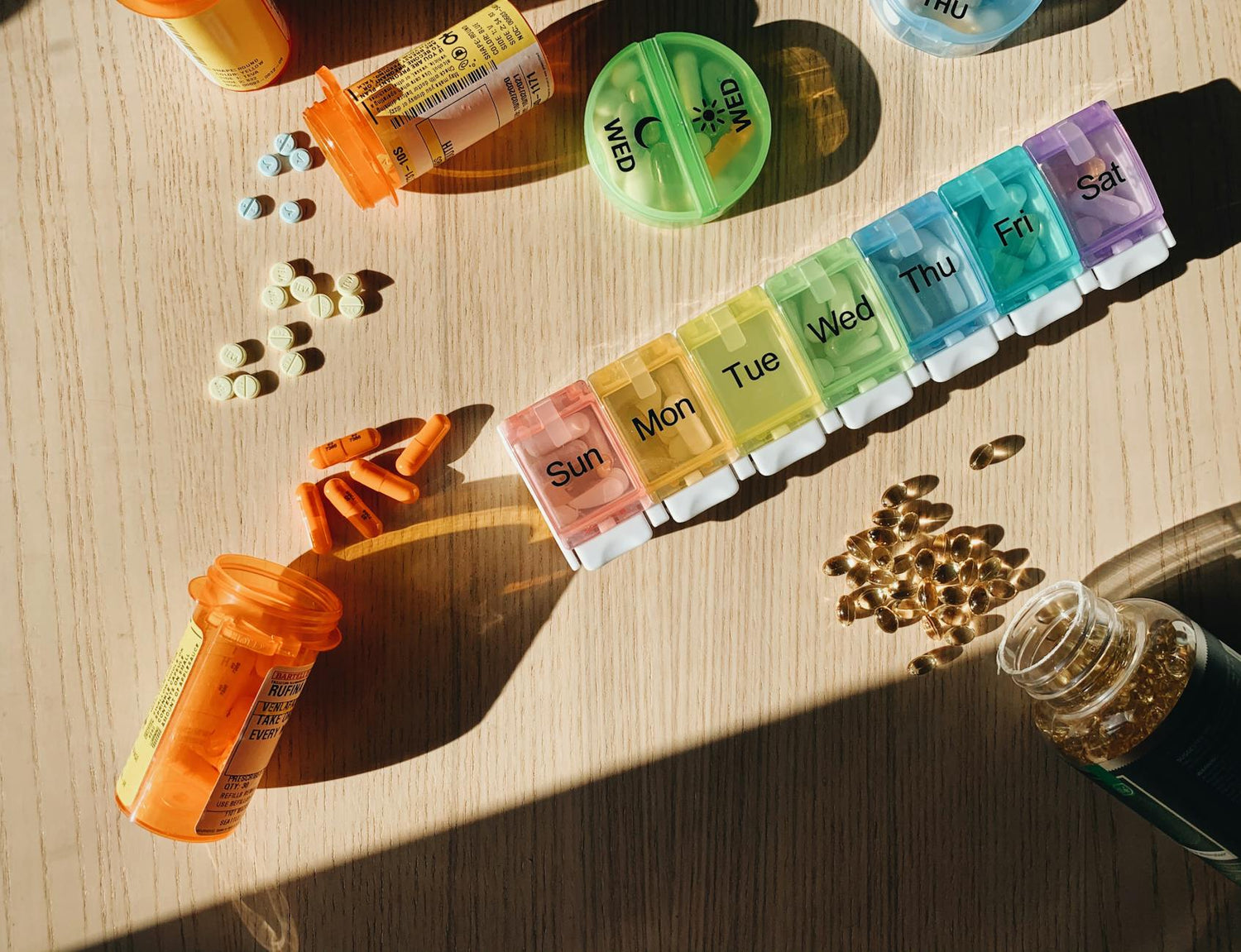
Here's something doctors are often weirdly quiet about: the prescription sitting on your nightstand might be the reason your sex life has gone quiet too.
It's one of the most common and least-discussed medication side effects out there. You start a new pill for your blood pressure, your mood, your heart, your hormones. Things feel better in one area. And then, slowly, something else shifts. The desire fades. Arousal becomes harder to reach. Orgasm, once reliable, starts feeling optional. And nobody told you this was coming.
Research has found that SSRI antidepressants, some of the most widely prescribed medications in the world, can reduce interest in sex, make it difficult to become aroused, sustain arousal, and reach orgasm.
And that's just one drug class. From birth control to beta blockers, the list of medications with sexual side effects is longer than most of us realize.
Your sex life isn't a luxury add-on. It's a real part of your health. And it deserves the same attention as the condition being treated.
The Pill That's Supposed to Help You (But Complicates Everything Else)
Picture this: You've finally found an antidepressant that works. The fog lifts. You're showing up to your life again. And then, about six weeks in, you realize you haven't thought about sex once. Not once.
SSRIs can reduce libido, make arousal harder to sustain, and in some cases, make orgasm impossible entirely.
This isn't rare, and it isn't in your head.
Studies have found that when comparing men and women on SSRIs, men reported slightly higher rates of sexual dysfunction at 62%, while women reported 60%.
In other words: the majority of people on these medications experience some form of sexual side effect. That's not a footnote. That's a headline.
The mechanism isn't mysterious. SSRIs flood the brain with serotonin, which does wonders for mood regulation. But serotonin and dopamine have a complicated relationship. Dopamine is the chemical most tied to desire, motivation, and reward. When serotonin goes up, dopamine often takes a hit. Less dopamine means less drive, less urgency, less want.
Research shows that not all antidepressants carry the same risk. Bupropion, for example, showed sexual dysfunction rates around 22-25%, compared to the significantly higher rates seen with most SSRIs.
So if you're on an SSRI and your sex drive has essentially left the building, it is absolutely worth a conversation with your prescriber about alternatives.
And it's a conversation worth having. Not every doctor will bring it up first.
Birth Control and Libido: The Relationship Is Complicated
The idea that the pill kills your sex drive is everywhere, and like most things that are "everywhere," the reality is messier than the slogan.
A review of 30 original research studies on oral contraceptives found that most retrospective studies showed women reporting an increase in libido during use.
But here's the twist: prospective studies, which are generally more reliable, painted a more mixed picture. Formulation matters enormously. Pill type, hormone dose, the ratio of estrogen to progestin, all of it can shift how someone's body responds.
What researchers do agree on is this: oral contraceptives can lower levels of sex hormone-binding globulin (SHBG), a protein that affects how much free testosterone circulates in the body. Less free testosterone often means reduced desire, slower arousal, and less genital sensitivity. For some people, these effects resolve when they switch to a different formulation or a non-hormonal option. For others, hormonal contraception is genuinely not a libido-friendly fit, and that's useful information to have.
If you use vibrators for women or other forms of solo play, you might already know that your arousal pattern has shifted since starting hormonal birth control, even if you never connected the two dots. Now you can.
Blood Pressure Meds and the Bedroom: What's Actually Going On

Not exactly the sexiest conversation: "My cardiologist put me on a beta blocker and now I can't get aroused." But it's a real one, and more people are having it than you'd think.
Beta blockers and certain diuretics used to treat high blood pressure have been associated with erectile dysfunction and reduced sexual interest. ACE inhibitors and calcium channel blockers are generally considered better alternatives for people who experience sexual side effects from their blood pressure medications.
The difference in sexual outcomes between drug classes is significant enough that many prescribers now factor it into their decision-making.
Beta blockers work by slowing the heart rate and reducing adrenaline response, which sounds reasonable. But that same dampening effect can quiet the body's arousal response too. Less blood flow, less sensitivity, lower physical urgency.
Statins, the widely prescribed cholesterol-lowering drugs, have also been shown to decrease testosterone levels in men
, adding another layer to the conversation about cardiovascular medications and sexual health.
The fix is rarely "stop your medication." It's usually "can we adjust, switch, or supplement?" That's a different question, and a much more productive one.
Why Does Nobody Warn Us About This?
Honestly? A mix of things. Medical culture has historically been awkward about sexual health, full stop. Sexual side effects often don't show up in short-term clinical trials because they take weeks to emerge. And patients, not wanting to seem ungrateful for a drug that works, don't always volunteer the information.
Sex researchers consistently point out that sexual side effects of medication are significantly underreported, both by patients and in clinical documentation. The stigma around talking about sexual function in a medical context means that providers often don't ask, and patients often don't tell. Everyone loses.
Antipsychotic medications, prescribed for conditions including schizophrenia and bipolar disorder, can affect sexual function by altering levels of dopamine and prolactin in the brain.
Prolactin, when elevated (which antipsychotics can do), directly suppresses sexual desire and can disrupt the arousal cycle.
Atypical, or second-generation, antipsychotics are generally less likely to cause sexual dysfunction, with risperidone being a notable exception.
Again: knowing which drug within a class is better or worse for sexual function is genuinely actionable information.
The stigma around talking about sex in medical settings is its own kind of side effect.
What You Can Actually Do About It

Let's get practical. You don't have to choose between your mental health and your sex life, your heart health and your desire. These aren't binary trades.
Start by naming it. When you talk to your doctor, be specific. Not "I've been feeling off" but "I've noticed a significant drop in sexual desire and difficulty reaching orgasm since starting this medication." Specificity gets results. Vagueness gets a shrug.
Ask about alternatives within the same drug class. As we've covered, not all antidepressants, not all antihypertensives, and not all contraceptives carry the same sexual burden. Your prescriber may have other options. The question is whether you ask.
Timing adjustments can also help in some cases. Taking a medication at a different time of day, or discussing a "medication holiday" approach with your doctor (something only appropriate for certain drugs, never antidepressants without supervision), can make a difference for some people.
And don't underestimate what clitoral vibrators and direct stimulation can do when arousal feels sluggish. If medications have blunted your body's natural response, more intentional, targeted stimulation often bridges the gap. Tools like the Berri Edging Clitoral Massager are designed precisely for sustained, responsive stimulation, ideal for when your body needs a little more invitation to the party.

Does It Always Get Better When You Stop the Medication?
For most people, yes. Sexual side effects from SSRIs, blood pressure medications, and hormonal contraceptives tend to improve after stopping or switching. But "most people" isn't everyone, and the timeline varies.
Some research has raised concerns about a condition called Post-SSRI Sexual Dysfunction (PSSD), where sexual side effects persist even after discontinuing the medication. It's considered rare, but it's real, and it's being studied more seriously now than it was a decade ago. If you've stopped a medication and the side effects haven't resolved after several weeks, that's worth flagging explicitly with your doctor.
The broader point: your sexuality is not a passive background process that just resets whenever you want it to. It's a biological, emotional, and relational system. Medications interact with that system. Understanding how is part of knowing your own body.
If you're rebuilding intimacy after a difficult period, exploring couples toys or pleasure tools designed for women can be a genuinely supportive part of the process. Not a replacement for the medical conversation. A complement to it.
I genuinely hope more prescribers start having these conversations upfront, before the prescription is filled, not six months later when someone has quietly stopped feeling like themselves. You deserve that honesty from the start.
Want to make your journey even more exciting? I've handpicked some amazing toys and goodies at Hello Nancy that'll add extra sparkle to your intimate moments. (Here's a little secret. use 'dirtytalk' for 10% off!)
Frequently Asked Questions
Which medications are most likely to cause sexual side effects?
The most commonly implicated medications include SSRIs and SNRIs (antidepressants), certain blood pressure drugs like beta blockers and diuretics, hormonal contraceptives, antipsychotics, and statins. SSRIs in particular are associated with high rates of sexual dysfunction, affecting up to 60-62% of users in some studies.
Can antidepressants permanently affect my sex drive?
For the vast majority of people, sexual side effects from antidepressants resolve after stopping or switching medication. However, a rare condition called Post-SSRI Sexual Dysfunction (PSSD) can cause persistent symptoms even after discontinuation. If side effects haven't improved several weeks after stopping the medication, speak with your doctor about further evaluation.
Does the birth control pill always lower libido?
No. The relationship between oral contraceptives and libido is more complex than the common narrative suggests. Some research shows many women report stable or even increased desire on the pill. Effects vary significantly based on hormone type, dosage, and individual biology. If you notice a libido change after starting hormonal contraception, switching formulations or trying a non-hormonal method may help.
Are there antidepressants with fewer sexual side effects?
Yes. Bupropion (Wellbutrin) consistently shows lower rates of sexual dysfunction compared to most SSRIs, with some studies reporting rates around 22-25%. Mirtazapine is another option that affects libido differently than SSRIs. Talk to your prescriber about switching if sexual side effects are significantly affecting your quality of life.
Can blood pressure medication cause erectile dysfunction?
Yes. Beta blockers and certain diuretics are among the blood pressure medications most associated with erectile dysfunction and reduced libido. ACE inhibitors and calcium channel blockers are generally better-tolerated options for people who experience sexual side effects. Ask your cardiologist or GP about switching if this is an issue for you.
How do I bring up sexual side effects with my doctor?
Be direct and specific. Instead of "I haven't been feeling quite right," try "Since starting this medication, I've noticed a significant drop in sexual desire and difficulty with arousal or orgasm." Specificity makes the conversation more productive. Your doctor should take this seriously as a medical concern, not a lifestyle complaint.
Do antipsychotics affect sexual function?
Yes. Antipsychotic medications can raise prolactin levels and affect dopamine pathways, both of which influence sexual desire and arousal. First-generation antipsychotics tend to cause more sexual side effects than second-generation ones, though risperidone is a notable exception among atypical antipsychotics and carries a higher risk.
Can statins reduce testosterone and affect sex drive?
Research suggests statins may lower testosterone levels in men, which could contribute to reduced libido. The evidence is not conclusive for all statin types, and the cholesterol-lowering benefits of statins are significant. If you're concerned about this, speak with your doctor about monitoring testosterone levels while on statin therapy.
Are women more affected by medication-related sexual side effects than men?
Interestingly, studies on SSRIs have found comparable rates of sexual dysfunction in men and women, with men reporting slightly higher rates (62% vs. 60%). However, women's sexual side effects are frequently underreported and under-researched overall, so these numbers may not capture the full picture across all medication types.
What can I do to maintain sexual wellbeing while on medication?
Practical strategies include: asking your prescriber about dose timing or alternative medications within the same class, communicating openly with your partner, allowing more time and intentional stimulation during intimacy, and exploring supportive tools like clitoral vibrators that can help when natural arousal response is blunted. Always discuss changes to your medication regimen with your doctor first.
References
- Harvard Health Publishing. When an SSRI Medication Impacts Your Sex Life
- PubMed Central (NIH). Sexual Dysfunction and Antidepressants
- PubMed (NIH). Impact of Oral Contraceptives on Sexual Desire and Libido
- Healthgrades. 9 Drugs That Can Affect Your Sex Drive
- GoodRx. These Drugs May Be Affecting Your Sex Life
By Mia Chang