Add $12.00 to get Free Gift



Some part of your brain, right in the middle of what should be a really good moment, taps you on the shoulder and says: "Does your stomach look weird from this angle?" And just like that, you're gone.
You're not alone in that.
Research consistently shows that people with a more positive body image experience significantly better sexual satisfaction, more presence during intimacy, and stronger connection with their partners. The gap between how we feel about our bodies and how much we actually enjoy sex is one of the most undertalked problems in modern relationships. And yet almost everyone I know has lived inside that gap at some point.
Why Your Body Image Follows You Into Bed
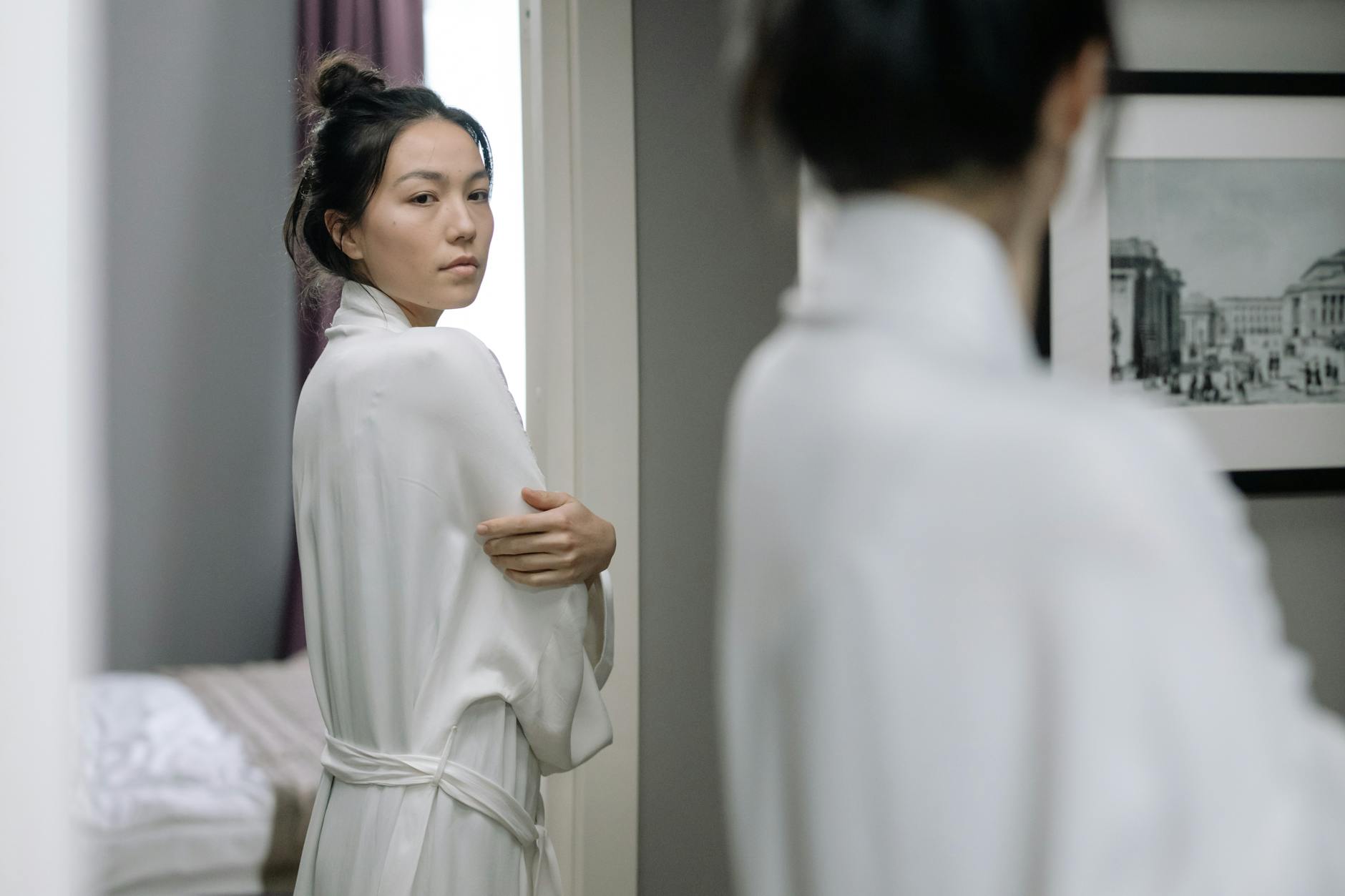
Your brain doesn't clock out when things get intimate. It brings everything with it. The comments from middle school, the magazines, the social media scroll at 11pm. All of it comes along for the ride.
There's actually a name for what happens when body insecurity hijacks intimacy. Psychologists call it spectatoring. It's when your mind steps outside your body and starts watching, judging, and critiquing yourself instead of being present in the experience. Masters & Johnson first described it in 1970, and the research since then has been pretty clear: spectatoring actively reduces sexual pleasure and makes it harder to connect with your partner.
Think about it this way. Your nervous system cannot simultaneously be in threat-mode and pleasure-mode. When you're mentally scanning your body for flaws, you've activated a low-level stress response. That stress response doesn't care that you're in a loving relationship. It doesn't care that the person next to you finds you deeply attractive. It just starts doing its job, pulling your attention away from sensation and toward self-monitoring.
That's not a character flaw. That's just a brain that learned to protect you.
The Confidence Myth (And What Actually Works)

Here's something nobody tells you: you don't need to love your body to have great sex.
I mean it. The idea that you have to achieve some zen state of body acceptance before you deserve pleasure is honestly just another version of the same trap. "Get thin first, then you can feel sexy." "Fix your skin, then you deserve intimacy." It's all the same logic, just dressed differently.
What actually works isn't loving every inch of yourself before you get into bed. What works is practicing something closer to neutrality. Researchers suggest that shifting from harsh self-criticism toward neutral, non-judgmental body awareness is far more achievable than jumping straight to body love, and it's remarkably effective at reducing spectatoring. You're not trying to gaslight yourself into thinking you look like a magazine cover. You're just practicing being here, in this body, right now, without running commentary.
That shift? It changes everything.
Practical Ways to Reclaim Your Presence During Sex
So what does "being present" actually look like when your brain keeps dragging you back to the mirror?
Start with sensation anchoring. When you feel your mind drifting into self-surveillance mode, redirect your attention to a specific physical sensation: the temperature of skin, the pressure of touch, the sound in the room. It sounds almost too simple, but it interrupts the spectatoring loop with something concrete. Your nervous system responds to sensory information. Give it something worth responding to.
Another underrated move: lighting. Not because you need to hide anything, but because soft, warm light changes the mood of a space, which changes the mood of your body. A dim room signals safety to your nervous system, and your brain gets the cue to relax. It's not about shame. It's about building an environment where your body can actually settle.
Communication is the big one, though. Telling a partner what feels good, what you want, what you'd like to try, keeps you in the driver's seat. When you're directing your own pleasure, you're too busy being an active participant to be a passive critic. Consider this your permission to use your voice. Communicating your needs in relationships is a skill, and it starts with the smallest, most honest sentence you can manage.
Bringing Your Whole Self: When Insecurity Meets a Partner

This is where it gets a little tender.
If you've been faking confidence for a long time, the idea of being actually vulnerable with a partner can feel scarier than any body insecurity. Because vulnerability means letting them see the gap between how you present yourself and how you actually feel. And that's terrifying. But it's also where real intimacy lives.
You don't have to monologue your insecurities mid-session. That's not what I'm suggesting. But there's something quietly powerful about saying, before or after, "Hey, sometimes my brain gets loud about my body. I just wanted you to know." Most partners, in my experience, respond with more warmth and care than you expect. And knowing that someone knows and is still present with you is one of the fastest ways to dissolve that inner critic.
For couples wanting to deepen that connection, exploring couples toys together can be a surprisingly effective way to shift the focus from performance to shared playfulness. When intimacy becomes collaborative and exploratory, the self-monitoring instinct has less room to breathe.
Your Pleasure Isn't Conditional on Your Appearance
Stop waiting for the "right" body before you let yourself enjoy this.
Pleasure is not a reward for looking a certain way. It's not something you earn after you've "fixed" yourself. Your body, as it is right now, is capable of feeling extraordinary things. And the more you actually inhabit it during intimacy rather than observing it from the outside, the more extraordinary those things become.
A lot of people find that exploring their own pleasure solo first, through self-touch or clitoral vibrators, builds a kind of body trust that carries into partnered sex. When you've spent time learning what your own body actually responds to, you show up with knowledge instead of just anxiety. That knowledge is confidence. Real confidence. Not the performed kind.
The Berri tapping clitoral massager is genuinely one of the gentler, more intuitive ways to start that kind of self-exploration. It's not about achieving anything. It's about listening.

Take it slow. Your body has been carrying you this whole time. It deserves some gratitude.
And if you're navigating this journey alongside shifting life stages, there's some genuinely useful thinking on dating and sex after 50 that speaks directly to body confidence at every age.
Bottom Line
Body image and sexual confidence are deeply connected, but neither is fixed. You are not doomed to watch yourself from the outside forever.
The path isn't through forcing yourself to love your body before you're ready. It's through small, consistent acts of presence. It's through choosing sensation over surveillance. It's through letting intimacy be something you actually participate in, rather than perform for an invisible audience. And honestly? That's a practice, not a destination. Even people who seem the most sexually confident are just practicing. You can start exactly where you are.
A Little Extra Spark for Your Journey
Want to make your journey even more exciting? I've handpicked some amazing toys and goodies at Hello Nancy that'll add extra sparkle to your intimate moments. (Here's a little secret—use 'dirtytalk' for 10% off!)
Frequently Asked Questions
How does poor body image affect sexual satisfaction?
Poor body image often triggers a psychological phenomenon called spectatoring, where you mentally step outside your body to observe and judge yourself during sex. This pulls attention away from physical sensation and emotional connection, which research consistently links to reduced arousal, lower satisfaction, and difficulty reaching orgasm. The good news is that it's a pattern that can be interrupted and changed over time.
Can you enjoy sex if you don't feel confident about your body?
Yes, absolutely. Full body confidence isn't a prerequisite for pleasure. Shifting from harsh self-criticism toward body neutrality, where you simply observe without judging, is often enough to dramatically improve presence during intimacy. You don't need to love every inch of yourself to feel genuinely good in bed.
What is spectatoring during sex and how do I stop it?
Spectatoring is when your mind detaches from the experience and starts monitoring or critiquing your body from the outside, like a camera watching yourself instead of living the moment. To interrupt it, try sensation anchoring: redirect your focus to a specific physical detail, like warmth, pressure, or sound. It sounds simple, but it works because it gives your nervous system something real to engage with.
Should I tell my partner about my body insecurities?
You don't have to, but a brief, honest moment of vulnerability can genuinely transform intimacy. Something as simple as "I sometimes get in my own head about my body" invites your partner in without requiring a full explanation. Most people respond with more tenderness than you'd expect, and knowing they know can quietly dissolve a lot of the pressure you've been carrying.
Does masturbation help with sexual confidence and body image?
It genuinely can. Solo pleasure helps you learn what your body actually responds to, which builds a form of embodied self-knowledge that's hard to get any other way. When you know your own pleasure, you arrive at partnered sex with awareness rather than anxiety. It shifts the dynamic from "will I be acceptable?" to "here's what I know about myself."
How can I feel more present during sex and less in my head?
Focus on your senses rather than your appearance. Notice textures, sounds, warmth, and pressure in real time. Creating a comfortable environment, such as soft lighting or familiar scents, also cues your nervous system to feel safe rather than scrutinized. Presence is a skill you practice, not a switch you flip.
Is body image insecurity during sex common?
Extremely common. Studies across genders show that body dissatisfaction during intimacy is widespread, and not limited to any particular body type, age group, or relationship status. If you've experienced this, you are not unusual or broken. You're just human in a world that sends a lot of confusing messages about bodies and desirability.
Can using sex toys help improve body confidence in bed?
They can be a genuinely useful tool. Exploring vibrators for women solo or with a partner shifts the focus from how your body looks to what your body feels. That reorientation from appearance to sensation is one of the most effective ways to build real intimacy with your own body over time.