


 Add $12.00 to get Free Gift


Your body has been trying to tell you something for years. You just never had anyone sit down and actually explain it to you.
That's not your fault. Most sex education — if you even got one — spent about forty-five minutes on reproduction diagrams and then called it a day. Nobody talked about pleasure. Nobody talked about your anatomy as something worth understanding for its own sake. And that gap? It follows people around for a lifetime.
Let's fix that.
Why Anatomy Education Is Still Failing Us

Here's the thing nobody wants to say out loud: most anatomy curricula were designed around reproduction, not experience. The parts that create pleasure were treated as footnotes — if they were mentioned at all. This isn't a minor oversight. It's a structural gap that leaves people navigating their own bodies with almost zero reliable information.
The consequences are real. People reach adulthood not knowing what their own anatomy looks like, how it functions, or why certain kinds of touch feel the way they do. They look things up online and find either clinical language that reads like an instruction manual, or content that's pure fiction.
You deserve better than both.
The Clitoris: More Than You Were Ever Taught

If you have a clitoris, chances are you were shown a tiny dot on a diagram and told that was it. That is comically incomplete. The clitoris is an entire internal structure. What you see externally — the glans — is just the visible tip. The full organ extends internally with two crura (legs) and two vestibular bulbs that wrap around the vaginal canal.
And it is exquisitely sensitive.
A 2022 study presented at the International Clinical Anatomy meeting found that the commonly cited figure of 8,000 nerve endings in the clitoris is likely a serious underestimate, with newer samples suggesting the number could be closer to 10,000 or higher (Baskin et al., 2022). For context, that concentration of nerve endings is packed into a structure smaller than your thumb. The clitoris exists entirely for pleasure. It has no reproductive function. That alone should have changed the way we teach anatomy decades ago.
Understanding that the clitoris is largely internal also reframes how stimulation works. External pressure, internal pressure near the front wall of the vagina, and even deep pressure can all stimulate different portions of the same structure. The so-called "G-spot" debate? Most researchers now believe it's simply the internal portion of the clitoris being stimulated through the vaginal wall. Same organ. Different angle.
The Pelvic Floor: The Unsung Hero of Sexual Pleasure
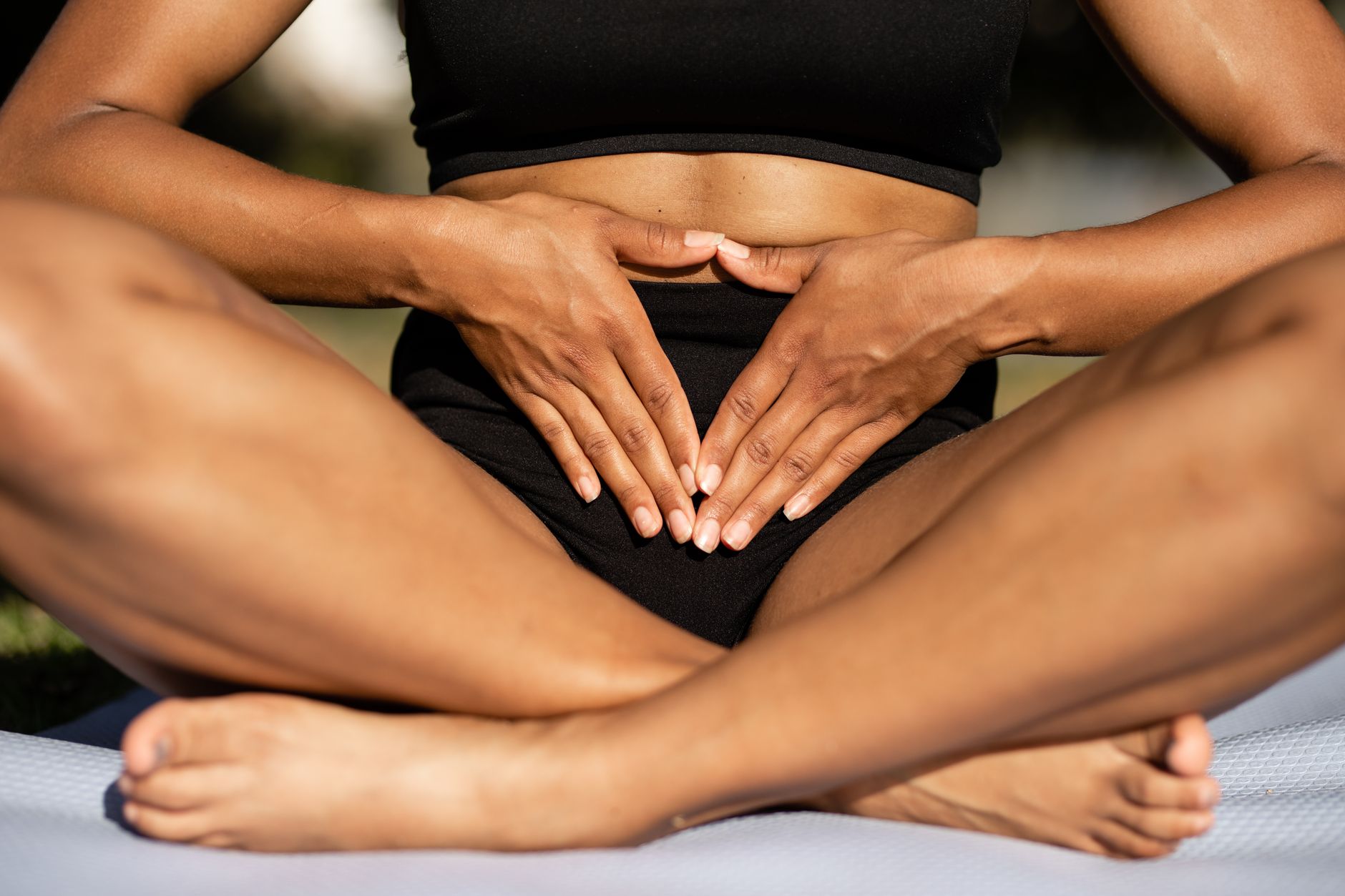
Almost nobody thinks about their pelvic floor until something goes wrong. That's a missed opportunity. The pelvic floor is a hammock of muscles running from your pubic bone to your tailbone, and it plays a direct role in the intensity of orgasm, arousal, and even the ability to climax at all.
These muscles contract rhythmically during orgasm.
When they're tight and unable to release, sex can be uncomfortable or even painful. When they're weak and undertoned, sensation can feel muted. Both extremes matter. Pelvic floor physiotherapy exists for a reason, and it's one of the most underutilized tools in sexual health. If you've ever felt like something "should" feel better than it does, your pelvic floor is worth investigating with a qualified professional.
Breathing into your pelvic floor — consciously releasing on the exhale — is something you can practice right now. It sounds almost too simple. But chronic tension in this area is extraordinarily common, especially among people who've experienced stress, trauma, or even just years of "holding it together."
Erogenous Zones: Reading Your Own Map

Every body has a different map. That's not a metaphor — it's neuroscience. Sensory nerve density varies significantly from person to person, which is why what sends one person to the moon leaves another completely indifferent.
The most well-known erogenous zones include the genitals, inner thighs, neck, nipples, and lower back. But some people experience intense pleasure from ear stimulation, the back of the knees, or even the scalp. These aren't quirks. They're variations in how your particular nervous system is wired.
Exploration without a goal is the whole point.
Self-touch with genuine curiosity, rather than the pressure to "achieve" something, tends to yield far more useful information about your body than anything else. This is also where quality tools come in. Clitoral vibrators can help you map sensations you might not be able to access with fingers alone, particularly around the internal clitoral structure. Products like the Berri edging clitoral massager, with its tapping and vibration modes, are specifically designed to let you explore different kinds of stimulation at your own pace.
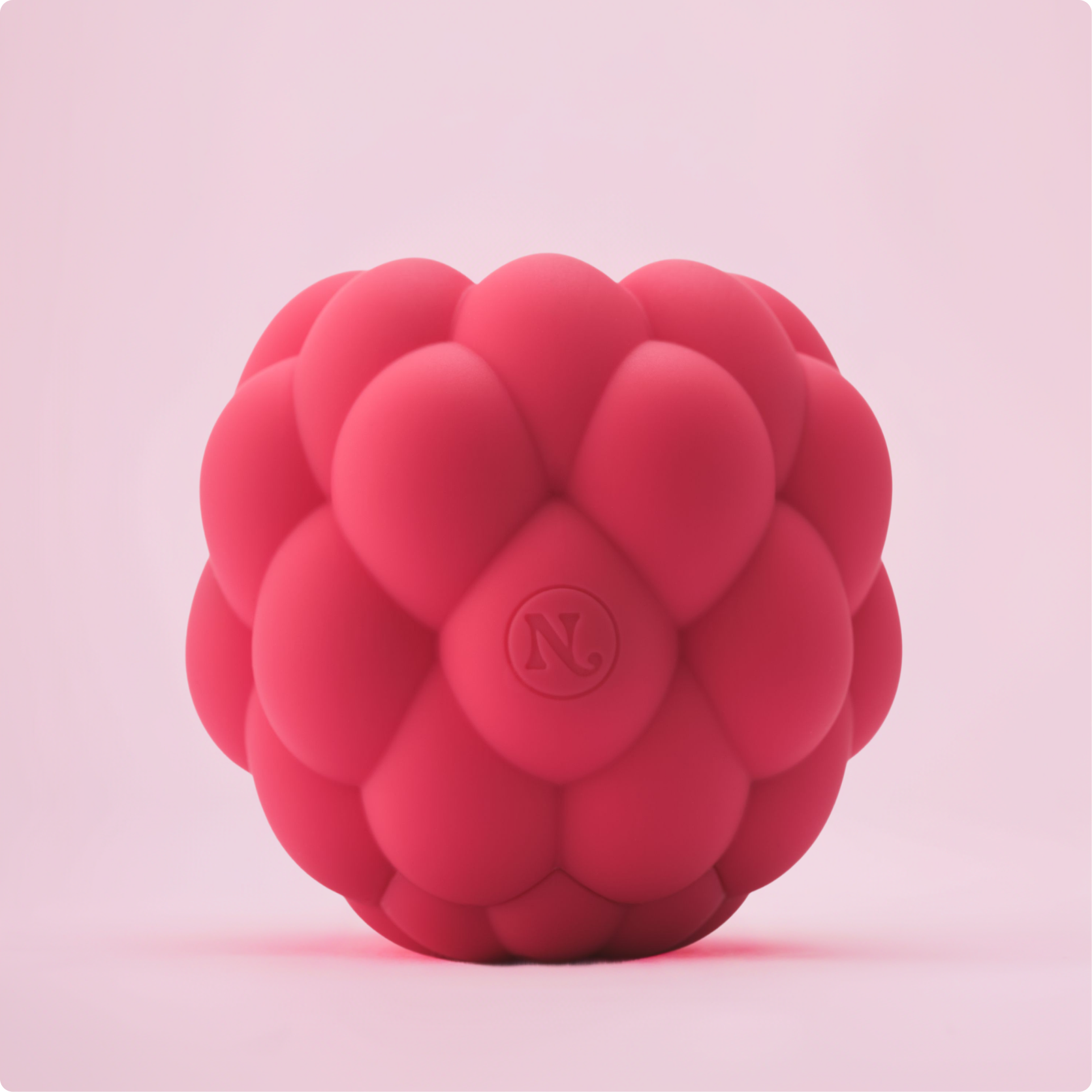
Learning what you actually enjoy — not what you're supposed to enjoy — is one of the most practical things you can do for your intimate life, whether you're exploring solo or with a partner.
Arousal Is Not Linear (and That's Completely Normal)

Here's something sex educators have been saying for years but it still hasn't fully landed in mainstream conversation: arousal doesn't work like a light switch. It's more like a dimmer attached to a circuit board with about forty different inputs. Emily Nagoski, author of Come As You Are, describes the dual-control model of sexual response — a system with both an accelerator (what turns you on) and a brake (what inhibits response). Most people only focus on the accelerator. The brake is just as important.
Stress, distraction, unresolved tension, discomfort with your body, worry about performance — these all activate the brake. Even mild, background-level anxiety can significantly dampen arousal, even when everything else feels "right." This is not a malfunction. It's your nervous system doing exactly what it was built to do.
Understanding this model practically changes everything.
Instead of asking "why isn't this working," you start asking "what's keeping the brake on?" Sometimes the answer is simple: you're tired. Sometimes it's more layered, and it's worth reading about how to talk about sex with your partner in a way that actually opens things up rather than closing them down.
Vaginal vs. Clitoral Orgasm: Ending the Debate

The "vaginal orgasm" versus "clitoral orgasm" debate has been going on since Freud decided in 1905 that one was more "mature" than the other. It is now safe to retire that framing entirely.
Research increasingly supports what many people already knew intuitively: most orgasms — regardless of how they're triggered — involve the clitoris. Internal stimulation that produces orgasm is almost certainly stimulating the internal clitoral complex. The distinction between "types" is more about method of stimulation than a fundamentally different physiological event.
This matters because the old hierarchy made people feel broken. If penetration alone didn't produce orgasm, something was assumed to be wrong. Studies consistently show that the majority of people with vulvas require direct clitoral stimulation to reach orgasm, making clitoral engagement the norm rather than the exception (Lloyd, 2005). Knowing this lets you stop chasing a response your body may not be wired to produce in a particular way, and start focusing on what actually feels good.
Anatomy for People with Penises: What Gets Skipped

The anatomical conversation isn't one-sided. People with penises also receive incomplete education, and the gaps have real consequences.
The frenulum — the small band of tissue on the underside of the penis, just below the glans — is often one of the most sensitive areas, and it's barely mentioned in standard education. The prostate gland, accessible internally through the rectum, is packed with nerve endings and can produce intensely pleasurable sensations. It's sometimes called the "male G-spot," though that framing imports all the same mysticism that surrounds the female equivalent. It's simply an erogenous zone that's anatomically internal. Couples toys and prostate-specific tools exist precisely because this is pleasure anatomy worth paying attention to.
Erectile function is also more complex than "on or off." Erections require a combination of neurological, hormonal, vascular, and psychological conditions all operating together. Difficulty achieving or maintaining erection is rarely purely physical, and it's rarely purely psychological either. It's usually both, interacting.
Lubrication: What's Normal, What's Not
Natural lubrication is one of the most misunderstood aspects of arousal. People often assume that wetness equals arousal and dryness equals lack of interest. Neither is consistently true.
Lubrication depends on hormones, hydration, medication, stress, where you are in your menstrual cycle, and even whether you recently consumed alcohol. It is not a reliable indicator of how turned on someone is. This has real consequences for communication and for how people interpret their own and their partner's responses.
Using lube is simply good sense.
It reduces friction, increases sensation, and makes most activities more comfortable. There's no threshold of "natural" lubrication that you need to hit before lube becomes acceptable. If you're curious about options that are body-safe and compatible with toys, our blog has a useful breakdown on natural lubes that actually love your body back.
Building a Relationship With Your Body

Knowing your anatomy is just the beginning. Actually building a relationship with your body — one based on curiosity rather than criticism — takes time.
A lot of us inherit body shame before we're old enough to question it. We learn to evaluate our bodies by external standards before we ever think to ask what feels good from the inside. Unlearning that takes patience. It doesn't happen in one session of reading, or one great sexual experience, or one good toy. It builds slowly, through repeated small choices to pay attention without judgment.
Start simple.
Self-exploration without a goal. Paying attention to what feels good during everyday moments, not just sexual ones. Noticing tension and learning to release it. If you've ever felt disconnected from your body, our guide on masturbation guilt and how to let it go is a good place to go next. Understanding your anatomy academically is useful. But knowing your body experientially, with compassion and without agenda, is the thing that actually changes how you feel.
You deserve to know yourself this well. Your pleasure matters, and it starts with understanding the body that makes it possible.
Want to make your journey even more exciting? I've handpicked some amazing toys and goodies at Hello Nancy that'll add extra sparkle to your intimate moments. (Here's a little secret — use 'dirtytalk' for 10% off!)
Frequently Asked Questions
What is the full anatomy of the clitoris, and why does it matter for pleasure?
The clitoris is a much larger structure than most people realize. Beyond the external glans, it includes internal components — two crura and two vestibular bulbs — that wrap around the vaginal canal. Understanding this explains why different types of stimulation (external, internal, combined) can all engage the same organ.
Why do some people struggle to orgasm from penetration alone?
Research consistently shows that the majority of people with vulvas require direct clitoral stimulation to reach orgasm, meaning penetration alone simply doesn't provide enough contact with the clitoris for most people. This is anatomically normal, not a dysfunction.
How does the pelvic floor affect sexual pleasure and orgasm intensity?
The pelvic floor muscles contract rhythmically during orgasm, and their condition directly affects sensation and intensity. Muscles that are too tight can cause pain or difficulty climaxing; muscles that are undertoned can reduce sensation. Pelvic floor physiotherapy can address both issues.
Is it normal for lubrication levels to vary during sex?
Completely normal. Lubrication is influenced by hormones, stress, hydration, medication, and menstrual cycle phase — not purely by arousal level. Dryness does not mean disinterest, and using lubricant at any point is both practical and beneficial regardless of natural lubrication levels.
What are erogenous zones and how do I find mine?
Erogenous zones are areas of the body with higher concentrations of sensory nerve endings that respond to touch with pleasure. They vary significantly between individuals based on how your nervous system is wired. Slow, goal-free self-exploration — with or without a vibrator — is the most effective way to discover your personal map.
What is the dual-control model of sexual arousal?
The dual-control model, developed by sex researchers John Bancroft and Erick Janssen, proposes that sexual response is governed by both an excitatory system (the accelerator) and an inhibitory system (the brake). Arousal difficulty is often less about insufficient stimulation and more about an overactive brake — driven by stress, anxiety, or distraction.
Is the G-spot a separate structure from the clitoris?
Most current anatomical research suggests the G-spot is not a separate structure but rather a region where internal portions of the clitoris can be stimulated through the front wall of the vagina. The pleasurable sensation is real; the idea that it's an entirely distinct organ is increasingly considered outdated.
How can I start exploring my body without feeling awkward or pressured?
Start by removing any goal or expectation. Set aside time where the only intention is to notice what sensations feel pleasant, with no pressure to reach orgasm. Many people find it helpful to begin outside of sexual contexts — a relaxing bath, a body scan meditation, or simply paying attention to touch during daily activities builds the same kind of body awareness.
Do vibrators help with understanding your anatomy?
They genuinely can. Vibrators for women provide types and intensities of stimulation that fingers alone often can't replicate, making it easier to locate and identify sensitive areas. Using one as an exploratory tool, rather than purely goal-oriented, is a practical approach to learning what your body responds to.


