Add $12.00 to get Free Gift



Your brain decided to betray you at the worst possible moment. Again.
That tight, creeping dread right before (or during) sex is something a staggering number of people know intimately. Yet almost nobody talks about it honestly. Performance anxiety in sex isn't a sign that something is permanently broken in you. It's a loop. A very learnable, very breakable loop.
But here's what makes it genuinely tricky.
Why Performance Anxiety Becomes a Spiral (And Not Just a Bad Night)

One uncomfortable experience sets off an alarm. Your nervous system files it under "danger." The next time intimacy comes up, that alarm pre-fires. Your body tenses before anything has even happened. You notice the tension. You worry about the worry. And suddenly you're watching yourself from the outside instead of actually being present.
Sex therapists call this "spectatoring." Masters and Johnson first named it decades ago, and research published in the Journal of Sexual Medicine confirms it's still one of the core mechanisms behind sexual dysfunction today. Instead of feeling, you're mentally grading your own performance like a harsh professor who only gives C-minuses.
The spiral locks in fast.
One awkward night becomes a pattern in your head. You start pre-empting intimacy. You make excuses, avoid the situation, or push through while feeling completely disconnected. Your partner might sense the distance without understanding what's causing it, which adds another layer of pressure. Research from therapy practices consistently shows that anxiety is present in up to 37% of people experiencing erectile difficulties, and similar cognitive-distraction patterns show up across all genders and body types.
What's Actually Happening in Your Body

Anxiety triggers your sympathetic nervous system. Fight or flight. Your body floods with adrenaline and cortisol, which are genuinely terrible for arousal. Blood flow redirects away from the genitals. Lubrication decreases. Erections become harder to maintain. Physical sensations dull. Your body isn't malfunctioning. It's doing exactly what it was designed to do under perceived threat. The problem is that it can't tell the difference between "there's a lion" and "I'm worried about disappointing my partner."
And then the cruel irony hits.
The very act of trying harder to perform makes things worse. Effort and arousal genuinely don't mix well. Sexual response is an autonomic process, meaning it operates best when you stop micromanaging it. Forcing it is a bit like trying really hard to fall asleep. The harder you try, the more awake you become.
The Thought Patterns That Keep the Loop Going

Anxiety loves predictive thinking. Your brain starts running worst-case scenarios before you've even taken off your socks. Common cognitive loops include anticipating failure based on one past experience, reading a partner's neutral facial expression as disappointment, and catastrophizing soft arousal into evidence of a permanent problem. These thought patterns feel completely logical from the inside. They're also mostly fiction.
Cognitive restructuring, a core tool from CBT-based sex therapy, targets exactly these thought patterns. The goal isn't toxic positivity. It's accuracy. When you catch yourself thinking "I'll definitely fail again," you pause and ask: Is that actually a fact, or is that anxiety narrating a story?
Most of the time, it's a story.
How to Actually Break the Spiral
The single most effective shift is taking penetration and orgasm off the table. Completely. Temporarily. This is called sensate focus, and it's the backbone of most evidence-based sex therapy. You and your partner explore touch, sensation, and connection with zero pressure to "perform" anything. When there's no finish line, the body can stop bracing for failure and start actually feeling.
Slow down before you even get to the bedroom.
Anxiety feeds on rushing. A long conversation, a shared meal, even a walk together before intimacy can shift your nervous system out of threat mode and into the parasympathetic rest-and-connect state where arousal actually lives. This isn't foreplay in the cheesy sense. It's physiological recalibration.
Mindfulness is genuinely useful here, not in a vague way, but in a very specific one. When you notice your attention drifting into self-monitoring mode, gently redirect it to one physical sensation. The warmth of skin. The sound of breathing. The pressure of a hand. That act of returning attention again and again is exactly what disrupts the spectatoring loop.
If you'd like to read more about how communication can completely transform these dynamics, this honest breakdown on how to suggest new things in the bedroom without making it awkward is genuinely worth your time.
What Your Partner Can Do (And What They Shouldn't)

If your partner is the one experiencing performance anxiety, the instinct to reassure is beautiful. But reassurance alone often doesn't help, and sometimes accidentally intensifies the pressure. Saying "it's fine, don't worry" can translate in an anxious brain to "they noticed, they're managing me."
What actually helps is removing the goal entirely.
Tell your partner explicitly that you'd enjoy just being close. That nothing needs to happen. Mean it. When intimacy stops being a test, the nervous system can finally exhale. Some couples find that incorporating couples toys into non-pressured exploration shifts the dynamic beautifully, because the focus moves to shared pleasure rather than individual performance. Think of it as redistributing the pressure across the whole experience.
When Solo Exploration Helps
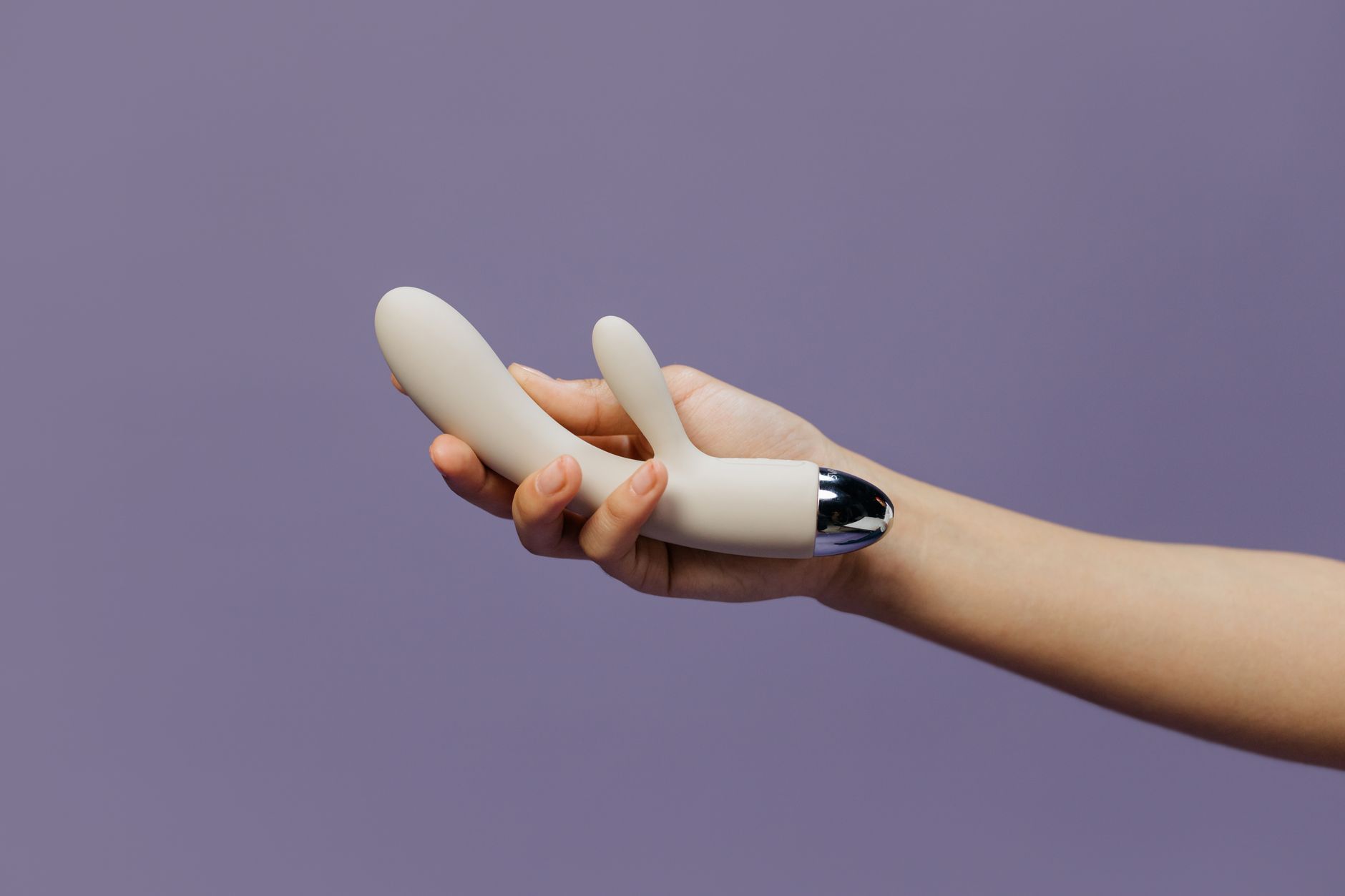
For many people, performance anxiety is deeply tied to partnered sex specifically. Solo exploration can be a low-stakes way to rebuild trust with your own body. Getting familiar with what sensation feels good, without any audience or expectation, retrains your nervous system to associate arousal with safety rather than scrutiny.
Clitoral vibrators designed with soft, intuitive controls work especially well here because they keep the focus on sensation rather than technique. Something like the Berri edging clitoral massager is a great example. Its tapping stimulation pattern is gentle, varied, and responsive in a way that makes it genuinely easy to stay present in your body rather than drift into your head.

Rebuilding your relationship with your own pleasure is not a detour. It's the main road.
Talking to a Professional Isn't Overkill
Sex therapy has a bit of an image problem. People assume it's only for "serious" issues or that it involves something clinical and uncomfortable. It's almost always the opposite. A certified sex therapist or psychosexual counsellor provides structured exercises, reframes persistent thought patterns, and offers a genuinely non-judgmental space to untangle what's happening. If anxiety has been consistently affecting your intimate life for more than a few months, it's worth seeking out.
Therapy isn't admitting defeat.
It's choosing to take your pleasure seriously, which is something you genuinely deserve. And for people working through healing sexual shame, having professional support can make the difference between cycling through the same loop for years and actually breaking free.
The Long Game: Rebuilding Confidence Over Time
Performance anxiety doesn't vanish overnight. Expecting it to disappear after one mindful encounter is setting yourself up for another round of disappointment. The goal is consistency, not perfection. Every experience where you manage to stay even slightly more present than last time counts as progress. It compounds.
Be radically patient with yourself.
Your worth as a partner, as a person, and as a sexual being is not determined by what happened (or didn't happen) last Tuesday. Bodies are complicated, contexts matter enormously, and one difficult night tells you approximately nothing about the full picture of your sexuality. What matters is that you keep approaching it with curiosity instead of dread. The spiral breaks when you stop feeding it with self-judgment.
And it does break. That's the part that gets left out of these conversations most often. People come out the other side of performance anxiety and build some of the most present, connected, genuinely pleasurable intimate lives they've ever experienced. Because going through this process tends to strip away the performance entirely, leaving something much more honest in its place.
If you're not there yet, that's okay. You're already doing the most important thing by taking it seriously.
Bottom Line
Performance anxiety spirals because anxiety is self-reinforcing by design. One tense experience triggers anticipatory dread, which blocks arousal, which confirms the fear, which increases the dread. Breaking the loop requires interrupting that chain at any point, whether through sensate focus, mindfulness, honest communication, solo exploration, or professional support. The more you understand the mechanism, the less power it holds. Your intimate life isn't broken. It's just stuck in a loop that has a way out.
Want to make your journey even more exciting? I've handpicked some amazing toys and goodies at Hello Nancy that'll add extra sparkle to your intimate moments. (Here's a little secret, use 'dirtytalk' for 10% off!)
Frequently Asked Questions
Why does performance anxiety keep happening even when I want to have sex?
Because anxiety operates through your nervous system, not your intentions. Even if you genuinely want sex, anticipatory dread activates your fight-or-flight response, which physically blocks arousal. Wanting something and your body feeling safe enough to receive it are two separate processes, and performance anxiety creates a gap between them.
Does performance anxiety affect people with vulvas or just people with penises?
It affects all genders and body types. For people with vulvas, performance anxiety commonly shows up as difficulty with lubrication, reaching orgasm, or staying mentally present during sex. The spectatoring loop, where you mentally watch yourself instead of feeling, is equally common regardless of anatomy.
Can performance anxiety cause erectile dysfunction?
Yes. Anxiety triggers the release of adrenaline and cortisol, which redirect blood flow away from the genitals and make maintaining an erection significantly harder. Research consistently finds anxiety present in a large proportion of people experiencing ED. The important distinction is that psychogenic ED caused by anxiety is very treatable, often without medication.
What is sensate focus and does it actually work for performance anxiety?
Sensate focus is a structured sex therapy exercise where you and a partner explore touch with all performance goals explicitly removed. No penetration, no orgasm requirement, just sensation and presence. It works because it breaks the loop by eliminating the conditions under which performance anxiety activates in the first place. Most sex therapists consider it a frontline intervention.
How long does it take to recover from sexual performance anxiety?
There's no universal timeline, and anyone who gives you a specific number is guessing. For some people, one or two conscious mindful experiences shift things meaningfully. For others, it takes months of consistent practice and sometimes therapeutic support. The pattern did not develop overnight, so recovery rarely happens overnight either. Patience with the process matters more than speed.
Should I tell my partner I have performance anxiety?
In most cases, yes. Partners who don't know what's happening often internalize the distance as rejection or a sign they're not attractive enough. Naming it removes that misunderstanding and opens space for a genuinely supportive dynamic. You don't need a clinical explanation. Something like "I get in my head sometimes and it affects things" is more than enough to start.
Can mindfulness really help with performance anxiety during sex?
Yes, and there's good research behind it. Mindfulness directly targets spectatoring by training your attention to return to present sensory experience rather than evaluative thinking. It doesn't mean emptying your mind. It means noticing when attention drifts to self-monitoring and gently redirecting it to what you're actually feeling in your body.
Is performance anxiety a sign of a deeper mental health issue?
Not necessarily. Performance anxiety can exist entirely on its own as a learned response to one or two difficult experiences. That said, it can also coexist with generalized anxiety disorder, depression, or sexual shame. If the anxiety feels pervasive across many areas of your life, it's worth speaking with a therapist who can look at the full picture.