Add $12.00 to get Free Gift


Nobody handed you a diagram when you were growing up. And somehow, we all ended up wondering if our bodies were "wrong." Let's fix that right now.
The Honest Truth About Labia Size Variation
Here's the thing nobody tells you in health class: labia come in an almost unbelievable range of shapes, sizes, colors, and textures. All of them normal. A landmark study by Lloyd, Crouch, Minto, Liao, and Creighton (2005) measured 50 premenopausal women and found significant variation in labial measurements, with labia minora length ranging from just 5mm to 100mm, and width anywhere between 1mm and 60mm. That's a tenfold difference, friend. On the same body part.
So if you've ever looked at yourself and thought something seems "off," sit with that data for a second.
Your labia don't need to be tucked, trimmed, or symmetrical to be correct. They just need to be yours. The labia majora (the outer lips) can be full and fleshy, or almost flat. They can be long or short, deeply pigmented or pale pink. The labia minora (the inner lips) might not be visible at all, or they might extend well beyond the outer lips. Research suggests that in more than half of people with vulvas, the labia minora protrude beyond the labia majora — meaning what's often called "outie" anatomy is statistically the most common configuration. But "common" shouldn't even matter. The real standard is whatever your body does naturally.
Why Does Labia Size Actually Vary?
Genetics are the biggest driver. Just as nose shapes run in families, labial anatomy is largely inherited. But hormonal shifts throughout life, including puberty, pregnancy, breastfeeding, and menopause, all influence tissue size and tone over time.
Asymmetry is also wildly normal.
One side of your labia being larger or longer than the other isn't a flaw — it's practically universal. A study published in ScienceDirect found that right and left labia minora lengths differed in 43% of adolescent participants measured. That means nearly half the group had measurably uneven inner lips. Your body isn't lopsided. It's just human. Even faces aren't symmetrical, and nobody calls a face "wrong" for that. Hormones during puberty cause a surge in estrogen that stimulates labial tissue growth, and the amount that develops varies between individuals based on receptor sensitivity and unique biology. Pregnancy and childbirth can stretch or deepen pigmentation of labial tissue. Menopause can thin it. None of these changes signal a problem.
The Comparison Trap: Media, Porn, and Body Image

Let's be real about where most labia anxiety actually comes from.
Mainstream pornography and filtered social media have built an impossibly narrow visual standard for vulvas that doesn't reflect real anatomy. Clinicians working with young patients report that people are increasingly worried their partners will compare their bodies to what pornography shows. And that's heartbreaking, because what pornography typically depicts is a highly curated, often surgically altered "tucked" appearance that represents a tiny minority of actual vulvas. It's not a reference point. It's a fiction.
Labiaplasty rates have risen sharply in recent years, and body image researchers have drawn a direct line between exposure to narrowly represented vulva imagery and increased dissatisfaction with one's own body. But here's the most important thing: labia that extend beyond the outer lips are not "too big." Labia that are barely visible are not "underdeveloped." Darker pigmentation isn't a sign of anything. Uneven sides aren't a defect. The entire spectrum is normal anatomy.
You deserve to know what real bodies look like. Because real bodies look like yours.
When to Actually See a Doctor About Labia

Variation in labia size and shape is normal. But there are specific signs worth checking in with a doctor about.
If you're experiencing physical discomfort during exercise, sex, or even just wearing certain clothes, that's worth a conversation with your healthcare provider — not because anything is wrong with your anatomy, but because comfort matters and options exist. Sudden changes in labial tissue, such as unexpected swelling, pain, or new lumps, are always worth investigating. Same with any sores, unusual discharge, or persistent irritation. These aren't cosmetic concerns. They're health signals.
Feelings of self-consciousness, though? Those don't belong in the same category. Disliking the way your body looks is a body image concern, not a medical one. And the solution there isn't a scalpel. It's information, community, and sometimes therapy.
Loving Your Body Starts With Knowing It

Getting to know your own anatomy is genuinely one of the most empowering things you can do.
Sitting with a mirror and actually looking at your vulva without judgment might feel strange at first. Do it anyway. Notice the color, the shape, the texture. Notice that it's yours and that it works. Your vulva, including your labia, is packed with nerve endings that exist specifically for pleasure. It's a body part that does extraordinary things. And if you're curious about exploring that pleasure more, clitoral vibrators designed with real bodies in mind can be a beautiful place to start. Your anatomy, exactly as it is, is more than sufficient.
Self-knowledge and self-touch are linked. The more comfortable you are with your body's appearance, the more comfortably you can inhabit it during intimacy. If you've never read about why pleasure exploration matters so much, this open letter to women who don't masturbate yet might land differently now.
And if you're partnered, none of this is solo work. Sharing what your body looks like, how it works, what it likes — that's intimacy in its most honest form. Consider exploring together with couples toys that put both partners' pleasure front and center, because your body is already perfect for that.
Wrapping Up
Your labia are not a problem to solve. They're part of a body that's been carrying you around your whole life, quietly doing its job.
Variation is the rule, not the exception. From the labia that sit neatly within the outer lips to the ones that drape beautifully beyond them, from pale pink to deep brown, from nearly symmetrical to visibly uneven — all of it falls within the enormous and completely normal range of human anatomy. You were never taught this clearly enough, and that gap in education has caused so much unnecessary shame. So consider this your belated lesson. You passed. You always did.
Want to make your journey even more exciting? I've handpicked some amazing toys and goodies at Hello Nancy that'll add extra sparkle to your intimate moments. (Here's a little secret — use 'dirtytalk' for 10% off!)
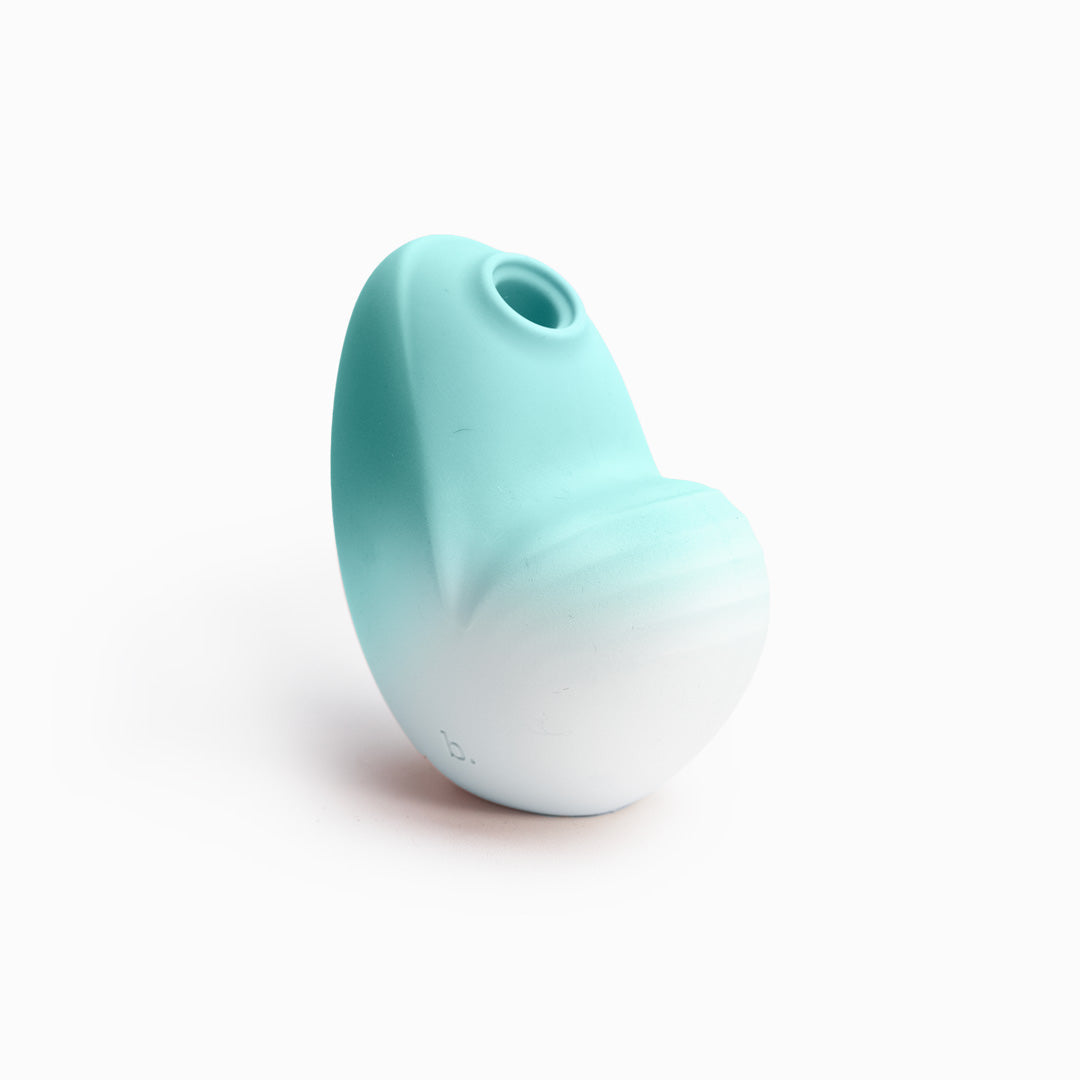
If you're looking for something that works beautifully with your body exactly as it is, the Lem Clitoral Massager is worth a look. It's designed with external anatomy in mind, soft on sensitive skin, and genuinely good at what it does.

And if you're drawn to something with dual sensations, the Namii 2, a clitoral suction and vibration combo, is one of those toys that genuinely makes you wonder why you waited so long.
Frequently Asked Questions
Is it normal for labia minora to stick out past the labia majora?
Completely normal. Research suggests more than half of people with vulvas have labia minora that extend beyond the outer lips. This is not a medical condition and requires no treatment unless it causes physical discomfort.
Why are my labia two different sizes on each side?
Asymmetry is extremely common and completely normal. Studies have found that measurable differences in size between the left and right labia minora appear in roughly 43-61% of people. Uneven labia are not a sign of injury, illness, or abnormality.
Can labia size change over time?
Yes, and that's expected. Puberty, pregnancy, childbirth, breastfeeding, and menopause can all cause changes in labial size, shape, and pigmentation. These changes reflect normal hormonal shifts, not damage or decline.
What is the normal size range for labia minora?
Research has found labia minora length ranging from approximately 5mm to 100mm across study populations, with width ranging from 1mm to 60mm. This enormous range confirms that there is no single "correct" size. Your measurements are yours, and they're normal.
Is labia color variation normal?
Yes. Labia can range from pale pink to deep brown, purple, or nearly black, often within the same vulva. Pigmentation is influenced by genetics, hormones, and age. Darker coloring does not indicate a health issue.
Does having larger labia affect sexual pleasure?
Not negatively. Labia size has no bearing on sexual sensitivity or the capacity for pleasure. The vulva and clitoris are richly supplied with nerve endings regardless of labial size or shape. Your ability to feel pleasure is entirely intact.
When should I see a doctor about my labia?
See a doctor if you experience physical pain, persistent irritation, sudden swelling, new lumps, or sores. Cosmetic concerns about appearance alone are not medical emergencies, though a body-positive gynecologist can still be a supportive resource for questions.
Is it common to feel self-conscious about labia size or shape?
Very common, unfortunately. Narrow representations of vulvas in media and pornography contribute significantly to body image concerns that don't reflect real anatomical diversity. Education and honest visual representation are the most effective antidotes.
Does labia size affect sex or using sex toys?
No. Most vibrators for women and external pleasure toys are designed to work with a wide variety of anatomy. Labia size and shape do not limit what kinds of stimulation or products work for you.