Add $12.00 to get Free Gift


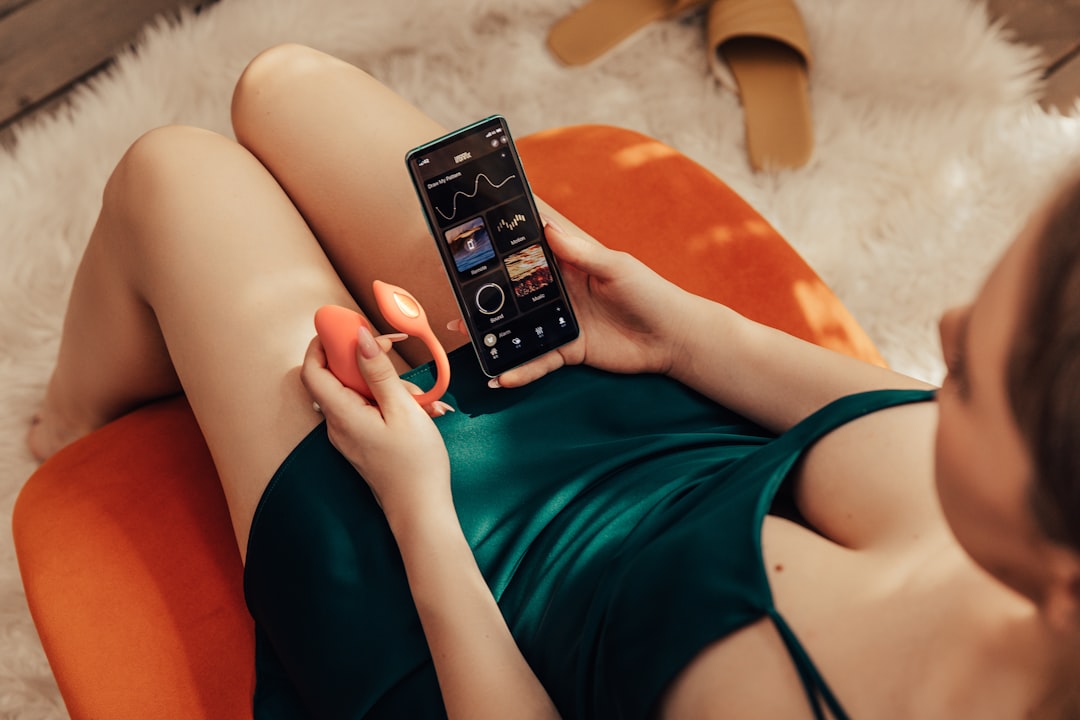
Nobody handed you a manual when you became a person with desires. That's exactly why we're here.
Using a dildo for the first time feels like a bigger deal than it actually is. Once you know what you're doing, it becomes one of the most reliable tools for understanding your own body. And honestly? Understanding your own body is the most powerful thing you can do for your pleasure life.
What Even Is a Dildo (And Why Does It Matter)?

A dildo is a non-vibrating insertable toy designed for vaginal or anal stimulation. It can be realistic or abstract in shape, large or petite, rigid or flexible. No motor, no batteries required.
This simplicity is kind of its superpower. You control everything: the angle, the depth, the speed, the pressure. There's no automated buzz to outpace what your body actually wants. Just you, your rhythm, and the toy responding to exactly how much force you give it.
The world of dildos is enormous. You'll find realistic dildos modeled after anatomy, smooth abstract shapes, curved G-spot-targeting toys, and even glass or metal options. Each one offers a genuinely different sensation. Beginners tend to do best with something smooth, mid-sized, with a gentle curve — less is truly more when you're just starting out.
Material matters more than most people realize. Silicone has become the gold standard in body-safe sex toys because it's non-porous, non-toxic, and easy to sterilize. Glass and stainless steel are also excellent options. What you want to avoid is anything labeled "jelly", "rubber", or suspiciously cheap materials that off-gas a strong plastic smell — these can harbor bacteria and may contain phthalates.
Before You Begin: The Prep That Actually Makes a Difference
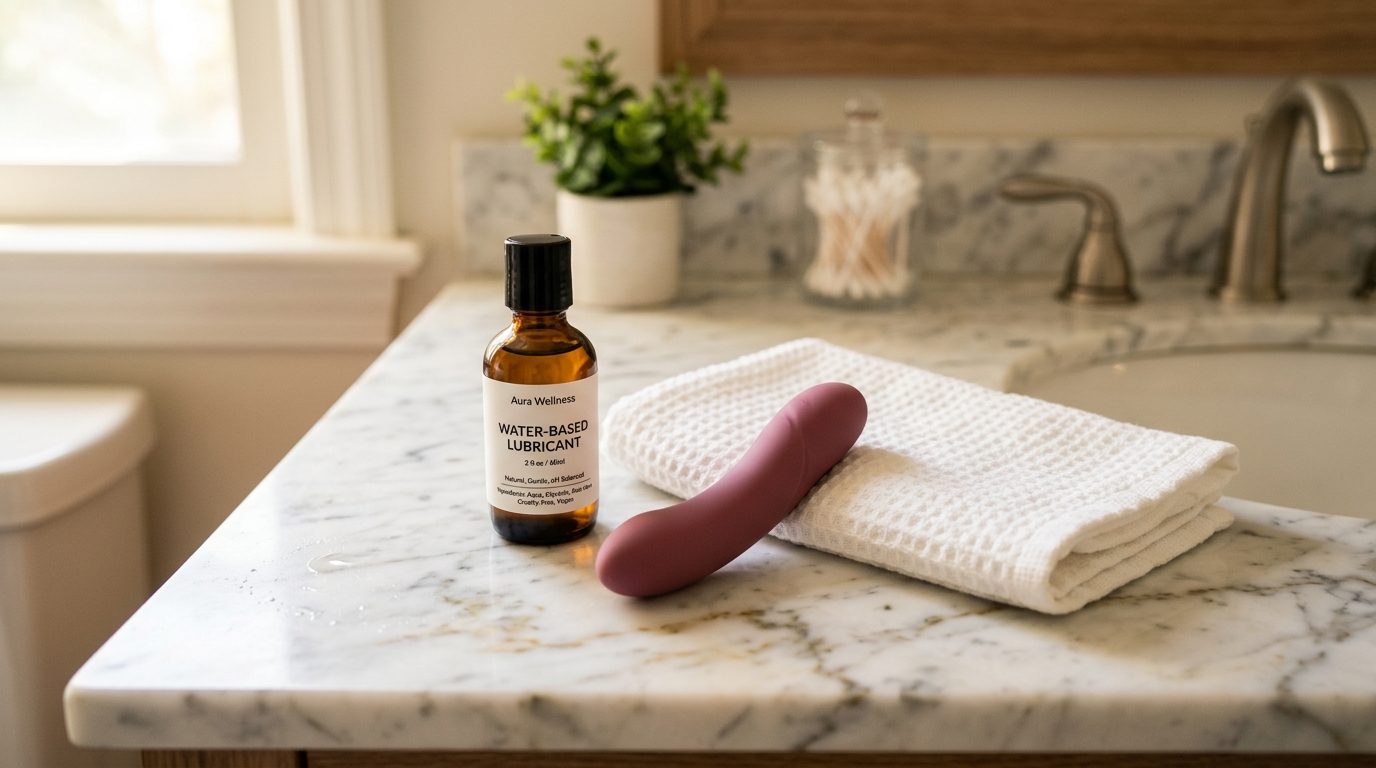
Prep isn't just practical — it's part of the experience.
Start with a clean toy. Wash it with warm water and mild soap, or use a dedicated toy cleaner. If your dildo is made of non-porous materials like silicone, glass, or stainless steel, you can even boil it briefly for full sterilization. This step isn't optional. It's just good self-respect.
Then there's lubricant, and this is where a lot of first-timers miss the memo. Your body can produce natural lubrication, but it's rarely enough on its own for comfortable penetration — especially if you're newer to it, slightly stressed, or just not in peak arousal yet. Using lube isn't a sign of a problem. It's smart. Think of it as silk sheets for your insides. Use a water-based lubricant if your dildo is silicone (silicone-based lubes can degrade silicone toy surfaces over time). For glass or metal dildos, you have more flexibility — any lube type works beautifully.
Your mental state matters too. Find a moment when you're genuinely relaxed and private. Low lights, a comfortable position, no pressure to perform or achieve anything specific. This isn't a race to an orgasm. It's exploration.
How to Use a Dildo: Step-by-Step for Beginners
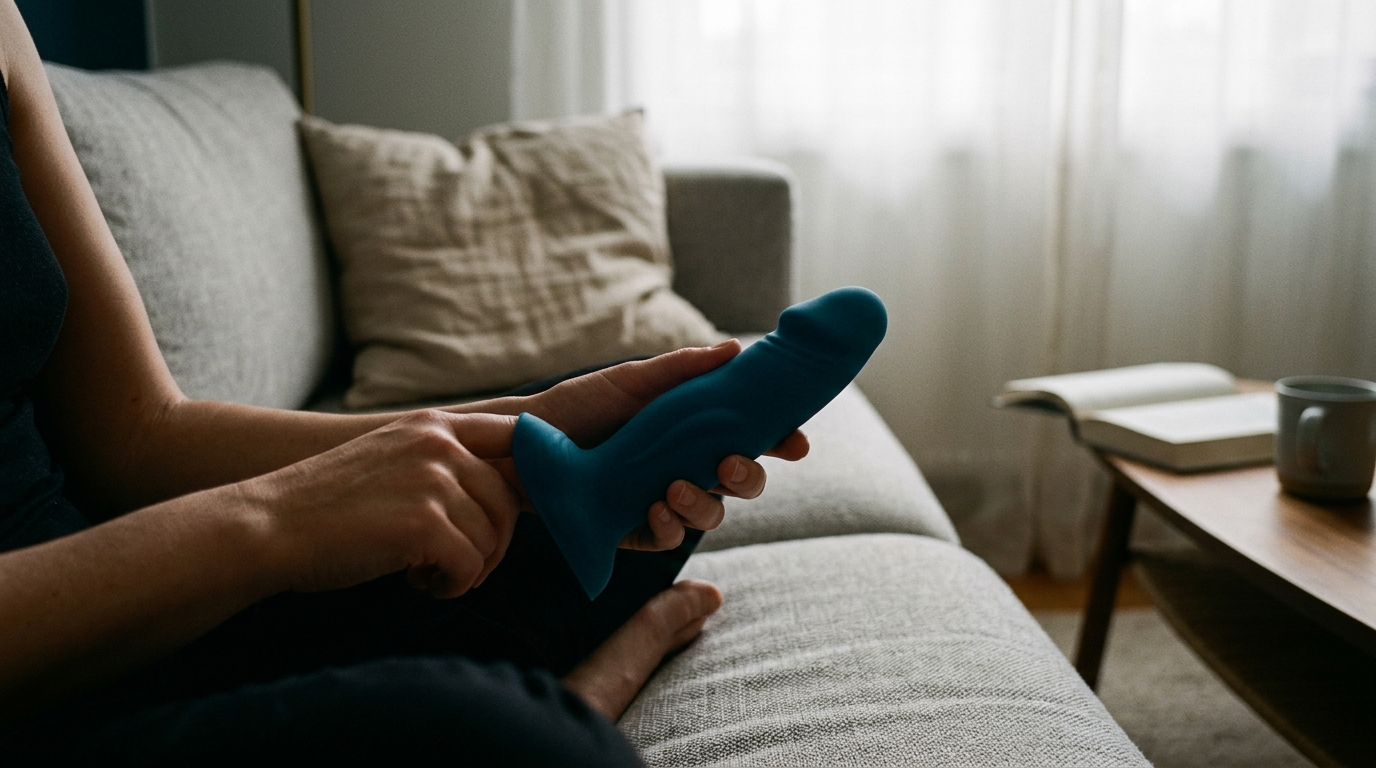
Start before you even touch the toy.
Arouse yourself first. Seriously. Take ten minutes. Watch something stimulating, use your hands, read something that makes your pulse quicken. Natural lubrication and internal tissue expansion happen when you're aroused, and this makes insertion significantly more comfortable. Trying to use a dildo when you're not yet turned on is like running before you've warmed up. Technically possible, but not a great idea.
Apply a generous amount of lube to both the toy and yourself. Don't be stingy here. You can always add more mid-session, but starting with too little is the most common rookie mistake. Hold the base of the dildo with a firm grip and press the tip gently to your entrance. Don't push immediately. Just breathe and let your body get used to the sensation of something being there. This moment of stillness is underrated. A lot of people rush past it, and it's actually where a lot of the magic lives.
Now move slowly. Shallow, gentle strokes to start. Let your body guide you deeper if and when it feels right. There should be a sense of pressure and fullness — not sharp pain. If you feel any pain, stop, add more lube, and try a smaller angle or shallower depth. Pain is information, not a milestone to push through.
Once you're comfortable, you can experiment with angle. Tilting the toy slightly forward (toward your belly button for vaginal use) can target the G-spot, which is that slightly ridged, spongier area on the front wall. Many people find curved dildos or the Gii Glow G-spot vibrator especially effective for this kind of targeted stimulation, even if you're only using it in manual mode.
For anal use, the process is the same but even slower and even more lube. The rectum doesn't self-lubricate at all, so there's truly no such thing as too much lube in this context. Always use a toy with a flared base for anal play — without one, retrieval becomes a very awkward trip to the ER.
Finding Your Rhythm: Techniques Worth Trying
There's no single "correct" dildo technique. That's genuinely the point.
Thrusting is the most intuitive move — in and out, varying depth and speed to find what builds sensation. But honestly, a lot of people find circular motions equally pleasurable. Rotating the toy gently while it's inside creates friction against different areas of the vaginal walls that straight thrusting often misses. Try both.
Pressure play is another underrated technique. Instead of movement, you apply steady, firm pressure in a specific direction — usually against the G-spot or the anterior wall — and simply hold it there. It sounds almost too simple, but this technique has been the key to G-spot orgasms for a lot of people who had tried everything else. Patience is genuinely the secret ingredient here.
Combining your dildo with clitoral vibrators is a game-changer for people who need dual stimulation to reach orgasm. Research consistently shows that the majority of people with vulvas require clitoral stimulation to climax, and penetration alone doesn't always do it. Pairing a dildo with external stimulation covers both bases simultaneously. The Lem clitoral massager was basically designed for exactly this kind of combination — its shape lets it sit comfortably against the body while your hands are occupied elsewhere.

You can also try using your dildo during partnered sex. For couples exploring penetration play together, having a partner guide the toy while you relax opens up an entirely different dynamic. It becomes about trust and communication as much as sensation. Speaking of which — if you and your partner want toys built specifically for shared use, exploring couples toys is worth your time.
Cleaning, Storage, and Toy Longevity
Always clean your dildo immediately after use.
For silicone, glass, and stainless steel: wash with warm water and unscented soap, or use a dedicated toy cleaner. Non-porous materials can also be boiled for 3-5 minutes or run through the dishwasher on the top rack (without detergent). Store toys in a clean cloth pouch or their original box — not loose in a drawer where they collect lint and press against other materials.
Never share a dildo between partners without thoroughly cleaning it first, or use a fresh condom on it between partners. This applies even between people in established relationships if STI status is shared. Bacterial cross-contamination is real and entirely preventable. Also never use the same toy for anal and vaginal play without cleaning in between.
Replace your toy if it develops cracks, discoloration, or a persistent odd smell. Even non-porous materials degrade eventually, and a compromised surface becomes porous — meaning it starts harboring bacteria no matter how well you clean it.
Choosing Your First Dildo: What to Actually Look For
Size is the question everyone agonizes over. Go smaller than you think you need.
A 4-5 inch insertable length and a 1-1.5 inch diameter is genuinely the sweet spot for most beginners. Bigger doesn't equal better when you're still learning what your body responds to. You can always size up later once you know what depth and girth feel good to you.
Shape is your next consideration. Smooth and slightly curved works well for most beginners. A gentle upward curve helps reach the G-spot without you needing to contort your wrist into unusual positions. Realistic textures (veins, ridges) add sensation but can feel overwhelming before you've established a baseline.
For material, body-safe silicone is your safest and most versatile starting point. It's soft, flexible, easy to clean, and widely available. If you're interested in temperature play — warming or cooling the toy before use — glass is extraordinary for that. Borosilicate glass is body-safe, non-porous, and the sensation of temperature contrast is unlike anything else. The Kalii glass G-spot dildo is a beautiful example of this done right, with a curve specifically designed for targeted internal stimulation.
Your budget matters too. Don't buy the cheapest thing you can find — material quality directly affects safety. But you also don't need to spend a fortune. A mid-range, reputable silicone toy from a trustworthy brand is the best value decision for a first dildo.
Common Beginner Mistakes (And How to Skip Them)
Skipping foreplay is the number one issue. Your body needs time to prepare — both mentally and physically.
Using too little lube is a close second. If you think you've used enough, add a bit more. This is one area where there is truly no such thing as overdoing it. Discomfort during penetration is almost always a lube issue or an arousal issue, and both are completely fixable.
Rushing through the experience is another common trap. First-time dildo use isn't about achieving a specific outcome. It's about learning. Some sessions will feel incredible. Some will feel a bit awkward and that is completely normal. Give yourself permission to take 30 minutes, go slow, and stop whenever you want without feeling like you "failed" at anything.
Finally — ignoring your own feedback. If a position isn't working, change it. If a specific depth feels bad, back off. Your body is the authority here, not what you've seen in adult content or read in a guide. This includes this guide. Treat everything as a suggestion until you've tested it on your own body.
If you're also curious about adding more intentional oral or manual stimulation to your broader pleasure practice, our guides on fingering techniques that actually work and how to give cunnilingus are worth a read alongside this one.
Wrapping Up
Here's the thing about dildos: they're just tools. Really good tools, but tools nonetheless. What makes the experience worthwhile isn't the toy itself — it's the attention you bring to your own body, the curiosity you let yourself have, and the permission you give yourself to enjoy it without shame.
You deserve pleasure that's informed, comfortable, and genuinely yours. Start slow, listen to your body, and don't take any of it too seriously. Pleasure is supposed to be fun.
Want to make your journey even more exciting? I've handpicked some amazing toys and goodies at Hello Nancy that'll add extra sparkle to your intimate moments. (Here's a little secret — use 'dirtytalk' for 10% off!)
Frequently Asked Questions
How do I use a dildo for the first time without it hurting?
Start with arousal first — your body needs time to prepare and expand before comfortable insertion. Use generous amounts of water-based lubricant, go slowly, and never push through sharp pain. Discomfort almost always means you need more lube or a shallower angle, not more force.
What size dildo should a beginner start with?
A 4-5 inch insertable length with a 1 to 1.5 inch diameter is ideal for most beginners. Erring on the smaller side lets you actually learn what sensations you enjoy before committing to a larger size.
What type of lube should I use with a silicone dildo?
Always use water-based lubricant with silicone toys. Silicone-based lubes can break down the surface of silicone toys over time, creating microscopic pores that harbor bacteria. For glass or metal dildos, any lubricant type — including silicone-based or oil-based — is compatible.
Can you use a dildo for anal play as a beginner?
Yes, but with two non-negotiable rules: use a toy with a flared base (so it cannot get lost internally), and use significantly more lube than you think you need because the rectum produces no natural lubrication. Go slower than you think necessary and stop at any sharp discomfort.
How do you clean a dildo properly after use?
Clean immediately after use with warm water and unscented soap, or a dedicated toy cleaner. Non-porous materials like silicone, glass, and stainless steel can also be boiled for 3-5 minutes for full sterilization. Store in a clean cloth pouch and replace the toy if it develops cracks or persistent discoloration.
What is the safest material for a beginner dildo?
Body-safe silicone is the most recommended material for beginners. It's non-porous, free of phthalates, flexible, and easy to sterilize. Borosilicate glass and stainless steel are also excellent choices. Avoid jelly, rubber, or PVC toys, which can be porous and may contain harmful chemicals.
How do I find the G-spot with a dildo?
Insert the toy 2-3 inches and tilt it slightly toward your belly button. The G-spot is a slightly textured, spongier area on the front vaginal wall. Applying steady pressure rather than fast thrusting tends to produce the strongest response. A curved dildo makes this significantly easier to reach without straining your wrist.
Is it safe to use a dildo every day?
Yes, as long as the toy is clean, properly lubricated, and you're not experiencing irritation or soreness. Your body will usually let you know if it needs rest. If you notice persistent soreness or irritation, give yourself a few days off and reassess your lube usage or technique.
Can I use a dildo with a partner?
Absolutely. Using a dildo with a partner can be a deeply intimate experience — one person guides the toy while the other simply receives. It's a great way to introduce penetration play into a shared context. Just clean the toy thoroughly between uses and never switch between anal and vaginal use without washing first.
Do I need to be aroused before using a dildo?
Yes, and this is more important than most beginner guides emphasize. Arousal causes the vaginal canal to lengthen and expand, and natural lubrication increases — both of which make insertion dramatically more comfortable. Spend at least 10 minutes on arousal before attempting penetration, even if you're also using external lube.