Add $12.00 to get Free Gift



Your clothes come off just fine. It's the guard that refuses to budge.
That's the quiet, uncomfortable truth about fear of sexual vulnerability. It's rarely about the physical act itself. It's about what happens when another person gets close enough to actually see you. Not your body. You. And for so many of us, that's the part that sends us running.
Let's actually talk about this. Because most of us carry this fear around like it's shameful to have, which only makes it heavier.
What Fear of Sexual Vulnerability Actually Means

Sexual vulnerability is the experience of being emotionally exposed during or around intimacy. It's not just nudity. It's letting someone witness your desire, your sounds, your need, your responses. Basically every part of you that you'd normally keep tightly under wraps.
The fear part kicks in when that exposure feels genuinely dangerous.
Research professor Brené Brown, who has spent over a decade studying shame and vulnerability, found that initiating sex ranks among the most commonly cited examples of vulnerability for people across genders. "There can be no intimacy without vulnerability," she wrote. And yet, vulnerability is precisely what most of us have been taught to suppress since childhood. So we arrive at adulthood wanting connection desperately and terrified of the exact thing that makes it possible.
That's not a personal flaw. That's a setup.
Where This Fear Actually Comes From

Here's the thing about sexual fear. It almost never starts in the bedroom.
It usually starts much earlier. A parent who reacted to your body with shame or silence. A partner who once laughed at the wrong moment. A culture that told you your desire was too much, your body wasn't right, or that wanting pleasure made you weak. These experiences compound quietly, and by the time you're in bed with someone you actually like, you're carrying all of it without realizing it.
Sexual shame is one of the strongest predictors of avoidance in romantic relationships. A 2023 study published in the Journal of Assessment and Research in Applied Counseling found that shame proneness and fear of intimacy together significantly predicted sexual avoidance in couples (Morales, L., et al., 2023). Shame doesn't just make sex uncomfortable. It makes it feel risky in a bone-deep way.
For some people, the fear shows up as avoidance. For others, it shows up as performance. Staying busy, staying in control, keeping sex technically happening but emotionally distant. Both are ways of protecting yourself from being truly seen.
The Difference Between Physical and Emotional Exposure
Being physically naked is easy compared to being emotionally present.
Physical nakedness is a fact. Emotional nakedness is a choice, and that distinction matters enormously. You can have sex while staying completely behind glass. Many people do it for years. You stay technically present but emotionally elsewhere. You perform instead of feel. You focus on your partner's experience as a way to avoid your own.
This isn't dishonesty. It's protection. But it also means you never actually get what intimacy promises: the feeling of being known and wanted at the same time. That feeling requires you to show up without the armor on. Which, yes, is terrifying. But also the only path to the good stuff.
How Fear of Sexual Vulnerability Shows Up in Real Life

Recognizing the pattern in yourself is actually the hardest part. So let's make it concrete.
You might be experiencing fear of sexual vulnerability if you find yourself deflecting with humor right when things get real. Or if you notice you go somewhere else mentally during sex. Or if you feel a vague panic when a partner looks at you too directly. Or if initiating feels almost impossible because it means admitting you want something.
Some people keep their emotional distance by never quite letting sex be slow. Fast means less time to be witnessed. Others avoid certain positions or acts not because of physical discomfort but because they feel too exposed. Too revealing. Too much.
And then there's the aftermath. The way some people feel a sudden urge to leave, scroll their phone, or turn the lights back on immediately. Post-sex vulnerability is its own beast. That moment when the heat clears and you're still there, still human, still wanting connection. That can feel just as scary as anything that happened before.
How It Affects Your Partners Too
Vulnerability fear doesn't just affect you internally. It ripples outward.
A partner who genuinely wants closeness will feel the distance, even if they can't name it. They might read your emotional absence as rejection, your deflection as disinterest, your walls as signals that they've done something wrong. This creates a frustrating cycle where both people are trying but the connection keeps slipping through. Understanding that this pattern exists, and that it has a name, is the first step toward interrupting it.
If you're exploring this with a partner right now, the Hello Nancy blog has a genuinely helpful read on how to make time for your partner that touches on the often-overlooked emotional infrastructure that makes intimacy feel safe.
Building Sexual Safety: What Actually Helps
Therapy is genuinely useful here. Not because something is wrong with you, but because fear of sexual vulnerability is often layered, and having a professional help you trace the roots can save years of confusion. Sex-positive therapists and somatic practitioners work specifically with this kind of thing, and finding one who specializes in intimacy is worth the search.
But therapy isn't the only path.
Sometimes the work is much simpler and much harder at the same time. It's learning to stay in your body instead of floating out of it. It's practicing saying what you want out loud, even once, even imperfectly. It's choosing to let a partner see your face instead of burying it. Small acts of staying present build a tolerance for vulnerability the way exposure therapy works. Slowly, then suddenly.
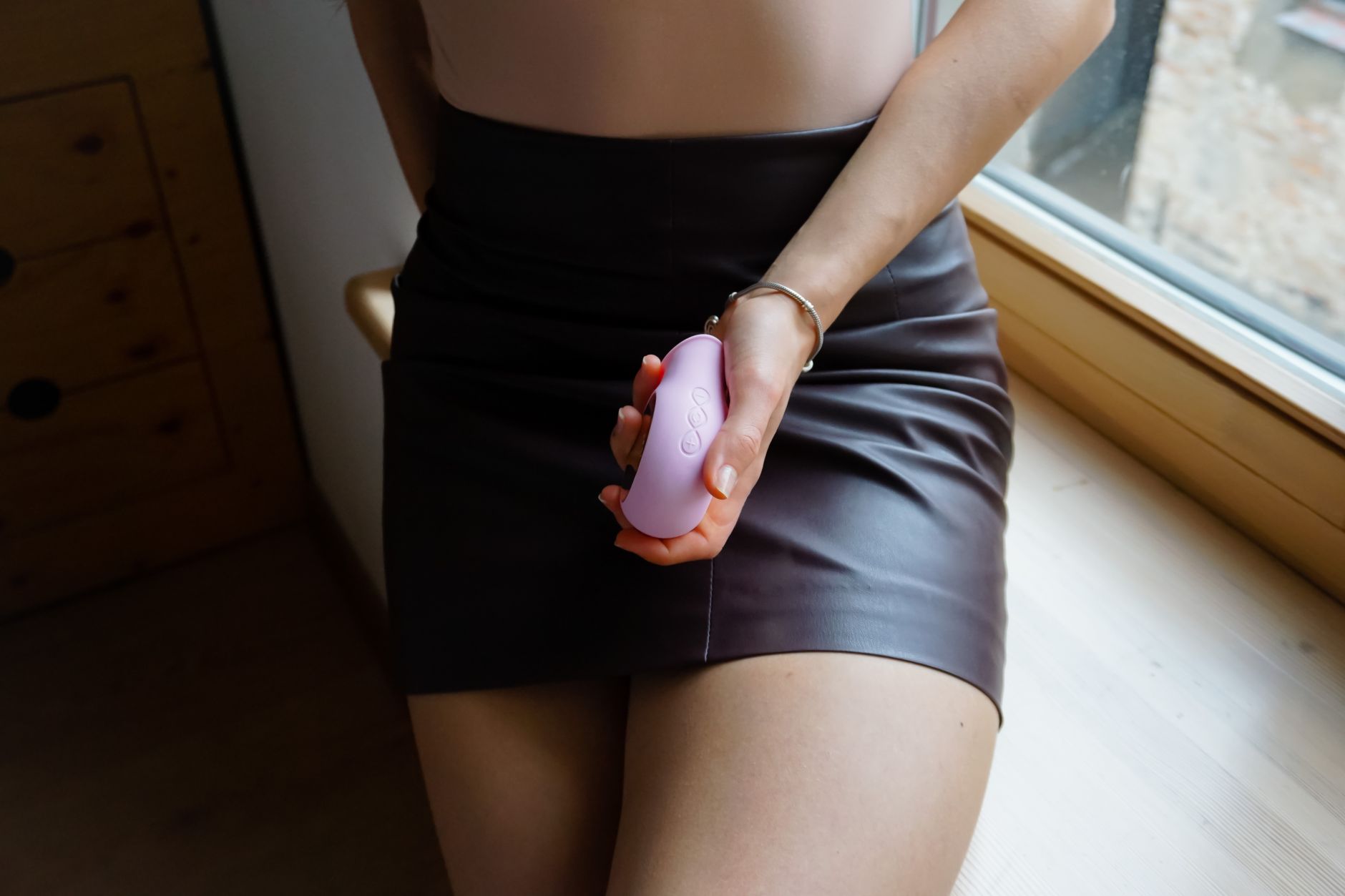
Solo exploration is also a legitimate, underrated part of this journey. When you get to know your own body without an audience, you build a kind of internal familiarity that makes shared intimacy less foreign. Clitoral vibrators and vibrators for women are tools that can help you learn what actually feels good to you, separate from performance or expectation. That self-knowledge becomes a quiet source of confidence when you're with someone else.
The Role of Communication in Reducing Fear
Talking about sex before you have it is genuinely revolutionary for anxious people.
When you establish preferences, boundaries, and even just general vibes with a partner ahead of time, you remove some of the unpredictability that fear feeds on. You're no longer going into the unknown. You're entering a space you've partially mapped together. That doesn't kill spontaneity. It creates a container that makes spontaneity feel safer, which is the whole point.
If starting that conversation feels impossible, you can begin somewhere adjacent. Talk about what you enjoyed last time. Ask what your partner is curious about. Read something together about adventurous sex positions for couples and discuss what resonates. The conversation doesn't have to be clinical to be useful.
Using Toys as Bridges, Not Distractions
This one surprises people, but stay with me.
Introducing something new into intimacy, like couples toys, can actually shift attention away from internal self-monitoring and onto shared curiosity. When both people are navigating something new together, the focus naturally moves outward. That curiosity and lightness can lower the emotional temperature just enough for genuine connection to slip in through the side door. It's not a bypass. It's a bridge.
Something like the Berri tapping clitoral massager is designed with a gentle, approachable sensation that lets you ease into pleasure without pressure. Used together or alone, it's about giving yourself permission to receive something good.

That permission is, ultimately, what overcoming fear of sexual vulnerability is really about. Not fearlessness. Just the willingness to show up anyway.
Bottom Line
Being sexually vulnerable doesn't mean being reckless. It means being real. It means letting intimacy be intimate, which sounds obvious until you realize how rarely most of us actually do it.
The fear makes complete sense given everything you've experienced. But it's also keeping you at a distance from something that could genuinely nourish you.
You deserve to be seen. The messy, wanting, fully present version of you. Not the curated, controlled, safely-behind-glass version. That person deserves pleasure too.
Want to make your journey even more exciting? I've handpicked some amazing toys and goodies at Hello Nancy that'll add extra sparkle to your intimate moments. (Here's a little secret. Use 'dirtytalk' for 10% off!)
Frequently Asked Questions
What is fear of sexual vulnerability and is it common?
Fear of sexual vulnerability is the anxiety or avoidance that arises when intimacy requires emotional exposure, not just physical. It's extremely common and often goes unrecognized because people assume sex-related anxiety is purely about performance or anatomy. In reality, most of it comes from a fear of being truly seen.
Can you be afraid of intimacy but still want sex?
Absolutely, and this is one of the most confusing parts of this experience. You can crave physical closeness while being deeply afraid of the emotional exposure that comes with it. Many people have sex regularly while staying emotionally disconnected as a protective mechanism.
How does childhood affect fear of sexual vulnerability in adults?
Early experiences with shame, emotional unavailability, or boundary violations shape how safe vulnerability feels in adulthood. If expressing need or desire was met with ridicule, silence, or punishment as a child, your nervous system learns to guard against that exposure. That learning doesn't disappear automatically when you grow up.
What's the difference between sexual anxiety and fear of vulnerability?
Sexual anxiety often focuses on performance: Will I be good enough? Will my body respond correctly? Fear of sexual vulnerability is broader and deeper. It's about being emotionally exposed and witnessed during intimacy. The two frequently overlap, but addressing the vulnerability layer tends to help the performance anxiety as well.
How can I become more sexually vulnerable with my partner?
Start small and outside the bedroom. Practice expressing desire or preference in low-stakes moments. During intimacy, try staying present in your body by focusing on sensation rather than observation. Communicating openly about what feels good, or even what feels scary, is one of the most effective tools you have.
Does fear of sexual vulnerability affect long-term relationships?
Yes, significantly. Over time, emotional distance during sex can create a quiet disconnect that both partners feel but may not be able to name. One person may feel repeatedly rejected while the other feels trapped by their own walls. Addressing it honestly, ideally together, is what tends to shift things.
Can therapy help with fear of sexual vulnerability?
Yes. Sex-positive therapists, somatic therapists, and trauma-informed counselors work specifically with intimacy-related fear. Therapy helps you trace where the fear originated, understand its current function, and gradually build tolerance for the emotional exposure that intimacy requires. It's one of the most effective investments you can make for your relationship and your own wellbeing.
Is it normal to feel like leaving immediately after sex?
Very common, and it's directly connected to vulnerability. The post-sex window is one of the most emotionally exposed moments two people can share. If vulnerability feels dangerous, your nervous system may interpret that openness as a threat and push you toward escape. Noticing this pattern is already a meaningful step toward changing it.