Add $12.00 to get Free Gift



Your body's been holding out on you. Not because it's cruel, but because nobody thought to introduce you.
Most of us grew up learning that the clitoris and G-spot were the headline acts. But tucked deeper, quieter, and further in, there's a zone that researchers have been quietly fascinated by since the late 1980s. The A-spot. And once you know where to find it, you may never look at deep pleasure the same way again.
What Exactly Is the A-Spot?

The A-spot is short for the anterior fornix erogenous zone, sometimes called the AFE zone or the "deep spot." It sits on the front wall of the vagina, between the G-spot and the cervix, roughly four to five inches inside. Think of it as the G-spot's quieter, deeper neighbor.
Dr. Chua Chee Ann, a Malaysian gynecologist, began researching this zone in the late 1980s. His 1997 study found that direct stimulation of the AFE zone produced significant increases in vaginal lubrication and arousal, sometimes almost immediately, even in people who had previously experienced dryness during penetrative sex. That's not a minor footnote. That's a potential game-changer for millions of people.
Soft, smooth, and tucked away, the A-spot doesn't have the firm, ridged texture of the G-spot. It's subtler. Which might be exactly why it's been so overlooked.
How to Actually Find the A-Spot

Let's get practical, because this is where most guides get vague and unhelpful.
The A-spot sits deeper than the G-spot, further toward the belly button side of the vaginal front wall. To reach it with fingers, you'll typically need two fingers inserted palm-up, curling toward the front wall, and then moving deeper than you'd go for G-spot stimulation. The key is applying gentle, consistent pressure rather than fast stroking. You're looking for that smooth patch of tissue just before the cervix.
Positions matter a lot here.
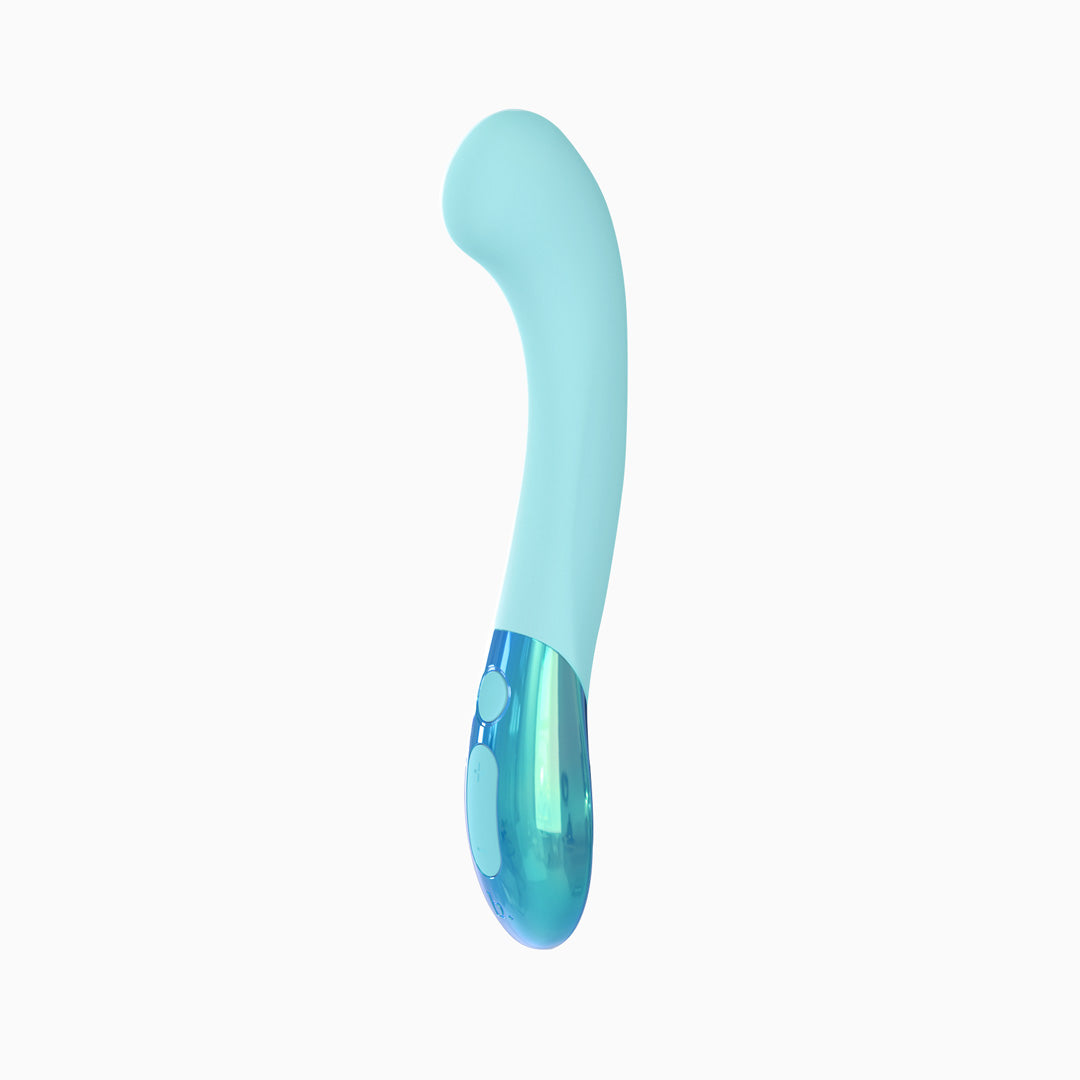
Deep penetration angles tend to be more effective for A-spot stimulation. Positions like doggy style, the coital alignment technique variation with deeper thrusting, or a partner using a G-spot vibrator with a curved tip angled toward the front wall all work beautifully. The Gii Glow by Biird, with its specifically curved design, is genuinely useful here because its angle targets that deeper front-wall territory without requiring contortion. What you'll likely notice first isn't a firework. It's a warmth, a fullness, a subtle "oh, that's something" sensation that builds slowly and deeply.
If you've ever read our piece on face-down positions for deep internal stimulation, some of those same angles apply here. Deep matters. Depth is the point.
A-Spot vs G-Spot: What's the Actual Difference?
People often conflate these two, and honestly, that confusion is understandable.
The G-spot sits roughly two to three inches inside the vagina on the front wall. It has a slightly ridged or spongy texture when aroused. The A-spot sits deeper, four to five inches in, and has a smoother feel. Both are on the same front wall, just at different depths. Think of them as two stops on the same train line, not two separate destinations.
The sensations they produce also differ. G-spot stimulation often creates that familiar "I might need to pee but actually I really don't" pressure. A-spot stimulation tends to feel more like a warm, spreading fullness. Less urgent. More oceanic. And for many people, A-spot stimulation produces lubrication faster and more reliably than G-spot stimulation alone, which is worth paying attention to if arousal or dryness has ever felt like a barrier.
Why Most People Have Never Found It
Short answer: it requires depth, patience, and the right angle, and nobody taught us to look.
Most sexual exploration, especially early on, focuses on easier-to-reach zones. The clitoris is external and obvious. The G-spot is a few inches in. The A-spot demands more. It needs deeper penetration or longer fingers or a curved toy designed specifically to reach that distance. Casual, hurried sex rarely creates the conditions for A-spot stimulation. This spot rewards slowness. It rewards intention. It rewards the kind of sex where you're actually paying attention to what your body is telling you, not just racing toward an endpoint.
Speed is the enemy here.
If you or your partner tend to rush through internal stimulation, the A-spot will stay elusive. This is a zone that opens up during longer, more deliberate sessions. Think of it as a reward for presence, not performance. Exploring vibrators for women with longer reach and curved heads can make this kind of exploratory session much more accessible, especially if finger reach is a limiting factor.
Tips for A-Spot Stimulation That Actually Work
Arousal first. Always. The vaginal canal lengthens and the cervix shifts when the body is fully aroused, making the A-spot more accessible. Skipping foreplay and going straight for depth is like trying to start a car with no fuel.
Use a curved toy. Straight toys are not your friend here. You need that upward curve to reach the front wall at depth. Many people find that clitoral vibrators used simultaneously during internal stimulation amplify the A-spot response dramatically, because the whole pelvic region becomes more sensitized. Pairing external and internal stimulation together tends to unlock responses that neither achieves alone.
Communicate. If you're exploring with a partner, tell them what you feel. "More pressure," "a little deeper," "stay right there" are complete, useful sentences. A partner who knows what they're doing with verbal feedback is worth ten positions from any listicle.
Go slow with the pressure. The A-spot responds to sustained, gentle pressure more than rapid thrusting. Think holding rather than moving. Once you find the spot and feel that warmth begin, maintaining consistent contact often matters more than varying the motion.
And if you want to explore solo, a quality toy designed for deep internal reach paired with external clitoral stimulation gives you full control of the angle, depth, and pressure without coordination overhead. You can discover what works for your body before bringing a partner into the equation.
What an A-Spot Orgasm Actually Feels Like
Here's the honest truth: not everyone has a distinct "A-spot orgasm" that feels categorically different from other orgasms.
For some people, A-spot stimulation contributes to a deeper, more full-bodied orgasmic experience rather than a completely separate event. For others, particularly those who have difficulty reaching orgasm through G-spot or clitoral stimulation alone, A-spot stimulation opens a genuinely new pathway. Dr. Chua's research noted that many participants reported feeling aroused and lubricated within minutes of targeted AFE stimulation, even those who hadn't responded strongly to other internal stimulation before. That kind of responsiveness matters.
The orgasm, when it comes through A-spot involvement, tends to be described as deeper and more internal. Less "peak" and more "wave." Less sharp and more long. It's the kind of pleasure that makes you understand why some people talk about the body having depths you haven't fully mapped yet.
You deserve to map yours.
Wrapping Up
The A-spot isn't a myth, a trend, or a consolation prize for people who haven't found the G-spot. It's a real, responsive erogenous zone that millions of people carry around without ever knowing it's there. Finding it takes depth, patience, the right angle, and permission to actually slow down and explore. If you've ever felt like your body still had something left to discover, this might be exactly the invitation you were waiting for.
Your pleasure doesn't have a map you finished drawing at twenty. It's still being written.
Want to make your journey even more exciting? I've handpicked some amazing toys and goodies at Hello Nancy that'll add extra sparkle to your intimate moments. (Here's a little secret, use 'dirtytalk' for 10% off!)
Frequently Asked Questions
Where exactly is the A-spot located inside the vagina?
The A-spot, or anterior fornix erogenous zone, sits on the front wall of the vagina approximately four to five inches inside, between the G-spot and the cervix. It's deeper than the G-spot and has a smoother texture. You'll know you're in the right area when gentle pressure there creates a warm, full sensation rather than the more urgent G-spot pressure.
Can you reach the A-spot with fingers alone?
Yes, but it depends on finger length and the body in question. Two fingers inserted palm-up, curved toward the front wall, and pushed deeper than you'd go for G-spot stimulation can work. Many people find a curved toy easier and more reliable for consistent A-spot reach, especially during solo exploration.
Does A-spot stimulation actually increase lubrication?
Research by Dr. Chua Chee Ann found that stimulating the anterior fornix erogenous zone produced significant increases in vaginal lubrication, sometimes within minutes, even in participants who had experienced dryness during penetrative sex. So yes, the evidence suggests it can be particularly helpful for arousal and natural lubrication.
What's the difference between an A-spot orgasm and a G-spot orgasm?
G-spot orgasms often feel more urgent and pressurized, sometimes described as a building, intense peak. A-spot orgasms, when they occur, tend to feel deeper, more spread-out, and wave-like rather than sharp. Not everyone experiences a clearly distinct A-spot orgasm, but many report that A-spot involvement makes orgasms feel more full-bodied and internal.
What sex positions are best for A-spot stimulation?
Positions that allow for deeper penetration and an angle toward the front vaginal wall work best. Doggy style, the receiving partner on top leaning slightly forward, and face-down positions all create favorable angles. Using a curved internal toy in any position also helps target that deeper front-wall zone precisely.
Is the A-spot the same as the deep spot?
Yes, the A-spot and the deep spot are the same area, just different names for the anterior fornix erogenous zone. Some people also call it the AFE zone. The various names all refer to the same region between the G-spot and the cervix on the front vaginal wall.
Why is the A-spot harder to find than the G-spot?
Simply because it's deeper. The A-spot requires more reach, fuller arousal for the vaginal canal to lengthen enough, and the right angle. Most casual or hurried sexual encounters don't create the physical conditions needed to consistently reach it. Slow, intentional exploration with adequate arousal and the right toy or position makes finding it far more likely.
Do all people with vaginas have an A-spot?
The anterior fornix is an anatomical structure present in all vaginas, so yes, the zone exists universally. However, sensitivity varies from person to person. Some find A-spot stimulation intensely pleasurable immediately, others need time and repeated exploration to build sensitivity there, and some simply respond more strongly to other erogenous zones. That variation is completely normal.