Add $12.00 to get Free Gift


Your body's been telling you this all along. You just didn't have the words for it. That involuntary gasp right before climax, the way you instinctively hold your breath at peak intensity. it's not random. Your breath and your orgasms are in a deep, ongoing conversation.
Most of us were never taught to actually participate in that conversation.
Here's what nobody covers in sex-ed, relationship advice columns, or even most couples' therapy sessions: the way you breathe during sex doesn't just reflect your arousal. It actively shapes it. Conscious breathing can intensify sensation, slow down that frantic rush toward the finish line, and open up pleasure your nervous system usually keeps gated behind a wall of tension and distraction. You're not missing chemistry or technique. You might just be missing breath.
Why Your Nervous System Is Running the Show

Sex is fundamentally a nervous system event. Your autonomic nervous system operates in two modes: sympathetic (fight-or-flight) and parasympathetic (rest-and-pleasure). Orgasm requires you to drop into that parasympathetic state. The problem is that stress, distraction, performance anxiety, and even the excitement of wanting it badly can keep yanking you back toward fight-or-flight, cutting sensation off before it fully builds.
Breath is the fastest lever you have to shift between those two states.
When you breathe slowly and deeply through the belly rather than taking shallow chest sips, you activate the vagus nerve. This is the parasympathetic superhighway running through your body, regulating your heart rate, relaxing your muscles, and signaling to every organ that the threat is over and it's safe to open up. Research on diaphragmatic breathing shows it reliably increases parasympathetic activity and decreases sympathetic dominance. In plain terms: your body gets the message that it's safe to feel good. A body that feels safe has fuller, deeper, more expansive orgasms.
Sex researcher and educator Nan Wise, Ph.D., whose work maps the brain during sexual response, notes that the key inhibitor of peak pleasure is mental distraction and physiological tension. both things controlled breath directly addresses.
The Breath-Hold Trap (And Why It's Killing Your Climax)

Here's the sneaky thing about arousal. Around 60 to 80 percent of people experience some form of dysfunctional breathing during daily life, and that pattern gets dramatically worse during sex. When sensation peaks, almost everyone holds their breath reflexively. It feels instinctive. Natural. But it actually creates a ceiling on what you can feel.
Holding your breath triggers a micro-burst of sympathetic nervous activation. The same response your body uses to brace for impact. Right when you need to open and expand, your body is essentially slamming the brakes. The orgasm you get is real, but it's a fraction of what it could be if you stayed with the breath instead of cutting it off.
This is the breath-hold trap.
"Deeper breathing can help us achieve deeper, stronger and longer-lasting orgasms," says sex educator Kim Anami, a sentiment echoed across breathwork-focused practitioners who work specifically at the intersection of somatics and sexuality. The shift isn't complicated. It's just counter-instinctive, which means you need to practice it outside of the heat of the moment before it becomes second nature.
How to Actually Practice Breathwork for Better Orgasms

The good news is that this is genuinely learnable. You don't need a retreat, a yogi, or a two-hour class. You need about ten minutes a few times a week and a willingness to get slightly bored before it gets brilliant.
Start with basic belly breathing on your own. Lie down, place one hand on your chest and one on your belly, and breathe in through your nose for four counts. Let your belly rise. Hold gently for two counts. Exhale slowly through your mouth for six to eight counts. The exhale should be longer than the inhale. That ratio activates the vagus nerve and drops you into parasympathetic mode faster than almost anything else.
Repeat for five to ten minutes. Notice what happens in your pelvis. Many people report a warm, pulsing sensation moving into the genitals just from this exercise alone, which tells you a lot about how starved that region is for oxygenated, parasympathetically-driven blood flow.
Once that feels natural, try it during solo pleasure. This is where it gets genuinely interesting.
Use clitoral vibrators or whatever tool you love, but consciously match your breath to your arousal instead of letting it spike and collapse on its own. As sensation builds, breathe into it. Keep the belly moving. When you feel the instinct to hold your breath, that's your cue to exhale instead. Long, sighing, releasing exhales. Let sound come with it if it wants to. You'll likely notice the pleasure spreading wider through your body rather than concentrating in one point and then vanishing.
Circular Breathing: The Advanced Move

Circular breathing is the technique that TikTok wellness creators have been buzzing about, and for once, the hype is actually grounded in real physiology. The basic principle is breathing without pauses between inhale and exhale. a continuous loop that keeps the body in a sustained state of expanded sensation.
It sounds simple. In practice, it's genuinely trippy.
By removing the breath-hold pause, you prevent your body from micro-resetting sympathetically during arousal. The sensation has nowhere to go but up, or rather, out. Many practitioners describe experiencing full-body orgasms using this technique, where pleasure radiates from the genitals into the chest, limbs, and scalp rather than concentrating and releasing in one sharp peak. It's not better or worse than a traditional orgasm. It's just radically different, and knowing both options exist is, I think, kind of life-changing.
You can start exploring circular breathing during solo or partnered sex by simply practicing the no-pause loop during meditation first. Ten minutes of circular nose breathing before a session primes your system beautifully. From there, maintain it during foreplay and let it carry into whatever comes next.
Bringing Breath Into Partner Sex

Breathwork in solo play is transformative. Breathwork with a partner? That's a whole other dimension of connection.
Synchronized breathing with a partner creates what researchers call physiological coherence. When two people intentionally match their breathing rhythm, heart rate variability aligns, nervous systems attune, and the emotional sense of intimacy deepens measurably. You don't need to be in sync every second. Even three to five minutes of intentional shared breathing before sex changes the entire texture of what follows.
Try this: face your partner and breathe together for a few minutes before you do anything else. Inhale together, exhale together, no rushing. Let your bodies settle into the same rhythm. Many people report that this kind of intimate connection ritual creates more emotional safety than even verbal communication alone.
From there, you can introduce couples toys designed to layer stimulation while maintaining that breath-conscious presence. The goal isn't to overload the senses. It's to stay grounded in the body and let the breath carry the pleasure further than tension alone ever could.
The Mind-Body Link Nobody Explains Properly
Most sexual pleasure advice focuses on technique. The angle, the pressure, the toy, the position. And yes, all of those things matter. But they're working at the surface of a much deeper system.
When your mind is busy judging, planning, or worrying, your body responds by narrowing sensation. It's not psychosomatic weakness. It's basic neuroscience. The prefrontal cortex, your planning and judgment center, competes with the limbic system for resources during sex. When one ramps up, the other dims. Breathwork is one of the most effective tools for quieting prefrontal chatter and letting the limbic system, the center of emotion and pleasure, run the show.
This is why vibrators for women and people with vulvas work even better when paired with mindfulness. The toy handles stimulation. The breath handles presence. Together, they create a feedback loop that builds sensation in a way that distracted, tension-filled sex simply cannot replicate.
Researchers in a study published in the Medical Hypotheses journal (Arora, 2003) found that altered breathing patterns during sex, including the natural hyperventilation that builds before orgasm, play a measurable role in intensifying the experience by shifting brain chemistry and oxygen flow. Mindful breathing essentially means learning to work with that process consciously rather than accidentally.
A Simple Pre-Sex Breathwork Ritual
You don't need to make this complicated or ceremonial. Think of it as a one-minute transition from the noise of your day to the body you actually live in.
Sit or lie comfortably. Take five slow belly breaths, making the exhale twice as long as the inhale. On the last exhale, consciously release tension from your jaw, shoulders, and pelvic floor. Yes, your pelvic floor. Most people carry chronic tension there without ever realizing it, and a tight pelvic floor is one of the quieter culprits behind muted orgasms. Then set a gentle intention: not to perform or achieve, but simply to feel.
That's it.
Doing this consistently before solo or partnered sex for two to three weeks tends to produce noticeable shifts. People describe orgasms that feel more spread out, more emotional, more present. Some describe sensations they'd never experienced before, not because anything changed externally, but because they finally stopped holding their breath through the best part.
The Pelvic Floor Connection
Your pelvic floor and your diaphragm move together. When you inhale, the diaphragm drops and the pelvic floor gently descends. When you exhale, both rise. This is not a wellness metaphor. It's anatomy. Which means that every breath you take is already massaging and toning the very muscles most involved in orgasm.
Deep, diaphragmatic breathing trains your pelvic floor to be both stronger and more responsive. A pelvic floor that knows how to release as well as contract gives you access to a much wider range of orgasmic sensation. Think of it like learning the full keyboard instead of just playing three notes.
If you're curious about adding internal stimulation to your breathwork practice, something like the Gii Glow G-spot vibrator pairs beautifully with slow, intentional breath cycles, because internal stimulation responds dramatically to pelvic floor relaxation. The more you exhale and release, the more sensation becomes available.
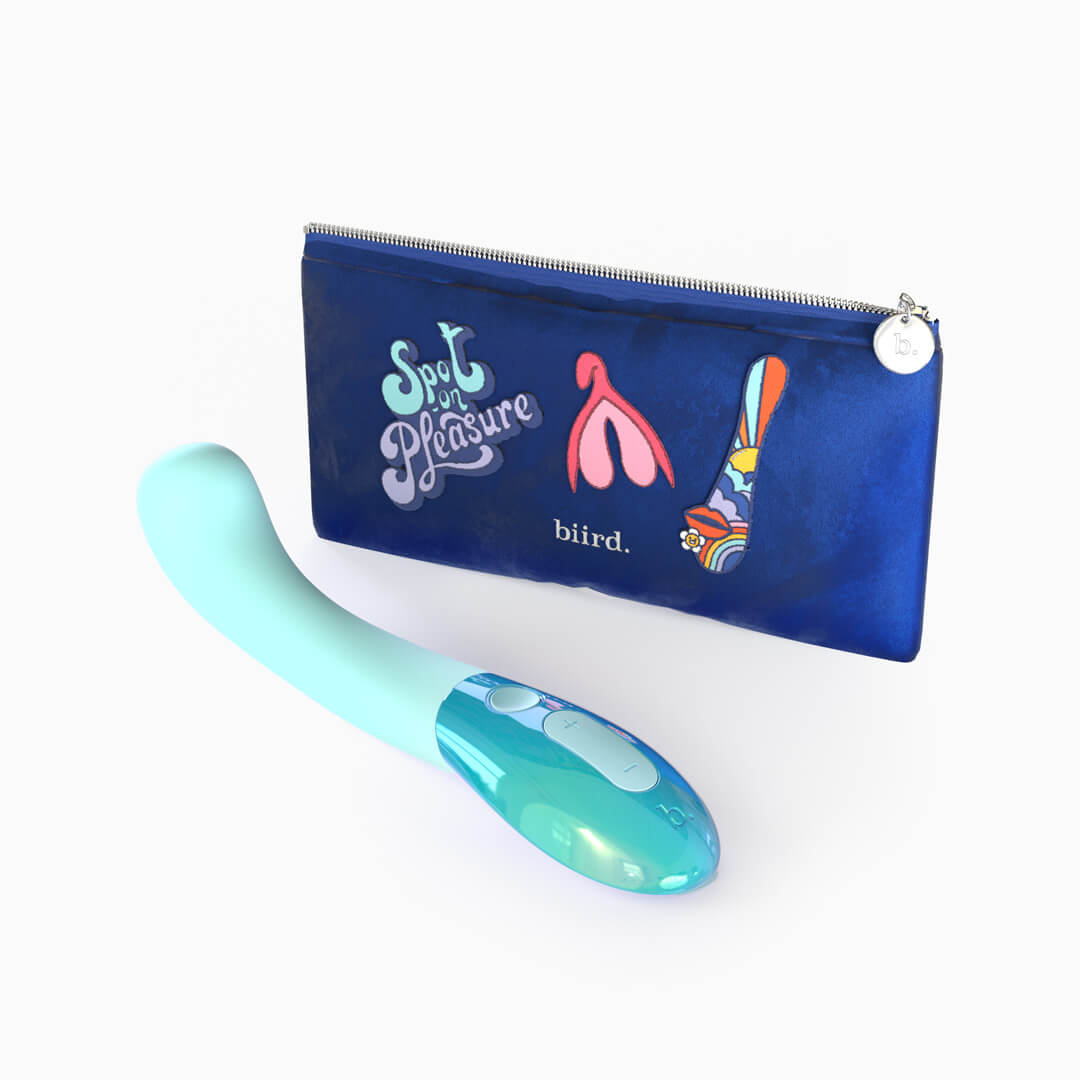
And here's a small thing worth saying: none of this requires a partner, a specific body type, a particular age, or any history of great orgasms. This is genuinely for everyone. Your nervous system is the same as anyone else's. The breath works.
Bottom Line
The most accessible, free, always-available upgrade to your sex life is already happening in your chest right now. It just needs a little attention. Breath is not a relaxation trick or a meditation side quest. It's the direct line between your nervous system and your pleasure, and learning to use it consciously is one of the most quietly radical things you can do for yourself.
Start small. Start tonight. Breathe slower than you think you need to. Exhale when the instinct is to hold. Let the sensation spread instead of squeezing it into a single sharp point. You might be surprised at what's been waiting on the other side of the exhale this whole time. ✨
Want to make your journey even more exciting? I've handpicked some amazing toys and goodies at Hello Nancy that'll add extra sparkle to your intimate moments. (Here's a little secret. use 'dirtytalk' for 10% off!)
Frequently Asked Questions
Can mindful breathing really make orgasms stronger?
Yes, and the mechanism is physiological, not just psychological. Slow, deep belly breathing activates the parasympathetic nervous system, which is the state your body needs to build and sustain orgasmic sensation. Holding your breath during sex creates a sympathetic spike that actually limits how far pleasure can expand. Learning to breathe through peak sensation instead of holding removes that ceiling.
What is orgasmic breathing and how do you do it?
Orgasmic breathing is the practice of using conscious, rhythmic breath to amplify sexual sensation and deepen climax. The core technique involves slow belly breathing with an extended exhale, typically inhaling for four counts and exhaling for six to eight. The goal is to keep breath flowing continuously during arousal rather than unconsciously holding it at moments of peak intensity.
What is circular breathing during sex?
Circular breathing means breathing without a pause between inhale and exhale, creating a continuous loop. During sex, this prevents the micro-tension reset that happens when breath is held, allowing sensation to build and spread through the body rather than peaking and dropping sharply. Many people describe experiencing full-body or expanded orgasms using this technique.
Does breathwork help with difficulty reaching orgasm?
It can be genuinely helpful, particularly when the barrier is tension, anxiety, or mental distraction rather than a physical cause. Breathwork quiets the prefrontal cortex, which competes with the pleasure centers of the brain during sex, and shifts the body into the parasympathetic state needed for orgasm. It's not a cure-all, but it addresses several of the most common root causes of orgasm difficulty.
How does the pelvic floor relate to breathing and orgasm?
The diaphragm and pelvic floor move in sync with every breath cycle. Deep diaphragmatic breathing naturally exercises the pelvic floor, helping it become both stronger and more able to release. Because orgasm involves rhythmic pelvic floor contractions, a floor that can fully relax between contractions creates much more expansive sensation than a chronically tight one.
How long before sex should I practice breathwork?
Even one to three minutes of intentional slow breathing immediately before sex can shift your nervous system state meaningfully. For deeper effects, practicing diaphragmatic breathing for five to ten minutes a few times a week trains your baseline physiology so that dropping into parasympathetic mode during sex becomes much more automatic over time.
Can couples practice breathwork together for better sex?
Absolutely. Synchronized breathing creates physiological coherence between partners, aligning heart rate variability and creating a deeper sense of emotional attunement. Even three to five minutes of shared intentional breathing before intimacy can change the emotional texture of the entire encounter, making both partners feel more present, safe, and connected before anything physical begins.
Is breathwork for better orgasms backed by science?
Yes. Research on diaphragmatic breathing consistently documents its ability to increase parasympathetic nervous system activity, and published research in medical literature has documented the role of breathing patterns in modulating sexual experience and brain chemistry during arousal. The science is solid. the application to sexual pleasure is a relatively recent but well-supported extension of established breathwork physiology.