Add $12.00 to get Free Gift



Something nobody tells you in sex ed: your body already knows how to do this. You just need the right map.
Squirting gets surrounded by so much myth, performance pressure, and honestly? Bad information. So let's clear the air, get into the actual anatomy, and talk about what G-spot stimulation really involves when squirting is the goal.
What Is the G-Spot (And Why Does It Matter for Squirting)?

The G-spot isn't a magical button hidden somewhere deep inside you. It's actually the area where the urethral sponge. a spongy erectile tissue that surrounds the urethra. can be felt through the front wall of the vagina. When aroused, this tissue fills with fluid and becomes noticeably more textured.
It sits roughly 2 to 3 inches inside the vaginal canal, toward your belly button. Not your back. Your belly button. That distinction matters more than most people realize.
Here's why this connects directly to squirting: the Skene's glands, sometimes called the female prostate, are embedded within that urethral sponge. Sustained G-spot stimulation compresses those glands. With enough arousal and the right pressure, that stored fluid can be expelled through the urethra during climax or even before it.
Research published in Clinical Anatomy (Rodriguez et al., 2020) confirmed that female ejaculation involves secretions primarily from the Skene's glands, while the larger volume fluid associated with squirting may have a different composition involving bladder fluid. Both are completely normal. Both involve G-spot pressure as the trigger.
Getting the Body Ready: Arousal Is the Real First Step
Skip foreplay and you're skipping the whole setup. This is where most people go wrong.
The urethral sponge only becomes palpable and responsive when you're genuinely turned on. Before arousal, the G-spot area feels relatively smooth and flat. After arousal, it swells, becomes ridged, and feels almost spongy or bumpy under your fingers. That change isn't subtle. You'll notice it.
Spend real time on whole-body arousal first. Kissing, caressing, using clitoral vibrators externally, building heat through whatever works for you and your partner. The fuller the arousal, the more pronounced that G-spot tissue becomes, and the more likely stimulation leads somewhere spectacular.
This is also the time to empty your bladder beforehand. That pressure sensation you'll feel during G-spot stimulation can mimic the urge to pee. Knowing your bladder is already empty takes the anxiety out of it so you can just relax into the feeling.
How to Find the G-Spot: The Technique That Actually Works
Let's get specific, because vague advice is useless here.
Lie on your back with your knees bent. Insert one or two lubricated fingers (palm facing up) about 2 to 3 inches into the vagina. Once inside, curl your fingers in a "come hither" motion toward the belly button. What you're feeling for is a change in texture. When aroused, the G-spot area feels noticeably rougher or more ridged compared to the smoother surrounding tissue.
Pressure matters more than speed here. Instead of rapid in-and-out movement, use rhythmic, firm pressure against that front wall. Think less thrusting, more pressing and releasing in a steady rhythm. Some people respond best to a circular motion, others to a consistent "come hither" stroke. There's no universal technique. Experiment.
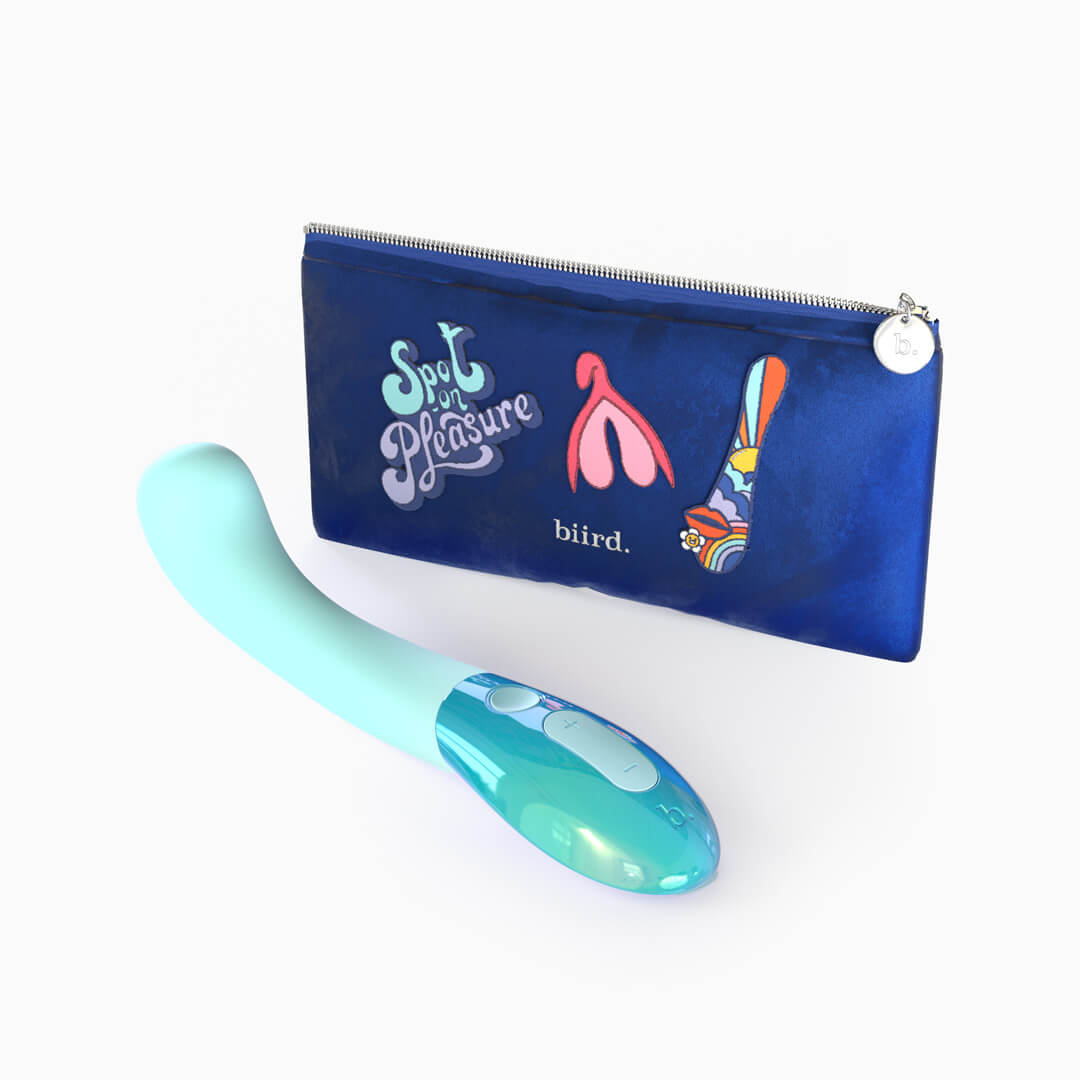
For self-exploration, angles can be tricky with fingers. A curved G-spot vibrator like the Gii Glow is designed specifically to reach that anterior wall without requiring the hand contortions that fingers sometimes demand.
Pay attention to what the body tells you. Warmth, pressure, a building urge, a sense of fullness. these are all positive signals that you're in the right area.
Combining Clitoral and G-Spot Stimulation
Here's something that changes everything: dual stimulation dramatically increases the likelihood of squirting.
The clitoris isn't just the small external nub you can see. It's an internal structure that wraps around the vaginal canal. When you stimulate it externally while simultaneously applying G-spot pressure internally, you're essentially squeezing the urethral sponge from two directions at once. That combined compression on the Skene's glands is what tends to push people over the edge into ejaculation.
Using a clitoral suction toy like the Namii 2 externally while using fingers or a curved toy internally is one of the most effective dual-stimulation setups you can try. The suction mimics oral stimulation while keeping your hands free for internal work. Coordinating both sensations takes a little practice, but the payoff is very much worth the learning curve.
For partnered experiences, this is also where couples toys really earn their place. Having a partner handle external stimulation while you focus internally, or vice versa, removes the coordination challenge entirely.
The "Letting Go" Problem (And How to Actually Solve It)
Most people stop themselves right at the edge without realizing it.
That pressure building during intense G-spot stimulation genuinely feels like you need to urinate. The instinct is to tense up, pull back, clench. That instinct is exactly what blocks squirting. The physical sensation is almost identical to the pre-urination urge because the urethra is involved in both processes. Your nervous system gets confused.
The solution is to consciously bear down rather than clench up. Think of the pelvic floor movement you'd use to push out rather than hold in. This requires trust. Trust in your body, trust in your partner, trust in the process. Practicing pelvic floor awareness through exercises like Kegels in everyday life actually helps you get better at consciously relaxing those muscles on demand during sex, which is the real skill being asked of you here.
If you're curious about how the body's responses relate to broader women's health and sexual anatomy, understanding your pelvic floor is genuinely one of the most empowering places to start.
Best Positions for G-Spot Stimulation and Squirting
Position changes the angle. Angle changes everything.
From behind (doggy style) naturally tilts the pelvis so a partner's fingers or a toy presses against the anterior wall with less effort. Many people find this the most instinctively effective angle for G-spot contact. The receiver can also reach forward with a hand or toy to add clitoral stimulation simultaneously.
Receiver on top gives the person being stimulated full control over angle, depth, and pressure. They can tilt their hips forward to increase anterior wall contact and adjust in real time based on what's working. Control is a genuine advantage here, especially early in the learning process.
Lying on your back with a pillow under your hips elevates the pelvis and makes the G-spot more accessible from the front. This is actually one of the easiest positions for solo exploration because gravity and the angle work together rather than against you. A curved toy pressed firmly upward toward the belly button from this position is highly effective.
Managing Expectations Without Killing the Mood
Not every session ends in squirting. That's genuinely okay.
Squirting isn't a performance metric or a measure of how good the sex was. Some bodies squirt easily. Some bodies never squirt no matter what technique you use, and there's no anatomical defect involved. The research on female ejaculation (Rodriguez et al., 2020) acknowledges significant variation in both the presence of Skene's glands and their size across individuals, which means some people simply have less of the relevant tissue.
What almost everyone does experience from sustained G-spot stimulation is intensified orgasm and a deeper sense of internal pleasure. Those are worth pursuing entirely on their own terms. The journey to squirting, if it happens, is built on learning your own body. And that education pays dividends in every kind of pleasure, not just this one.
For people exploring vibrators for women as part of this journey, prioritizing curved designs with firm shafts and adjustable intensity is the most practical starting point.
Wrapping Up
G-spot stimulation for squirting isn't about pressure to perform. It's about understanding your own anatomy, building genuine arousal, and releasing the instinct to hold back at the crucial moment. Know where the urethral sponge is. Combine internal and external stimulation. Trust the sensation even when it feels unfamiliar. That's the whole playbook.
Your pleasure deserves this kind of attention. Take the time. Enjoy the exploration. The destination is great, but honestly? The journey is where most of the best stuff happens.
Want to make your journey even more exciting? I've handpicked some amazing toys and goodies at Hello Nancy that'll add extra sparkle to your intimate moments. (Here's a little secret. use 'dirtytalk' for 10% off!)
Frequently Asked Questions
Where exactly is the G-spot located inside the vagina?
The G-spot is located on the anterior (front) wall of the vagina, roughly 2 to 3 inches inside, toward the belly button. It's not a separate structure but rather the area where the urethral sponge can be felt through the vaginal wall. When aroused, this tissue swells and becomes noticeably textured, making it easier to locate.
Why does G-spot stimulation feel like I need to pee?
That sensation happens because the G-spot area surrounds the urethra, and stimulating it puts pressure on the same nerves and tissues involved in urination. It's completely normal. Emptying your bladder before a session helps reduce anxiety about it, and bearing down rather than clenching when you feel that pressure is the key to moving through it toward ejaculation.
Can everyone squirt from G-spot stimulation?
Not necessarily. Research shows that Skene's glands, which are responsible for female ejaculation, vary significantly in size and even presence across individuals. Some people squirt easily, others rarely, and some never do regardless of technique. That variation is anatomical, not a reflection of arousal level or partner skill.
What is the best position for G-spot stimulation when trying to squirt?
Lying on your back with a pillow under your hips is excellent for solo exploration because it naturally tilts the pelvis and makes the anterior vaginal wall more accessible. Receiver-on-top positions are great for partnered sex because they give the receiver full control over angle and pressure. Doggy style also creates a natural angle that facilitates G-spot contact with less effort.
Does combining clitoral stimulation with G-spot stimulation really help with squirting?
Yes, and significantly so. The internal clitoral structure wraps around the vaginal canal, so stimulating the clitoris externally while applying G-spot pressure internally compresses the urethral sponge from two directions simultaneously. This combined pressure on the Skene's glands is one of the most reliable triggers for ejaculation that exists.
How long does G-spot stimulation typically need to last before squirting occurs?
There's no fixed timeline, but sustained stimulation of at least 10 to 20 minutes after full arousal is common. Rushing doesn't help. The body needs time to fully engorge the urethral sponge and build enough fluid pressure in the Skene's glands for ejaculation to occur.
What kind of toy is best for G-spot stimulation and squirting?
Look for a curved toy with a firm shaft that doesn't flex too much under pressure. Silicone or glass materials work well because they transmit pressure efficiently. A pronounced curve or bulbous head helps maintain consistent contact with the anterior wall without constant repositioning. Adding a clitoral massager for simultaneous external stimulation dramatically increases effectiveness.
Is squirting fluid the same as urine?
It's complicated. Research shows two types of fluid are involved: a smaller volume secretion from the Skene's glands that is chemically distinct from urine, and a larger volume fluid that is expelled from the bladder but has a different composition than regular urine during arousal. Both exit through the urethra, which is why the confusion exists. Neither should be a source of shame.
Do I need to use a lot of pressure on the G-spot?
More than people expect, yes. The G-spot area responds to firm, consistent pressure rather than light touch. Think of it less like external skin stimulation and more like massaging deeper tissue. Start moderate and increase based on feedback from your body or your partner. Discomfort is a signal to ease off; a pleasurable pressure buildup means you're on the right track.