Add $12.00 to get Free Gift



Somebody in your relationship always wants something different. Maybe it's more often, less often, a little kinkier, a lot slower. That tension? It's more common than you think.
Research from Psychology Today found that 80 percent of couples experience mismatched sexual desires at some point in their relationship. Not some couples. Not troubled couples. Almost all of them.
But here's what the statistic doesn't tell you: mismatched preferences don't have to mean incompatibility. They mean you're two full, complex humans sharing a bed. That's actually kind of beautiful, if you know how to work with it.
Why Different Sexual Preferences Are More Normal Than You Think

Sexual desire is not a fixed setting you're born with. It shifts with stress, hormones, life seasons, past experiences, even how well you slept last Thursday.
People change.
Your partner's preferences at 28 won't be identical to theirs at 38. Your own desires evolve too, whether you're consciously tracking them or not. The idea that two people will naturally sync up forever without any conversation or negotiation is honestly one of the most damaging myths we've inherited from rom-coms and silence.
So if you're sitting there thinking your relationship is broken because you want different things in the bedroom, I want you to take a breath. You're not broken. You're just human, and your relationship is just a relationship.
The Conversation Nobody Wants to Have (But Everyone Needs)

Talking about sex with your partner can feel weirdly harder than the sex itself.
There's vulnerability in saying "I want more of this" or "that thing we do doesn't really work for me." It can feel like criticism, even when it's just honesty. But here's the thing: couples who regularly talk about their sexual desires report significantly higher relationship satisfaction. Not occasionally. Regularly. As in, making it a real, recurring conversation.
Start low-stakes. Not right before or after sex, when nerves are high and emotions are close to the surface. Try a walk, a quiet evening on the couch, or even a voice memo you share when words feel hard. The format matters less than the intention: I want us to understand each other here.
Ask curious questions instead of making demands. "What would make you feel really good lately?" lands differently than "Why don't you ever want to try that?" One opens a door. The other slams one.
What "Middle Ground" Actually Looks Like
Middle ground isn't compromise in the boring, clinical sense. It's not about scoring 50-50 on a spreadsheet of sexual acts.
It's creative. It's generous. And honestly, it can lead to better intimacy than you had before you had the mismatch conversation, because you're both paying attention now.
Say one partner wants more adventurous experiences and the other feels most connected through slow, tender sex. That's not a wall. That's a design challenge. Maybe adventurous looks like a new couples toy introduced in a familiar, low-pressure setting. Maybe tender looks like extended touch and eye contact before anything else happens. These things don't cancel each other out. They can coexist in the same relationship, even in the same evening.
The key is taking turns holding the lead. Sometimes your partner's desire sets the agenda. Sometimes yours does. And sometimes you genuinely co-create something neither of you had imagined alone.
When One Partner Has a Higher Libido
This is one of the most common mismatches and one of the most quietly painful.
The higher-libido partner can feel rejected, unwanted, like they're too much. The lower-libido partner can feel pressured, guilty, like they're not enough. Both experiences are real, and both deserve space in the conversation.
For the higher-libido partner: pursuing solo pleasure isn't a failure. It's actually a healthy part of managing your own needs without putting all the pressure on your relationship. Exploring vibrators for women or other solo toys can give you an outlet that feels genuinely satisfying, not like a consolation prize.
For the lower-libido partner: it helps to get curious about why your desire feels low rather than assuming it's just who you are. Stress, sleep deprivation, hormonal shifts, and unresolved emotional distance all impact libido in measurable ways. If you've been curious about navigating sex when you're not in the mood, that conversation is worth having with yourself before anything else.
For both of you: check in about the emotional dynamic, not just the frequency. Often the hurt isn't really about sex. It's about feeling desired, seen, and wanted by someone you love.
Navigating Kink, Curiosity, and Hard Limits
Sometimes the difference isn't about how often. It's about what.
One partner is curious about something new, and the other has zero interest. Or one has a specific desire they've never shared before, and bringing it up feels terrifying. This is where a lot of couples hit a wall, not because the desire itself is dangerous, but because the shame around talking about it is.
Hard limits deserve full respect. Always. If someone says no, that's the whole answer, no negotiation required. But "I'm not sure" or "I've never thought about that" is an invitation to keep the conversation going gently.
A useful framing: think of desire exploration as a shared experiment, not a test your partner either passes or fails. Something like the Berri edging clitoral massager might introduce a new kind of sensation for someone who's curious about edging but unsure about the idea in the abstract. Toys can be a low-stakes, playful way to explore territory that felt intimidating when it was just a concept.
Keep checking in. Not just once, but throughout. "Is this still good?" is one of the most intimate questions you can ask.
Building an Ongoing Sexual Culture in Your Relationship
The couples who handle sexual differences best aren't the ones who happened to match perfectly from the start.
They're the ones who treat their sex life as something they actively tend to, like a garden, not a switch they flipped once and left alone. That means regular check-ins, curiosity about each other's evolving desires, and a willingness to laugh when things get awkward (they will get awkward, that's fine).
It also means celebrating what does work. When something lands beautifully, say so. "That was incredible" does more for your long-term sex life than any technique tip ever could.
If you're curious about the deeper architecture of what makes intimacy work, exploring common relationship problems and their solutions can give you a broader map for everything that feeds into sexual connection, including trust, communication, and emotional safety.
Practical Steps Toward Genuine Middle Ground
Here's where to start if this all feels overwhelming.
First, agree to a no-pressure conversation outside the bedroom. Set the tone by going first. Share something you genuinely love about your current intimacy before you introduce anything that feels like a gap. That establishes safety. Then listen more than you speak. Your partner's experience of your shared sex life might surprise you, and that's not a bad thing.
Second, experiment with small shifts before big ones. Introducing a clitoral vibrator to a familiar routine can feel exciting without being destabilizing. Small wins build a shared language of curiosity, which makes bigger conversations easier later.
Third, revisit the conversation. Not as a crisis meeting. Just as a standing check-in. "How are we feeling about our sex life lately?" asked over dinner or during a walk normalizes the topic and makes it feel like maintenance instead of emergency repair.
You deserve a sex life that feels mutual. So does your partner. And getting there is a process, not a destination you either reach or miss.
Wrapping Up
Different sexual preferences aren't a sign your relationship is wrong. They're a sign you're both real people with inner lives, and that's actually the raw material of real intimacy.
The middle ground isn't a place you find once and park in forever. It shifts, it evolves, it sometimes requires a tough conversation you've been putting off. But couples who do the work? They often end up with a more satisfying, more connected sex life than they had before the mismatch even surfaced.
You're not trying to become the same person. You're learning how to meet each other, over and over, in a space that belongs to both of you. ✨
Want to make your journey even more exciting? I've handpicked some amazing toys and goodies at Hello Nancy that'll add extra sparkle to your intimate moments. (Here's a little secret—use 'dirtytalk' for 10% off!)
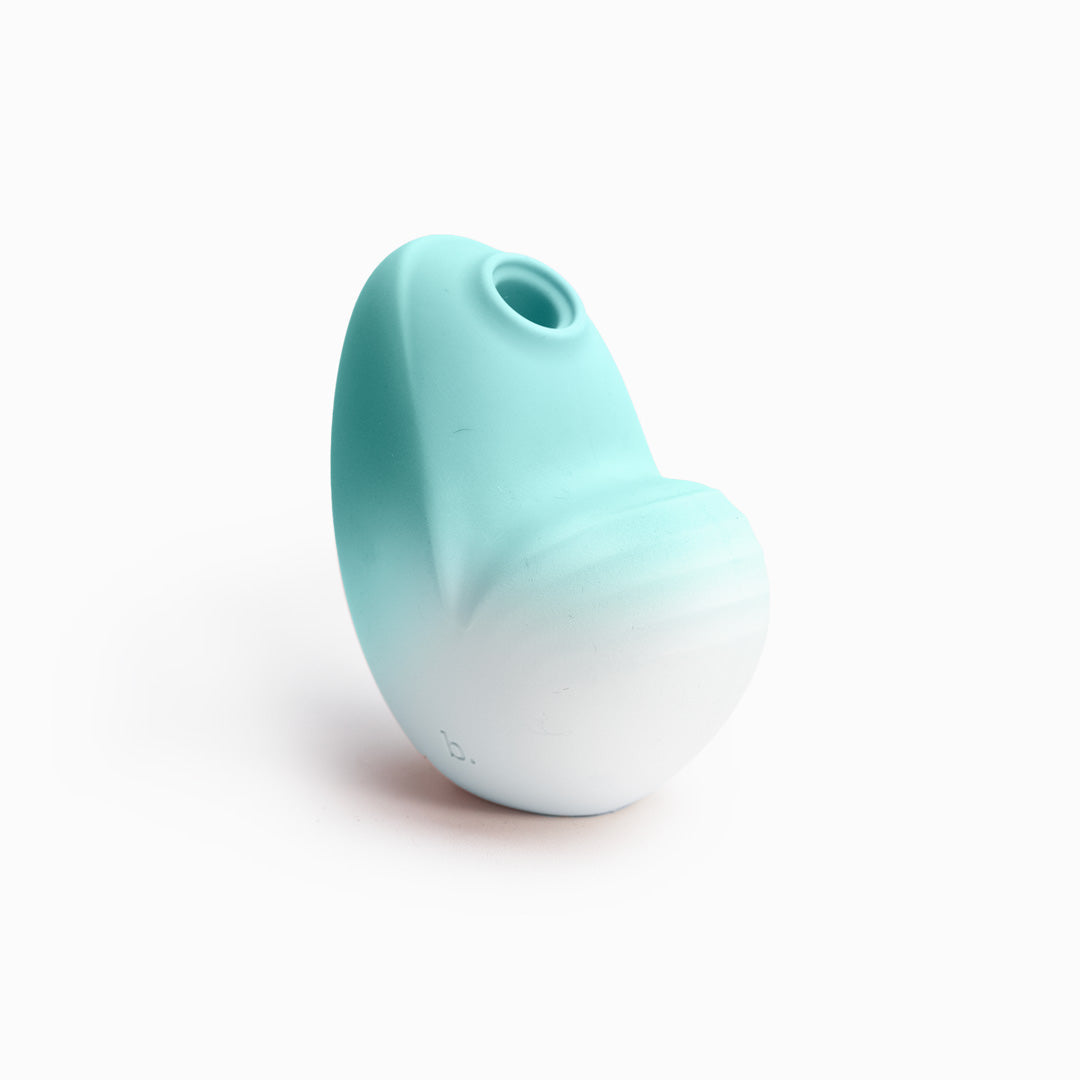
The Namii 2 is a beautiful example of a toy that works for both solo and partnered play. Its dual clitoral suction and vibration makes it a genuinely versatile bridge for couples navigating different arousal styles.
Frequently Asked Questions
Is it normal to have different sexual preferences than your partner?
Completely normal. Research suggests around 80 percent of couples experience some form of mismatched sexual desire during their relationship. Differences in libido, preferences, and curiosity are a natural part of being two distinct people sharing a life together.
How do you talk to your partner about mismatched sexual desires without hurting their feelings?
Timing and framing matter a lot. Choose a calm, neutral moment outside the bedroom and start by affirming what you already love about your intimacy. Use curious, open questions rather than complaints, and make clear you're coming from a place of wanting connection, not criticism.
Can a relationship survive sexual incompatibility?
Yes, many do. Sexual compatibility is less about matching preferences perfectly and more about both partners being willing to communicate honestly, stay curious, and make genuine effort. Couples who talk regularly about their desires tend to report higher satisfaction overall, even when differences exist.
What should I do if my partner wants more sex than I do?
Start by exploring what's driving the gap on your end. Stress, hormonal changes, and emotional disconnection all affect libido. Honest conversation, along with individual exploration of your own desires, can take pressure off both partners and create space for genuine reconnection.
How do you introduce a new sexual interest to a reluctant partner?
Bring it up casually and without pressure, framing it as a curiosity rather than a request. Ask how they feel about it before assuming the answer. Small, low-stakes experiments, like trying a new toy together, can be easier entry points than jumping straight to a big new experience.
Does mismatched libido always mean the relationship is in trouble?
Not at all. Libido fluctuates for both people over time, and mismatches are a normal part of most long-term relationships. The issue isn't the mismatch itself. It's whether both partners feel heard and whether there's a willingness to keep showing up for the conversation.
Can sex toys help couples with different sexual preferences?
They absolutely can. Toys give couples a playful, low-pressure way to explore new sensations and bridge gaps in what each person finds satisfying. They can also support solo pleasure so one partner isn't solely dependent on the other for all their sexual fulfillment.
How often should couples talk about their sex life?
There's no magic number, but making it a regular, low-stakes check-in rather than a crisis conversation is the goal. Even a brief "how are we feeling about things lately?" once a month normalizes the topic and keeps small gaps from growing into big ones.