Add $12.00 to get Free Gift



Most of us were handed a biology textbook that skipped the good parts. So here we are, adults, quietly Googling something our bodies deserved a real answer to years ago.
The G-spot has been surrounded by myth, debate, and a whole lot of mystery since gynecologist Ernst Gräfenberg first described it in 1950. And honestly? The confusion makes sense. Science itself has gone back and forth on whether it's a distinct anatomical structure or part of a bigger, more complex pleasure system. But here's what we know for certain: there is a zone inside the vagina that, when stimulated, feels very different. And learning exactly where it is and how to reach it can genuinely change your intimate life.
The Anatomy Behind the Mystery

So what actually is the G-spot?
Research now points to the G-spot not as a single isolated button, but as part of what scientists call the clitourethrovaginal (CUV) complex. This is the area where the internal clitoris, the urethra, and the vaginal wall all overlap and interact. When you stimulate the front wall of the vagina, you're essentially stimulating multiple structures at once, including the urethral sponge (a spongy tissue that surrounds the urethra and fills with fluid during arousal) and the internal roots of the clitoris, which extend much deeper than the external nub you can see.
Think of it less like a hidden button and more like a neighborhood. The whole area responds together.
The G-spot zone sits on the anterior (front) wall of the vagina, roughly 2 to 3 inches inside, toward the belly button. At rest, the tissue in that area can feel slightly ridged or textured compared to the smoother surrounding walls. During arousal, it becomes noticeably more swollen, raised, and sensitive because the urethral sponge is filling with blood, just like any other erectile tissue. This is exactly why arousal matters so much before you go searching for it.
How to Find the G-Spot: Step by Step

Ready for the actual directions? Here's what you do.
Start with arousal, not exploration. The G-spot is dramatically easier to find and stimulate when you're already turned on. Spend time on whatever gets your body going first, whether that's kissing, external clitoral stimulation, or anything else that works for you. Think of it like warming up an oven before you bake. Skipping this step is the number one reason people report "not finding" anything.
Once aroused, lie on your back.
Insert one or two fingers (yours or a partner's) into the vagina with the palm facing upward, toward the ceiling. Curl the fingers in a slow "come here" beckoning motion, pressing gently against the front wall. You're looking for a slightly raised or textured patch of tissue. It might feel spongy, ribbed, or just noticeably different from the surrounding area. Some people feel a mild urge to pee at first, which is completely normal. That sensation usually shifts into pleasure if you stay relaxed and keep going.
Pressure matters more than speed.
The G-spot typically responds better to firm, steady pressure and rhythmic movement than to fast or shallow stimulation. Experiment with circular motions, a slow in-and-out rocking pressure, or holding firm contact while adding external clitoral stimulation at the same time. Many people find that combining both creates the most intense sensations, because you're activating the same internal clitoral structure from multiple angles at once.
Why Some People Find It Easily (And Others Don't)
This part is important, so let's not skip it.
Anatomy varies. The location of the G-zone sits about 2 to 3 inches inside for most people, but the exact position shifts depending on individual body proportions, arousal state, and pelvic floor muscle tension. For some people, their G-spot sits closer to the entrance; for others, it's deeper inside. Neither is abnormal. Neither is broken. It just means your exploration might take a few different attempts before you find what works for your specific body.
Mental state also plays a real role. Research consistently shows that anxiety and distraction reduce genital blood flow and sensitivity, making the whole area less responsive. This isn't psychological weakness. It's physiology. If you're stressed, overthinking, or feeling self-conscious, your body genuinely becomes harder to read. So creating a relaxed, low-stakes environment isn't just nice to have. It's functionally necessary.
The Best Positions for G-Spot Stimulation

Angle is everything.
Cowgirl (partner on top) is one of the most recommended positions for G-spot stimulation because it puts the person with a vagina in full control of angle, depth, and pressure. Leaning slightly forward shifts the point of internal contact toward the front wall, right where that sensitive zone lives. Small tilts and micro-adjustments make a huge difference here.
Doggy style, when angled slightly downward (hips lower, torso higher), can also create strong front-wall contact for some people. A pillow under the hips while lying on your back is another classic trick that shifts the internal angle just enough to change everything. Try a few. Your body will tell you which ones speak its language.
If you're exploring solo or with a partner using toys, a G-spot vibrator with a curved or angled tip is genuinely one of the most effective tools for this. The curve isn't decorative. It's engineering. It allows the tip to press upward along the front vaginal wall in exactly the direction that manual fingers aim for during that "come here" motion.
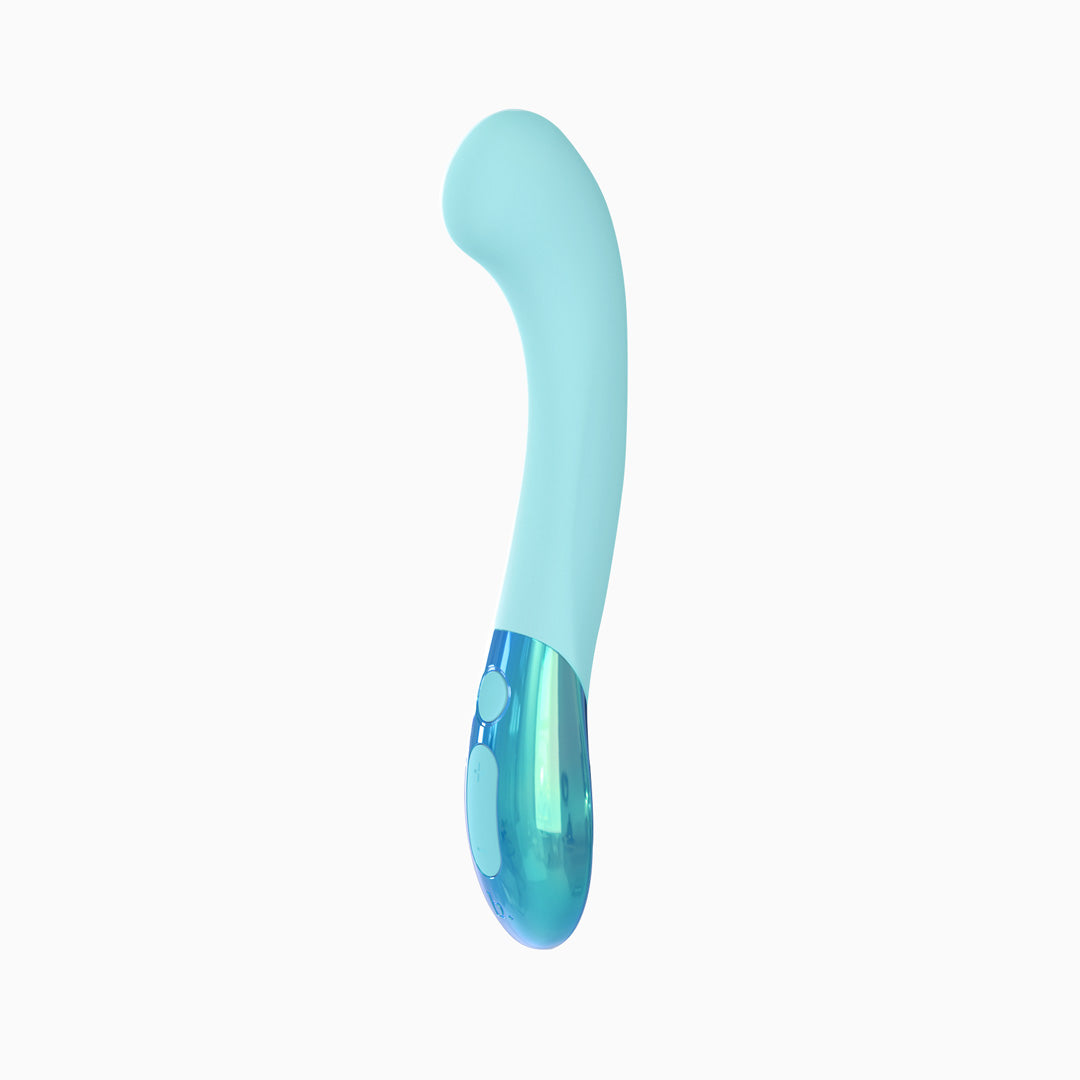
The Gii Glow G-Spot Vibrator from the Nancy x Biird collaboration is designed with precisely this in mind. Its ergonomic curve targets the anterior vaginal wall, and the flexible silicone tip responds to your body's pressure rather than working against it. Whether you're exploring solo or navigating G-spot territory with a partner, it's a genuinely thoughtful tool for this specific kind of discovery.
G-Spot Orgasms: What They Actually Feel Like
Here's the thing nobody really describes properly.
G-spot orgasms (when they happen) tend to feel deeper and more full-bodied than purely clitoral orgasms. Some people describe a building, pulsing wave that moves through the entire pelvic region rather than focusing at one point. Others feel a rush of warmth, an involuntary contraction of pelvic muscles, or the kind of release that leaves you genuinely surprised by how much sensation was stored there. It can also trigger female ejaculation, which is a completely real, documented physiological response involving fluid released from the Skene's glands near the urethra.
Not everyone experiences G-spot orgasms. That's also real and also fine.
Researchers at Indiana University found that most people with vaginas report achieving orgasm primarily through clitoral stimulation rather than internal stimulation alone. The point isn't to chase one "superior" type of orgasm. The point is to understand your own anatomy well enough to explore it intentionally, without pressure, without a deadline, and with genuine curiosity about what your body is capable of.
Tips for Exploring With a Partner
Communication turns good into unforgettable.
If you're guiding a partner toward your G-spot, the most effective thing you can do is give real-time feedback. Not performance feedback. Honest feedback. "A little higher," "more pressure," "keep doing exactly that" are the kinds of directions that actually work. Many people feel shy about this, but your partner genuinely cannot feel what you feel. They need the map, and you're the only one who has it.
For partners doing the exploring: patience is not a soft skill here. It's the skill. Rushing, or treating G-spot stimulation like a checklist item to complete, usually backfires. Slow down. Pay attention to breathing changes, hip movements, and involuntary sounds. The body gives real signals when something is working. Learning to read those signals is one of the most intimate skills you can develop.
Couples who incorporate toys for couples into their exploration often find it easier to maintain consistent pressure and angle while freeing up hands for external stimulation at the same time. The combination matters.
Does the G-Spot Actually Exist?
Science's honest answer: yes, sort of, and it's more interesting than the simple version.
A landmark review by researchers Rodriguez et al. (2020), published in Clinical Anatomy, concluded that while a discrete, isolated G-spot "button" hasn't been consistently identified in cadaveric studies, the sensitivity of the anterior vaginal wall is entirely real and well-documented. The most current scientific consensus treats the G-spot as a region of the CUV complex rather than a standalone structure. This distinction matters because it shifts the question from "does it exist?" to "how do I activate the whole system?" And that reframe is genuinely more useful.
Your pleasure isn't a debate to be settled. It's a landscape to be explored.
If you're curious about combining G-spot exploration with external stimulation, vibrators for women designed for dual stimulation can make the internal-external combination much easier to achieve consistently. And the Namii 2, which combines suction and internal vibration, is worth exploring if you want to experience the clitoral-vaginal connection from multiple angles at once.
Wrapping Up
Your body is not a puzzle to solve on the first try.
The G-spot is real, it's reachable, and finding it is mostly a matter of patience, arousal, the right angle, and a willingness to explore without judgment. Start warm. Use the "come here" curl. Communicate. And remember that every body maps differently, which means your version of this experience will be uniquely yours. That's not a limitation. That's actually the best part.
Want to make your journey even more exciting? I've handpicked some amazing toys and goodies at Hello Nancy that'll add extra sparkle to your intimate moments. (Here's a little secret. use 'dirtytalk' for 10% off!)
Frequently Asked Questions
Where exactly is the G-spot located inside the vagina?
The G-spot is located on the anterior (front) wall of the vagina, roughly 2 to 3 inches inside toward the belly button. The tissue in that area often feels slightly ridged or spongy compared to the surrounding walls, especially when aroused. Its exact position varies slightly from person to person based on individual anatomy.
Why can't I find my G-spot no matter what I try?
The most common reason is attempting to find it before being fully aroused. The G-spot zone (which includes the urethral sponge) only becomes raised, swollen, and distinctly sensitive when there's sufficient blood flow to the area. Try spending more time on arousal before internal exploration, and reduce any mental pressure or performance anxiety, since these genuinely reduce physical sensitivity.
What does G-spot stimulation feel like?
Many people describe an initial urge to urinate followed by a deeper, fuller sensation that builds into intense pleasure. G-spot orgasms are often described as more diffuse and full-bodied than clitoral orgasms. Not everyone experiences them the same way, and some people feel very little G-spot sensitivity, which is also completely normal.
What is the best finger technique for G-spot stimulation?
Insert one or two fingers with the palm facing upward and use a slow, deliberate "come here" curling motion to press against the front vaginal wall. Firm, steady pressure tends to work better than fast movement. Adding external clitoral stimulation at the same time significantly increases intensity for most people.
Which sex positions are best for hitting the G-spot during penetration?
Cowgirl (partner on top leaning slightly forward), doggy style with hips lower than the torso, and missionary with a pillow under the hips are all commonly recommended for G-spot contact. The key in every position is angling stimulation toward the front wall of the vagina. Small positional adjustments make a noticeable difference.
Does the G-spot actually exist scientifically?
Current research treats the G-spot not as an isolated anatomical button but as part of the clitourethrovaginal (CUV) complex, where the internal clitoris, urethra, and vaginal wall overlap. The sensitivity of the anterior vaginal wall is scientifically documented and real, even if a single distinct "G-spot organ" hasn't been consistently identified in anatomical studies.
Can a vibrator help find or stimulate the G-spot?
Yes. A curved G-spot vibrator is specifically engineered to angle toward the front vaginal wall, mirroring the "come here" motion used with fingers. The added benefit of vibration means you can stimulate the urethral sponge and internal clitoral tissue simultaneously with sustained, consistent pressure that fingers alone can struggle to maintain.
Is female ejaculation connected to G-spot stimulation?
Yes. Female ejaculation is thought to originate from the Skene's glands located near the urethra, in the same region as the G-spot zone. Sustained front-wall stimulation is the most commonly reported trigger for ejaculation. It's a real, documented physiological response, though not everyone will experience it.
How long does it take to have a G-spot orgasm for the first time?
There's no universal timeline. Some people experience G-spot orgasms on the first focused attempt; others take weeks or months of exploration to get there. The biggest variable is relaxation and arousal level before stimulation begins. Removing the pressure of a deadline and treating it as ongoing exploration tends to produce the best results.