Add $12.00 to get Free Gift



Nobody taught us how to read the label on a sex toy. That gap has quietly cost a lot of people comfort, safety, and peace of mind.
Why Certifications Actually Matter

Sex toys go on or inside your body. That's not a minor detail. It matters enormously what they're made of, how they're tested, and whether anyone with any authority has verified that the product won't cause harm.
The adult toy industry sits in a regulatory grey zone in many countries. There's no single global governing body that stamps every vibe and massager with a universal safety seal the way pharmaceuticals get regulated. This means the responsibility for understanding certifications shifts partly to you, the buyer.
But here's the good news. A handful of legitimate, verifiable certifications actually tell you a lot. And once you know what to look for, shopping for vibrators for women or any intimate toy becomes a much more informed decision.
CE Marking: The European Baseline
If you're shopping in Europe or buying from a brand that sells into European markets, CE marking is your first filter. CE stands for Conformité Européenne, which roughly translates to European Conformity. It signals that an electronic product meets EU safety, health, and environmental requirements.
For sex toys specifically, CE marking is required on any device with electronic components. This covers things like charging circuits, vibration motors, and wireless connectivity. Without it on an electronic toy sold in the EU, the product is technically non-compliant.
That said, CE marking isn't a magic word. Some manufacturers self-declare CE compliance without rigorous independent testing. A real CE declaration should come with supporting technical documentation. If a brand can't show that documentation on request, treat their CE claim with healthy skepticism.
RoHS and REACH: The Chemical Safety Pair

RoHS stands for Restriction of Hazardous Substances. It limits the use of heavy metals like lead and cadmium in electronic products. For a toy with a rechargeable battery or circuit board, RoHS compliance means the manufacturer has restricted those nasty substances in the actual hardware components.
REACH is the companion regulation. It covers the broader chemical landscape, including the materials in the toy's outer body. REACH compliance is significant because it addresses substances of very high concern, some of which have been found lurking in cheaper adult products.
Together, RoHS and REACH form the chemical safety duo you want to see on any electronic intimate product. A brand that voluntarily publicizes both certifications is usually a brand that takes material safety seriously. This is especially relevant when you're shopping for clitoral vibrators that will be in direct skin contact during use.
ISO 3533: The New Standard Built Just for This

ISO 3533 is a relatively recent development worth knowing. It's a dedicated safety standard for sex toys, introduced for European markets, and it's a big deal.
Unlike CE or RoHS, which apply broadly to electronics, ISO 3533 was specifically designed for intimate products. It covers material biocompatibility, mechanical safety, and chemical requirements all in one document. A toy that meets ISO 3533 has been evaluated against criteria written with your body's sensitivity in mind.
Not every brand has achieved this yet, since the standard is new. But brands that actively pursue it are sending a clear signal about their priorities. When a manufacturer references ISO 3533 compliance, that's a green flag worth noting.
FDA Compliance and What It Actually Means

Here's where things get a little nuanced. The FDA doesn't regulate sex toys as a specific product category in the US. However, the materials used in those toys can fall under FDA oversight depending on how they're classified and marketed.
Silicone used in medical or food-contact applications must pass FDA testing standards, including ISO 10993 biocompatibility testing and USP Class VI requirements. Some premium toy manufacturers use medical-grade or food-grade silicone that meets these benchmarks, then reference FDA validation of their materials. That's a meaningful distinction from a safety standpoint.
When a brand says "FDA-compliant materials," ask what they mean specifically. The best answer is a reference to the actual testing standard, like ISO 10993. Vague FDA name-dropping without specifics is a much weaker claim.
IPX Ratings: Why Waterproofing Has a Scale

IPX ratings measure a device's resistance to water and dust. For sex toys, this matters for both hygiene and safety.
The IPX scale runs from IPX0 (no protection) to IPX8 (submersible in water beyond one metre). An IPX4 rating means splash-resistant. IPX7 means the device can be submerged up to one metre for thirty minutes. For toys you plan to use in the bath or clean under running water, IPX7 is the practical minimum you should look for.
A proper IPX rating isn't just a marketing term. It requires testing by a recognized lab. Brands that display a verified IPX rating are telling you that the charging port, seams, and body have been physically tested against water ingress, not just claimed to be fine.
Materials: The Certification Behind the Label
Certifications only mean so much if the underlying material is problematic. The most important thing you can confirm about any intimate toy is its material composition.
Silicone, borosilicate glass, stainless steel, and body-safe ABS plastic are the materials that consistently earn trust in this space. They're non-porous, easy to clean, and don't leach chemicals during use. Phthalates, on the other hand, are plasticizers historically found in PVC-based toys that have been linked to hormonal disruption. A phthalate-free claim on a toy made of genuine medical-grade silicone is redundant but reassuring. A phthalate-free claim on a TPE toy deserves more scrutiny, since TPE can still contain other concerning additives even without phthalates.
Products like the Namii 2 clitoral suction and vibration toy from the Nancy x Biird collaboration are made with body-safe, non-porous materials. That's the kind of material transparency that should come standard.
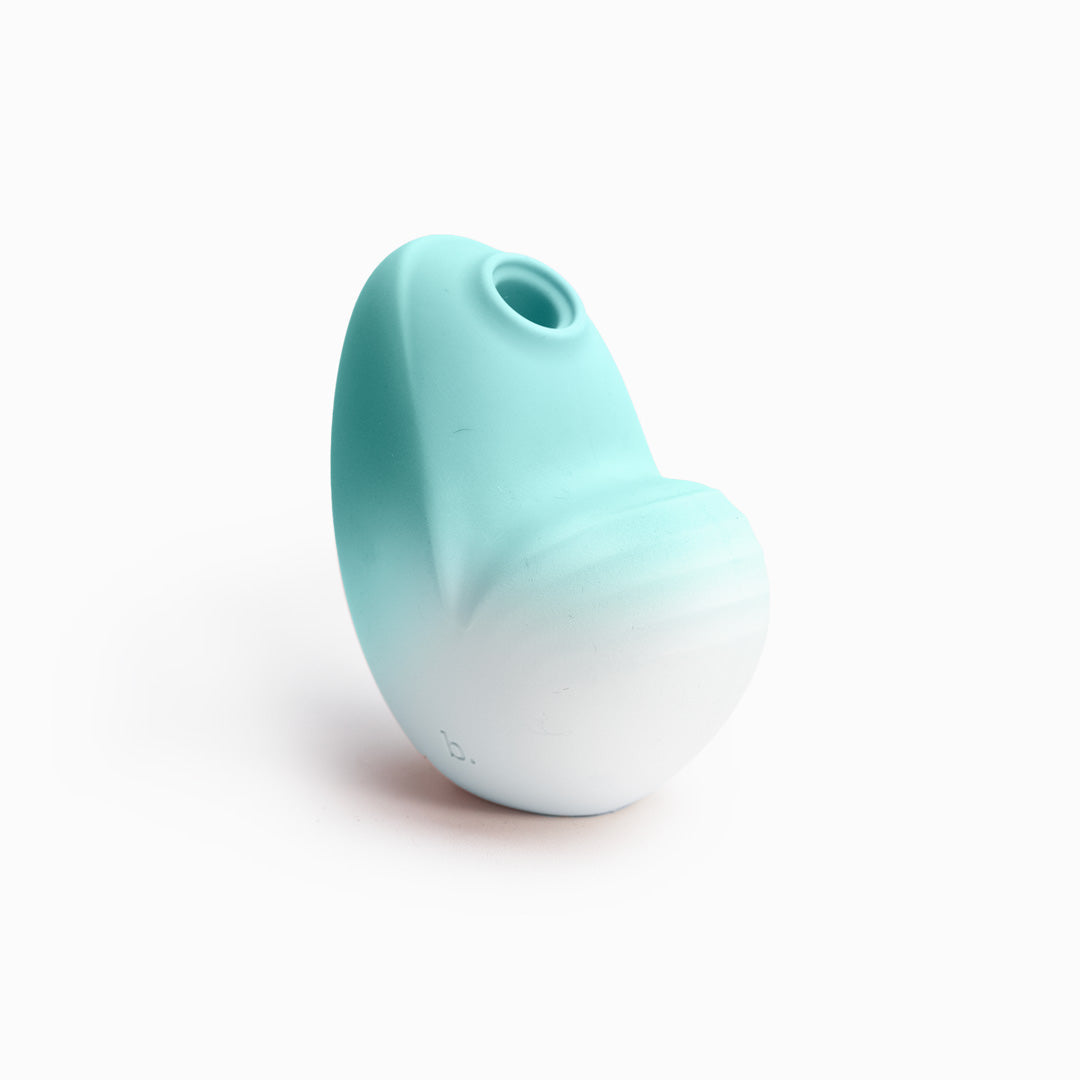
The distinction between "body-safe" as a marketing phrase and "body-safe" as a verifiable claim is exactly what certifications help you navigate. A brand using certified materials will almost always be able to point you to a spec sheet or test report.
The Red Flags Worth Knowing
Some warning signs are worth mentioning plainly.
Vague phrases like "premium quality" or "body-safe" with zero supporting documentation are not certifications. They're marketing copy. Similarly, toys that smell strongly of rubber or chemicals when unboxed are flagging a material problem that no amount of packaging language can fix. Discoloration, stickiness, or a tacky feel on a toy that claims to be silicone are signs you may be holding a lower-grade blend.
Pricing is also a rough proxy, though not a rule. Genuinely certified, body-safe materials cost more to produce. A vibe selling for a few dollars is almost certainly not using medical-grade silicone with verified IPX ratings and CE documentation. That's not snobbishness. That's just manufacturing economics.
If a brand can't or won't share documentation for their certifications when you ask, that tells you something important. The brands worth trusting are generally the ones happy to show their work.
How to Verify Certifications Before You Buy
Verifying certifications doesn't require a science degree. A few practical steps cover most of the ground.
First, check the product page and packaging for specific certification names, not just vague safety language. Look for CE, RoHS, REACH, IPX ratings, or ISO 3533 explicitly stated. Second, search for the brand's FAQ or dedicated safety page. Reputable brands usually maintain one. Third, if you're uncertain about a specific product, email the brand and ask for their CE Declaration of Conformity or material test reports. A confident, transparent brand will send those without hesitation.
For browsing couples toys or solo devices, sticking to brands that display certifications prominently is the single fastest way to raise the quality of your purchase decisions without becoming a materials scientist.
Wrapping Up
Safety labels aren't bureaucratic noise. For intimate products, they're the most concrete signal you have that someone tested this thing before it reached your body.
You deserve products that are genuinely transparent about what they're made of and how they've been tested. The certifications exist precisely so you don't have to guess. Use them. And if a brand can't explain what their certifications actually mean, that's your answer.
Want to explore toys that take material safety seriously? Brands that pair good design with honest safety documentation do exist. Look for CE, RoHS, REACH, and verified IPX ratings, and pair that knowledge with your own preferences. Your pleasure and your health belong in the same sentence, always.
Want to make your journey even more exciting? I've handpicked some amazing toys and goodies at Hello Nancy that'll add extra sparkle to your intimate moments. (Here's a little secret, use 'dirtytalk' for 10% off!)
Frequently Asked Questions
What does CE marking mean on a sex toy?
CE marking (Conformité Européenne) indicates that an electronic product meets EU safety, health, and environmental standards. For sex toys sold in Europe, CE marking is required on any device with electronic components like motors or charging circuits. A genuine CE claim should be backed by a technical documentation file, not just a logo on the box.
Are sex toys regulated by the FDA in the United States?
The FDA does not regulate sex toys as a specific product category. However, the materials used in toys can fall under FDA oversight when they're classified under food-contact or medical-grade standards. Some premium manufacturers use silicone that meets ISO 10993 biocompatibility and USP Class VI benchmarks, and reference FDA validation of those materials specifically.
What is RoHS certification and why does it matter for sex toys?
RoHS stands for Restriction of Hazardous Substances. It limits the presence of heavy metals like lead and cadmium in electronic components. For rechargeable sex toys, RoHS compliance means the circuit board and battery hardware have been tested to restrict those substances. It's a meaningful indicator of responsible manufacturing, especially for products used repeatedly on the body.
What IPX rating should I look for in a waterproof sex toy?
For toys you plan to use in the shower or clean under running water, IPX7 is the practical minimum. IPX7 means the device has been tested to withstand submersion up to one metre for thirty minutes. IPX4 only covers splashing, which isn't sufficient for bath or shower use. Always look for a verified IPX rating rather than a general "waterproof" claim without a numbered rating.
What is ISO 3533 and does my sex toy need to meet it?
ISO 3533 is a dedicated safety standard for sex toys introduced for European markets. Unlike broader regulations like CE or RoHS, ISO 3533 was specifically designed for intimate products and addresses material biocompatibility, mechanical safety, and chemical requirements together. Not all brands have achieved it yet since it's relatively new, but it's one of the strongest signals of safety-focused manufacturing available right now.
Are phthalate-free sex toys always safe?
Not necessarily. Phthalate-free labeling means the toy doesn't contain that specific group of plasticizers, but materials like TPE can still contain other additives that aren't fully disclosed. The safest materials for intimate use remain medical-grade silicone, borosilicate glass, stainless steel, and body-safe ABS plastic. These are non-porous, durable, and have the longest safety track record.
How can I verify that a sex toy's certifications are genuine?
Start by looking for specific certification names on the product page, such as CE, RoHS, REACH, or an IPX rating with a number. Then check whether the brand has a safety or compliance page. If you're still uncertain, contact the brand directly and request their CE Declaration of Conformity or material test reports. A trustworthy manufacturer will share these documents without hesitation.
What materials should I avoid in sex toys for body safety?
Avoid toys made from PVC, especially if they have a strong rubbery or chemical smell when unboxed. PVC often contains phthalates and is porous, meaning it harbors bacteria even after cleaning. Jelly rubber is another material to approach with caution for the same reasons. Stick to non-porous, certified materials like silicone, glass, or stainless steel for anything used directly on or in the body.