Add $12.00 to get Free Gift


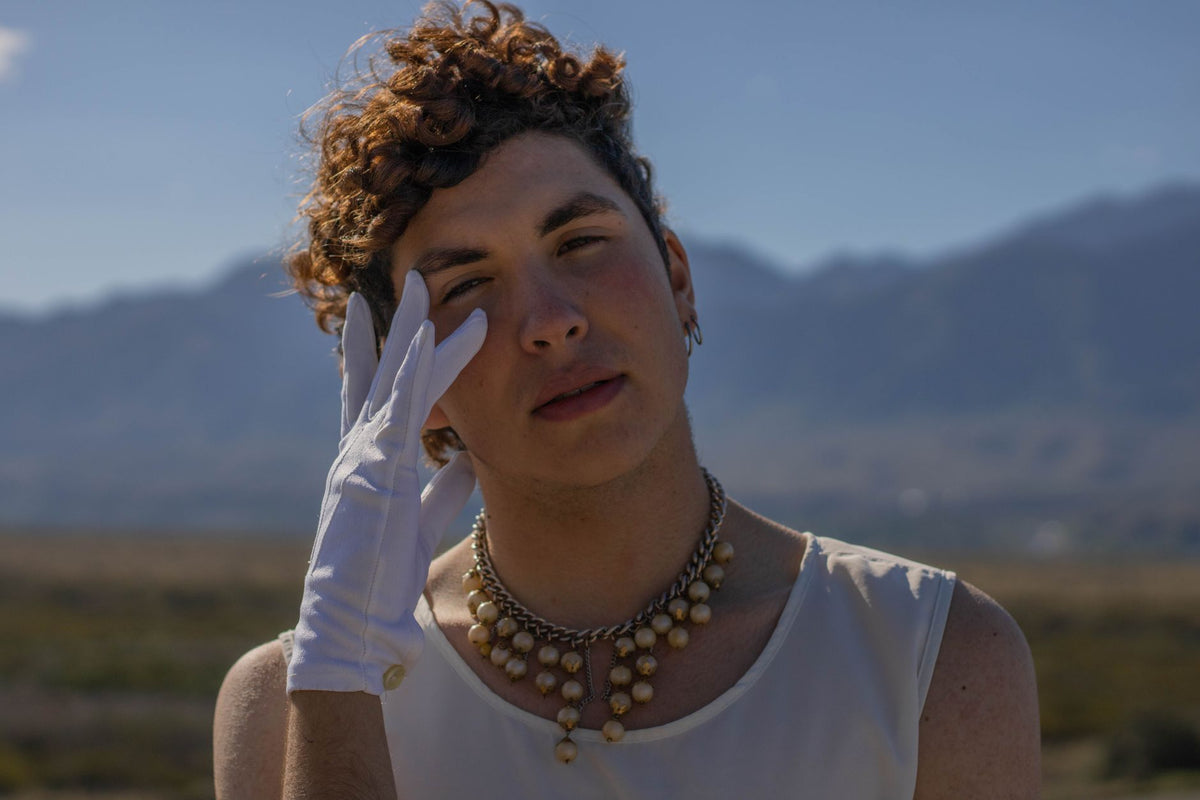
Something clicked. Maybe it was a glance at a stranger that lasted a half-second too long. Maybe it was a conversation with a friend that left you weirdly restless. Or maybe you were thirty-four, watching a film, and suddenly thought: oh.
That moment is more common than you think.
For a long time, pop culture gave us one script for coming out: a teenager, a locker room revelation, a dramatic conversation with parents. That script is real and valid. But it's only one version of a story that arrives for millions of people much, much later. If you've been living what looked like a heteronormative life and something recently shifted, you are not confused, you are not going through a phase, and you are absolutely not broken.
Why Queerness Often Reveals Itself in Adulthood

Here's the thing nobody explains in health class. Sexual identity is not always fixed at a specific age and then filed away. For many people, it is genuinely fluid. It shifts with experience, safety, and access to language.
Researchers studying gay men who came out in their mid-twenties and beyond found that growing up in environments that defaulted to heterosexual norms made it nearly impossible for many to even access their own desires (Modesto et al., 2025). When the world assumes you are straight, you often assume it too. Until you don't.
Society builds invisible scaffolding around us. Family expectations, religious frameworks, social circles, the sheer absence of visible queer role models. All of that scaffolding can delay recognition for years, sometimes decades. This isn't a failure of self-awareness. It is what happens when the map you're given doesn't include the territory you actually live in.
The Late Bloomer Label Is More Common Than You'd Guess

The phrase "late bloomer" tends to carry a faint whiff of apology. Like you're explaining why you didn't get the memo on time.
Ditch that framing entirely.
Bisexual women, in particular, often describe years of suppressing attractions they couldn't fully name, partly because bisexuality faces skepticism from both straight and queer communities. When attraction to one gender is visible and "works" socially, the other attractions get quietly shelved. Not consciously. Just... absorbed into the noise of daily life until something makes them undeniable. A 2024 piece in Reckon News put it plainly: coming out as queer later in life "isn't just normal, it's a revelation" that's shaped by access to language, community, and safety rather than by some internal clock running slow.
People don't discover queerness late. They discover the conditions that finally let them see it.
Grief Is Part of It (And That's Okay)
Coming out to yourself as an adult often brings something unexpected alongside the relief.
It brings grief.
Grief for the years spent performing an identity that didn't quite fit. Grief for experiences you didn't have. Sometimes even a complicated grief for the life you'd built, which may have been genuinely loving and good, even if it wasn't the full picture. This is a completely natural response. You're not being dramatic. You're processing a genuine loss while simultaneously gaining something real.
Therapists who specialize in queer identity often describe this as a kind of second adolescence. You are going through milestones that many people moved through in their teens, and you're doing it with adult responsibilities, possibly a partner, possibly children, and a brain that is very much aware of how strange and destabilizing it all feels. Give yourself the grace you'd offer a teenager going through it for the first time. You deserve that too.
Coming Out to Others (On Your Own Timeline)

Here's what nobody owes you: a grand announcement.
Some people feel a surge of relief when they finally say the words out loud. Others find that coming out is a slow, selective process that happens person by person over years. Both are legitimate. There is no correct speed. There is no queer committee handing out timing grades.
If you are in a relationship when this clarity arrives, the path gets more complicated. That complexity is real and it deserves real conversation, ideally with a therapist who actually understands queer identity. What's important to remember is that your self-knowledge is not an attack on anyone else. Understanding yourself more fully is not a betrayal. It's one of the most honest things a person can do.
And if you're not in a relationship? You get to just... explore. Slowly or quickly. Privately or openly. With new toys for two or in quiet solitude first. There is no rulebook.
Finding Community Without Feeling Like an Outsider
Walking into queer spaces as an adult can feel weirdly intimidating.
You might worry you don't "count." That someone will clock your late arrival and question it. That people will think you're performing something rather than living it. I want to say this clearly: those fears are common, they are understandable, and they are almost never accurate.
Queer communities have always been made up of people who found their way in non-linear paths. The community has room for you whether you're twenty-five or fifty-five. Online communities can be a gentler first step if in-person feels too much. There are subreddits, Discord servers, and local organizations specifically for people navigating queer identity in adulthood. You don't have to arrive with your whole self figured out. You can figure it out there, alongside people who get it. If you've ever felt like anorgasmia-level disconnection from your own desire, the piece on why you can't orgasm and what actually helps might resonate more than you expect.
Intimacy, Pleasure, and Exploring What You Actually Want
One of the quieter parts of a later queer awakening is realizing you get to learn your own body again. Or maybe for the first time.
This is genuinely exciting, even when it feels vulnerable. Queer sex. especially when it's new to you, is not a performance to get right. It's an exploration. And exploring your desires through solo practice is often the gentlest place to begin. Clitoral vibrators designed with sensitivity in mind can be a quiet, low-pressure way to get curious about your own pleasure without any audience.
If you're venturing into partner intimacy for the first time as a queer adult, pacing matters. Communication matters more than technique. And enthusiasm, even clumsy enthusiasm, matters most of all.
Something like the Berri tapping clitoral massager from Hello Nancy brings a different kind of sensation entirely. Gentle rhythmic tapping instead of vibration. It's the kind of toy that doesn't assume what your body already knows, which feels oddly right when you're still figuring things out.

Solo exploration is self-knowledge. And self-knowledge is never wasted.
You Don't Have to Rewrite Your Past to Claim Your Present

This is the part I think matters most.
Discovering queerness later doesn't erase who you were or what you lived. Your past relationships were real. Your feelings were real. The version of you that existed before this clarity was not a lie. As one writer reflecting on this experience put it beautifully: "Wanting something new doesn't negate what came before, even when people feel pressured to perform a complete transformation."
Your story is allowed to be non-linear. It is allowed to have chapters that look different from each other. What you're doing now, naming something true about yourself, is not a rejection of everything that came before. It is an addition. A deepening. You are more fully yourself today than you were yesterday. That is always a good thing.
People searching for language around their sense of deep connection and identity often find that old frameworks simply stop fitting. That's not a crisis. That's clarity arriving.
Bottom Line
Queerness doesn't come with an expiration date on its discovery. There is no cutoff. There is no correct age. The people who are "on time" are simply the people who had access to the right mirrors, the right language, and the right safety sooner. If you didn't have those things, your timeline makes complete sense.
You are not late. You are here.
And arriving here, even now, even after everything, is something worth celebrating. Whether that looks like a whispered conversation with yourself in a mirror at midnight, a first date that makes your hands shake in the best way, or simply spending a quiet evening getting reacquainted with your own body through a new vibrator for women you bought just for you. All of it counts. All of it is valid. ✨
Want to make your journey even more exciting? I've handpicked some amazing toys and goodies at Hello Nancy that'll add extra sparkle to your intimate moments. (Here's a little secret. use 'dirtytalk' for 10% off!)
Frequently Asked Questions
Is it normal to discover you're queer in your 30s, 40s, or later?
Completely normal. Research consistently shows that sexual identity can surface or shift at any point in life. Societal pressure, lack of language, and limited access to queer community are among the main reasons many people don't recognize or name their queerness until adulthood.
Does coming out later in life mean I was lying to myself or others before?
Not at all. Your past feelings and relationships were real. Discovering new dimensions of your identity doesn't rewrite or invalidate what came before. It simply adds a fuller picture.
What is a queer late bloomer?
A queer late bloomer is someone who comes to recognize or publicly identify their queer identity in adulthood, often after living in a heteronormative context. The term is informal, but the experience it describes is widely shared. Coming out later is not a character flaw, it is a product of circumstance.
How do I explore my queer identity safely as an adult?
Start at your own pace. Solo reflection, journaling, or therapy with a queer-affirming counselor are all valid first steps. Online communities offer low-stakes entry points too. Physical and emotional exploration is allowed to be gradual. Nothing needs to be decided or announced before you're ready.
What should I do if I realize I'm queer while in a long-term relationship?
This is one of the most emotionally complex situations, and there's no single right answer. Working with a therapist who specializes in queer identity is strongly recommended. Open, honest communication with your partner, when you feel safe and ready, is usually the best next step. Your self-knowledge is not an attack on your relationship.
Is sexuality fluid? Can it really change in adulthood?
Yes. Research in psychology supports the idea that sexual attraction can be fluid and can shift across a lifetime for many people. It doesn't change for everyone, but for a meaningful portion of people, it genuinely does. This is especially well-documented in research on bisexuality and women's sexuality.
How do I find queer community as an adult who is new to identifying as LGBTQ+?
Online spaces can be a great starting point. Subreddits, Discord communities, and local LGBTQ+ centers often have specific groups for people navigating identity in adulthood. You don't need a fully formed identity to join. Showing up curious is enough.
Why do some people not realize they're queer until they're older?
Heteronormativity, lack of visible queer representation, religious or cultural pressure, and limited access to language around queerness all play a role. When the dominant social script assumes straightness, it can take years or decades for someone to recognize and name an attraction that doesn't fit that script.