Add £9.00 to get Free Gift


Everybody has googled this. At least once. Probably more than once, in an incognito tab, at an oddly specific hour of the night.
The problem is, most of what comes up is either outdated locker-room mythology or content clearly written by someone who has never thought critically about data. So let's cut through all of it and just talk about what the research actually says.
What the Research Actually Says About Average Penis Size

The most rigorous data we have comes from a landmark 2015 study published in BJU International by Dr. David Veale and colleagues at King's College London. Reviewing measurements from up to 15,521 men across multiple studies, they found the average erect penis length sits at around 13.12 cm (5.17 inches), with an average erect girth of approximately 11.66 cm (4.59 inches). Flaccid, the average length drops to about 9.16 cm (3.61 inches). These are clinician-measured numbers, not self-reported ones. That distinction matters enormously (Veale et al., 2015, BJU International).
Self-reported studies consistently skew higher.
A 2023 meta-analysis reviewed 75 studies spanning 79 years and over 55,000 participants. It found that self-reported average erect length trends closer to 6 inches. The researchers also noted a 24% increase in reported erect penis length between 1992 and 2021, which is a genuinely puzzling trend that scientists haven't fully explained yet.
Flaccid vs. Erect: The Comparison Nobody Does Fairly

Here's where things get genuinely interesting. Flaccid size is a terrible predictor of erect size. Some penises are "showers" (relatively large when soft, smaller relative gain when erect), and some are "growers" (compact when soft, significant increase upon erection). Research suggests roughly 79% of penises fall into the grower category to some degree, though the split between these types is more of a spectrum than a binary.
So glancing at someone in a changing room tells you almost nothing.
Girth, meanwhile, tends to matter more for sexual satisfaction than length does, according to several partner-preference studies. The nerve endings in the vaginal wall are concentrated largely in the first few inches of the vaginal canal, and the clitoris. Length beyond a certain point can actually cause discomfort rather than pleasure, especially without adequate arousal. This is why understanding anatomy, not chasing numbers, is genuinely the more useful project.
Why "Normal" Is a Much Bigger Range Than You Think
Medically speaking, a condition called "micropenis" is diagnosed when erect length falls below 7 cm (2.76 inches), which applies to roughly 0.6% of the population. At the other end, anything above roughly 7 inches (17.78 cm) places someone in the top 1% or less. The vast middle ground, which covers the overwhelming majority of people, spans from about 4 to 6.5 inches erect.
That is a genuinely wide range.
The thing is, anxiety about size is extremely common, and it doesn't correlate well with actual size. Studies consistently find that men who are clinically within normal range still report significant distress about their penis size. Researchers call this "penile dysmorphic disorder" in its more severe form, and it's more about perception than measurement. The cultural noise around this topic is doing real psychological damage to real people, and the stats don't support the anxiety.
What Partners Actually Think About Size

Surveys of people with vaginas consistently report that size is much further down their priority list than communication, emotional connection, and technique. One widely cited study found that over 85% of women were satisfied with their partner's penis size, while only 55% of men felt satisfied with their own. That gap is enormous. It tells you more about the cultural messaging around penis size than it does about actual satisfaction in real relationships.
Technique, presence, and attentiveness consistently outrank size.
This is also where the role of couples toys becomes genuinely relevant. Adding a toy to the mix isn't a workaround for anything. It's an upgrade. Many couples find that incorporating vibrators for women into partnered play completely reframes what "good sex" even means. The focus shifts from anatomy to experience, which is exactly where it belongs.
Size, Pleasure, and the Anatomy Behind the Numbers
Most pleasure research points to the same conclusion: the clitoris is the primary pathway to orgasm for people with vulvas, and the clitoris is external. Length doesn't reach it. This is why clitoral vibrators consistently rank as some of the most satisfying toys in independent reviews. Pleasure is far less about what's penetrating and far more about what's stimulating the nerve-dense external anatomy.
The G-spot is real, but it's close.
The anterior vaginal wall, where G-spot stimulation happens, sits roughly 5 to 8 cm inside the vaginal canal. An average-sized erect penis reaches it with zero difficulty. A G-spot vibrator like the Gii Glow, with its targeted curved tip, reaches it even more precisely, which is part of why so many people find internal vibrators revelatory. Anatomy is on everyone's side here, regardless of partner size.
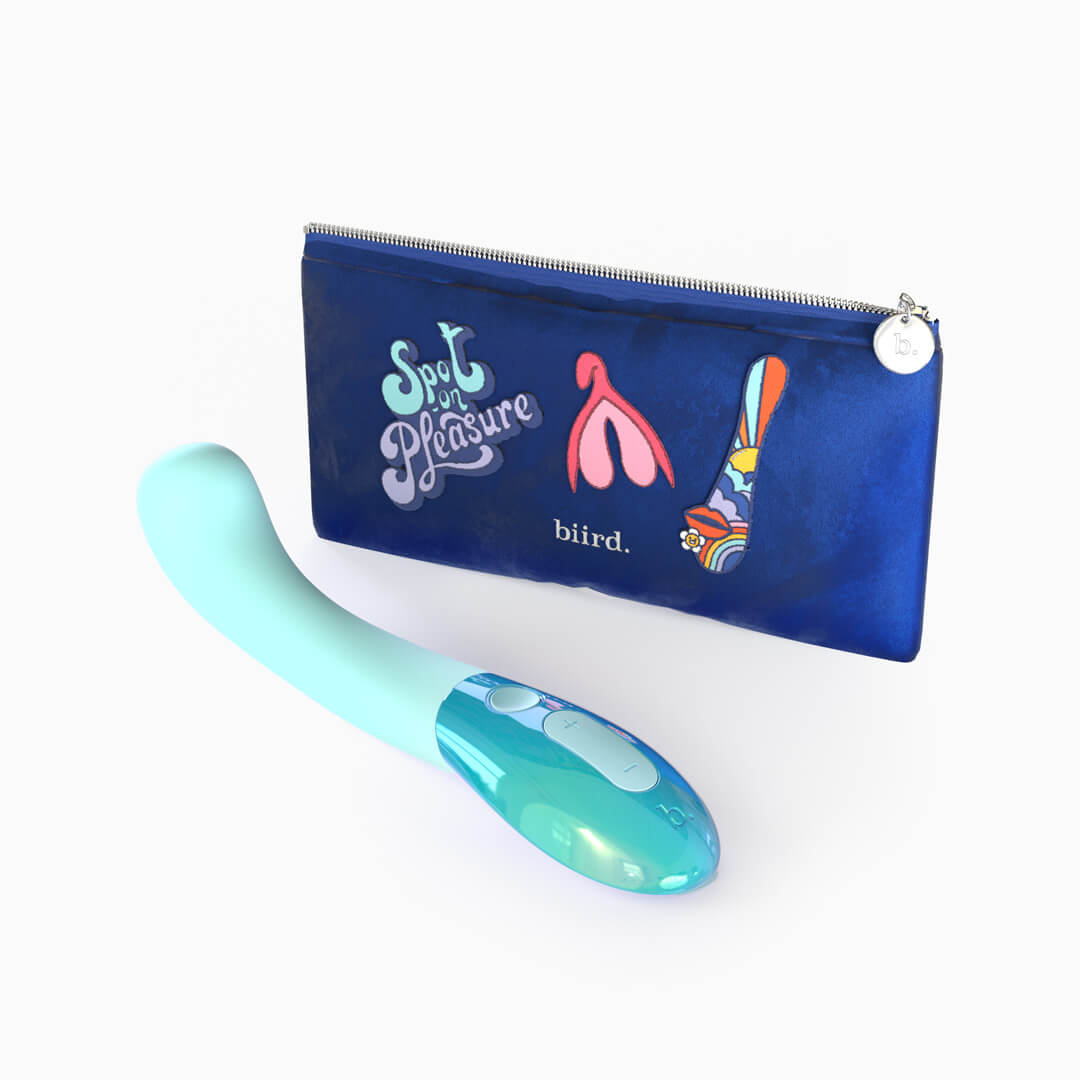
For clitoral stimulation during partnered sex, something like the Lem clitoral massager fits naturally between bodies during penetration, adding direct clitoral stimulation without requiring either partner to change much about what they're already doing. It's a small addition with a genuinely outsized effect on shared pleasure.
The Myth of the "Ideal" Size and Where It Came From
Porn. Mostly porn. The average performer in mainstream adult content is not average by any statistical measure, but that content is consumed at scale and shapes what people unconsciously normalize as "typical." Research on unrealistic sexual expectations from pornography has grown substantially. If this topic resonates with you, the piece on porn comparison and unrealistic standards is worth reading. It goes deeper into how repeated exposure rewires expectation.
And it's not just porn. Locker-room culture, casual jokes, and media tropes all pile on.
The result is a cultural environment where people with entirely average anatomies feel inadequate, and their partners feel like they need to perform enthusiasm they may or may not feel. Both sides of this equation are being done a disservice. The actual numbers say most people fall in a range that is more than adequate for pleasurable sex. The anxiety is the problem, not the anatomy.
Bottom Line: What the Numbers Are Really Telling You
The stats on average penis size exist to be reassuring, not to create new hierarchies. The average erect penis is around 5.1 to 5.5 inches long. Most people with penises fall comfortably within a range that works perfectly well for the kind of connected, attentive, technique-focused sex that actually results in satisfaction for everyone involved. Anxiety about size is common, statistically unfounded for most people, and worth examining.
Your pleasure matters more than any measurement ever could.
Want to make your journey even more exciting? I've handpicked some amazing toys and goodies at Hello Nancy that'll add extra sparkle to your intimate moments. (Here's a little secret. Use 'dirtytalk' for 10% off!)
Frequently Asked Questions
What is the average erect penis size according to research?
Based on clinician-measured data from the landmark Veale et al. (2015) study in BJU International, the average erect penis length is approximately 13.12 cm (5.17 inches), with an average erect girth of around 11.66 cm (4.59 inches). Self-reported surveys tend to produce slightly higher averages, which is why clinician-measured data is considered more reliable.
What is the average flaccid penis size?
The average flaccid penis length is approximately 9.16 cm (3.61 inches), with a flaccid girth of around 9.31 cm (3.66 inches). Flaccid size is not a reliable indicator of erect size, as penises vary significantly in how much they change between flaccid and erect states.
Does penis size actually affect sexual pleasure for partners?
Research consistently shows that most people with vaginas rate emotional connection, communication, and technique far above size when it comes to sexual satisfaction. Over 85% of women in one widely cited survey reported being satisfied with their partner's size. The clitoris, the primary source of orgasm for vulva owners, is external and not directly affected by penetrative length at all.
What is considered a micropenis and how common is it?
Medically, a micropenis is defined as an erect length below 7 cm (approximately 2.76 inches). It affects roughly 0.6% of the population, making it genuinely rare. The vast majority of people fall well within the normal range of 4 to 6.5 inches erect.
Are "growers" more common than "showers"?
Yes. Research suggests that roughly 79% of penises are "growers," meaning they increase significantly in size from flaccid to erect. "Showers" tend to look larger when soft but gain less proportionally during erection. The difference between the two is a spectrum, not a strict binary.
Why do so many men feel insecure about penis size even when they're within normal range?
Cultural factors play a huge role. Porn, media tropes, and locker-room culture all skew expectations away from statistical reality. Studies show that men who are clinically within the normal range still frequently report significant anxiety about their size. In more severe cases, this is classified as penile dysmorphic disorder, a perception problem rather than an anatomy problem.
Does girth or length matter more for sexual pleasure?
Several preference studies suggest girth tends to matter more than length for vaginal stimulation, as it creates more contact with the vaginal walls. Excessive length can actually cause discomfort, especially without full arousal. That said, the clitoris remains the most reliable route to orgasm regardless of penetrative dimensions.
Has average penis size changed over time?
A 2023 meta-analysis of 75 studies found a reported 24% increase in average erect penis length between 1992 and 2021. Researchers are still debating why, with possible contributing factors including diet, environmental hormone exposure, and measurement methodology changes. It is a genuinely puzzling trend with no confirmed explanation yet.
Where is the G-spot and does average penis size reach it?
The G-spot, located on the anterior vaginal wall, sits roughly 5 to 8 cm (2 to 3 inches) inside the vaginal canal. An average erect penis reaches it easily. A curved internal toy like a dedicated G-spot vibrator can reach it even more precisely and consistently, especially because it allows for targeted pressure without depending on positioning or angle.