


 ¥1,955 追加で 無料プレゼント をゲット


Your body's been telling you something is wrong for years. You just never had the right name for it.
Complex PTSD, often written as C-PTSD, is not a character flaw, a personality disorder, or proof that you're "too sensitive." It's what happens when the nervous system spends so long in survival mode that it starts treating everyday life like a battlefield. And the terrifying part? You can look completely fine on the outside while your inner world is on fire.
Let's actually talk about this.
C-PTSD vs. PTSD: They Are Not the Same Thing

Most people have heard of PTSD, the kind that develops after a single traumatic event. A car accident. An assault. A natural disaster. The brain gets stuck replaying one specific horror.
C-PTSD is different at its root. It develops from repeated, prolonged trauma, usually in contexts where escape felt impossible. Think chronic childhood abuse, long-term domestic violence, religious cult environments, or years of emotional neglect. Psychiatrist Judith Herman first coined the term "Complex PTSD" in her 1992 work, arguing that survivors of sustained trauma showed a distinct cluster of symptoms that standard PTSD criteria simply didn't capture (Herman, 1992). The World Health Organization officially recognized C-PTSD as a separate diagnosis in the ICD-11 in 2022, which was a massive deal for everyone who'd been fighting to have their experience seen as legitimate.
The core PTSD symptoms are still there: flashbacks, avoidance, hypervigilance. But with C-PTSD, they come packaged with something extra.
The Symptoms Nobody Talks About

Here's where C-PTSD gets genuinely complicated. Beyond the flashbacks and nightmares, three additional symptom clusters define it, and they touch every corner of a person's life.
The first is emotional dysregulation. This means emotions arrive fast, hit hard, and refuse to follow logical rules. You might go from completely calm to overwhelmed in seconds, not because you're dramatic, but because your nervous system learned to scan constantly for danger and react before your rational brain even gets the memo. Research from a 2024 review confirms that emotional regulation difficulties are one of the most distinguishing features separating C-PTSD from standard PTSD presentations (ChangedDirection.org, 2024).
Then there's the self-perception piece. And this one is brutal. C-PTSD often produces a deep, persistent sense of shame, worthlessness, or feeling fundamentally broken. Not guilt about something you did. Shame about who you are. Survivors frequently internalize the abuse or neglect as evidence that they deserved it. That internal narrative is not truth. It's a symptom.
The third cluster involves relational difficulties. Trusting people feels dangerous. Closeness triggers fear. You might oscillate between desperately wanting connection and pushing everyone away the moment they get too close. This push-pull isn't manipulation. It's the nervous system doing exactly what it was trained to do when relationships were sources of pain.
What Causes C-PTSD
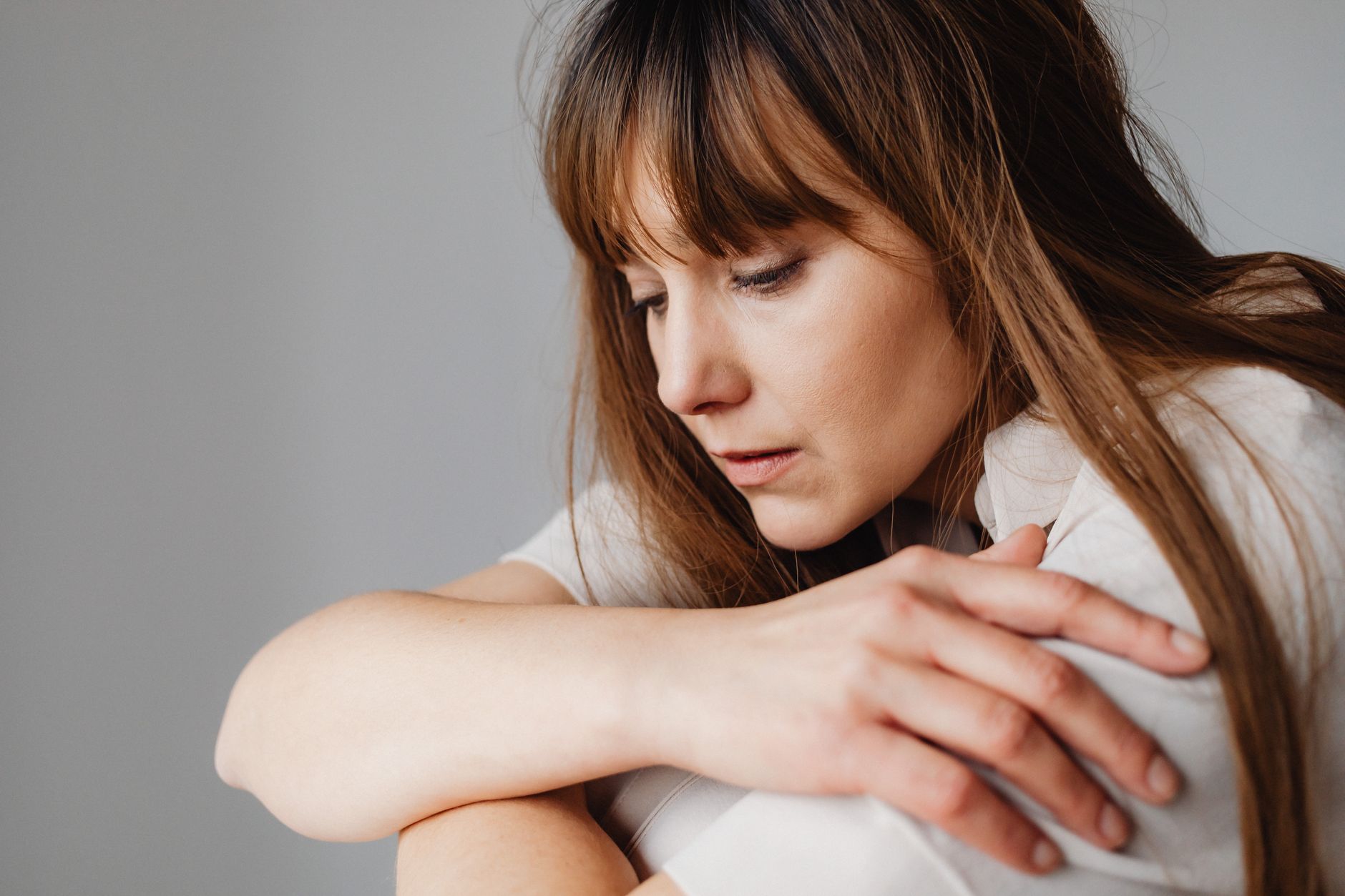
C-PTSD doesn't come from one bad day.
It comes from sustained exposure to environments where someone, often someone who was supposed to love or protect you, caused repeated harm and where leaving wasn't a real option. Childhood abuse (physical, emotional, or sexual) is one of the most common causes. So is long-term intimate partner violence, being trafficked, growing up in a home shaped by addiction or severe mental illness, or enduring sustained bullying with no safe adult to turn to.
The key ingredient is entrapment. When a person can't escape the source of trauma, their nervous system adapts in extreme ways just to keep them alive. Those adaptations are brilliant short-term survival strategies. The problem is they don't automatically switch off when the danger is finally gone.
Age of onset matters too. The younger a person is when sustained trauma begins, the more it shapes developing neural pathways, attachment systems, and core beliefs about safety and self-worth. This is why C-PTSD from childhood can feel so woven into identity. It developed before a stable identity existed.
How C-PTSD Shows Up in Everyday Life

C-PTSD doesn't always look like someone falling apart in public.
Sometimes it looks like someone who is relentlessly high-functioning at work but completely dissociates the moment they're home and alone. It looks like being an incredibly perceptive, empathetic person who also has zero tolerance for perceived criticism, because their nervous system learned that disapproval could mean danger. It looks like catastrophizing small conflicts in relationships because the body remembers what happened last time things went wrong.
Dissociation is another common feature, that strange floating feeling of being slightly outside yourself, watching life happen rather than living it. This is the nervous system's emergency exit when overwhelm gets too intense. Many people with C-PTSD describe feeling like strangers to themselves, disconnected from their own body, emotions, or even their sense of time.
Sleep is usually a war zone too.
Getting a Diagnosis: Why It's Still Hard

Here's an honest frustration worth naming. The DSM-5, which is what most US-based clinicians use, still doesn't formally include C-PTSD as a separate diagnosis. It sits under PTSD with specifiers, or gets misidentified as Borderline Personality Disorder, depression, or anxiety. This matters because misdiagnosis means mismatched treatment, and that can make things worse.
The ICD-11 (used internationally) now formally lists C-PTSD as its own diagnosis, which is a genuine leap forward. But accessing a clinician who is specifically trained in complex trauma can still require significant effort, money, and luck depending on where you live.
If you're seeking answers, asking specifically for a trauma-informed therapist is a good starting point. Mention the words "complex trauma" and "developmental trauma" directly. You deserve a provider who understands the full picture, not just the surface symptoms.
Treatment That Actually Works

Recovery from C-PTSD is real. It is also not linear.
Some of the most evidence-supported approaches include EMDR (Eye Movement Desensitization and Reprocessing), which helps the brain reprocess traumatic memories so they lose their grip. Somatic therapies focus on the body itself, because trauma lives in the nervous system, not just the story you can tell about it. Schema therapy targets the deep core beliefs and patterns developed during early trauma. And Trauma-Focused CBT helps shift the way the mind interprets present-day experiences through a trauma lens.
Peer support and trauma-focused group therapy also carry significant healing power. There is something specifically potent about being in a room with people who actually get it, where you don't have to translate your experience into something more palatable.
Healing doesn't mean the memories disappear. It means they stop running your life.
If you're on a healing journey and looking for ways to feel more at home in your body, reconnecting with physical sensation and pleasure can be a meaningful part of that path. Many trauma survivors find that gentle, self-directed exploration through vibrators for women helps rebuild a relationship with their own body on their own terms. It's not a replacement for therapy, but reclaiming bodily autonomy is genuinely part of healing for many people.
Supporting Someone with C-PTSD

If someone you care about has C-PTSD, the most powerful thing you can offer is consistency.
Not fixing. Not explaining why their reactions seem disproportionate. Just showing up the same way, repeatedly, over time. Safety for a C-PTSD survivor is built through pattern, not through grand gestures. If you notice sexual disconnect in a relationship where one partner has C-PTSD, know this is incredibly common. Trauma affects intimacy deeply, and patience paired with open, non-pressured communication makes a real difference.
Learn their triggers where possible, not to tiptoe around everything forever, but to understand context. Ask what support looks like for them. And educate yourself, because the more you understand C-PTSD, the less you'll take their responses personally.
You don't need to be their therapist. Just be someone they can trust.
If You Recognize Yourself Here
Maybe you've read this whole article nodding.
Maybe you've spent years thinking you were simply broken or "too much" or fundamentally unlovable. That story is a symptom. It is not who you are. C-PTSD is a logical, understandable response to experiences that were genuinely too much for one person to carry alone. The fact that you survived them is not nothing. It's everything.
Getting support isn't weakness. It is the actual work. If you're exploring what connection and self-compassion can look like for you, knowing your own body and clitoral vibrators designed for mindful self-exploration are tools some survivors use to gently reconnect with physical sensation in a safe, controlled way. Your healing gets to look like yours. If you're also dealing with depression symptoms alongside C-PTSD, which is extremely common, that link has some honest, grounded information worth reading.
You are not too late. You are not too broken. You are just beginning.
Want to make your journey even more exciting? I've handpicked some amazing toys and goodies at Hello Nancy that'll add extra sparkle to your intimate moments. (Here's a little secret — use 'dirtytalk' for 10% off!)

The Lem Clitoral Massager is one of those beautifully designed couples toys that also works wonderfully for solo self-discovery, with a lemon-shaped silhouette that's as discreet as it is effective for anyone starting to explore bodily reconnection.
Frequently Asked Questions
What is the difference between PTSD and Complex PTSD?
PTSD typically results from a single traumatic event, while Complex PTSD (C-PTSD) develops from repeated, prolonged trauma in situations where escape felt impossible. C-PTSD includes all core PTSD symptoms plus additional features like deep shame, emotional dysregulation, and significant difficulties with relationships and trust.
Can you have C-PTSD without remembering specific traumatic events?
Yes. Many people with C-PTSD, especially those whose trauma started in early childhood, don't have clear narrative memories of specific events. The body and nervous system hold trauma even when conscious memory doesn't. Symptoms like emotional dysregulation, shame, and hypervigilance can be present without explicit recollection.
Is C-PTSD a recognized diagnosis in the DSM-5?
Not as a separate diagnosis. The DSM-5 (used by most US clinicians) includes C-PTSD symptoms under PTSD with specifiers, or they may be diagnosed as other conditions. The ICD-11, used internationally, formally recognizes C-PTSD as its own distinct diagnosis as of 2022.
How is Complex PTSD treated?
Evidence-supported treatments include EMDR, somatic therapies, Schema Therapy, and Trauma-Focused CBT. Trauma-informed individual therapy is typically the cornerstone of treatment. Group therapy and peer support also play a meaningful role, as shared understanding can be deeply healing for survivors.
Can childhood neglect cause C-PTSD?
Absolutely. Emotional neglect, particularly in early childhood, is one of the leading causes of C-PTSD. The absence of consistent care, attunement, and emotional safety is itself a form of chronic trauma. The nervous system responds to sustained neglect the same way it does to active abuse.
How do I know if I have C-PTSD or Borderline Personality Disorder?
C-PTSD and BPD share overlapping symptoms, which is why misdiagnosis is common. A trauma-informed clinician is best placed to distinguish between them. The key difference is that C-PTSD is explicitly trauma-rooted, while BPD has a broader diagnostic framework. Getting a second opinion from a specialist in complex trauma is always worth pursuing if you feel misdiagnosed.
Does C-PTSD affect relationships and intimacy?
Deeply. C-PTSD often creates fear of closeness, difficulty trusting partners, emotional shutdown, or cycles of push-pull in relationships. Intimacy can feel triggering even with safe people. Trauma-informed couples therapy and open communication about needs and limits are essential for navigating this together.
Can C-PTSD be fully healed?
Recovery is real and well-documented, though "healed" looks different for everyone. Most people work toward integration rather than erasure: the traumatic memories lose their controlling power, emotional regulation improves, and relationships become safer. Full remission is possible for many, especially with sustained, appropriate treatment.
What type of therapist should I look for if I think I have C-PTSD?
Look specifically for a trauma-informed therapist with experience in complex or developmental trauma. Useful search terms include "EMDR certified," "somatic therapy," "schema therapist," or "complex trauma specialist." Don't hesitate to ask a potential therapist directly about their experience with C-PTSD before committing to sessions.


