Add £8.88 to get Free Gift


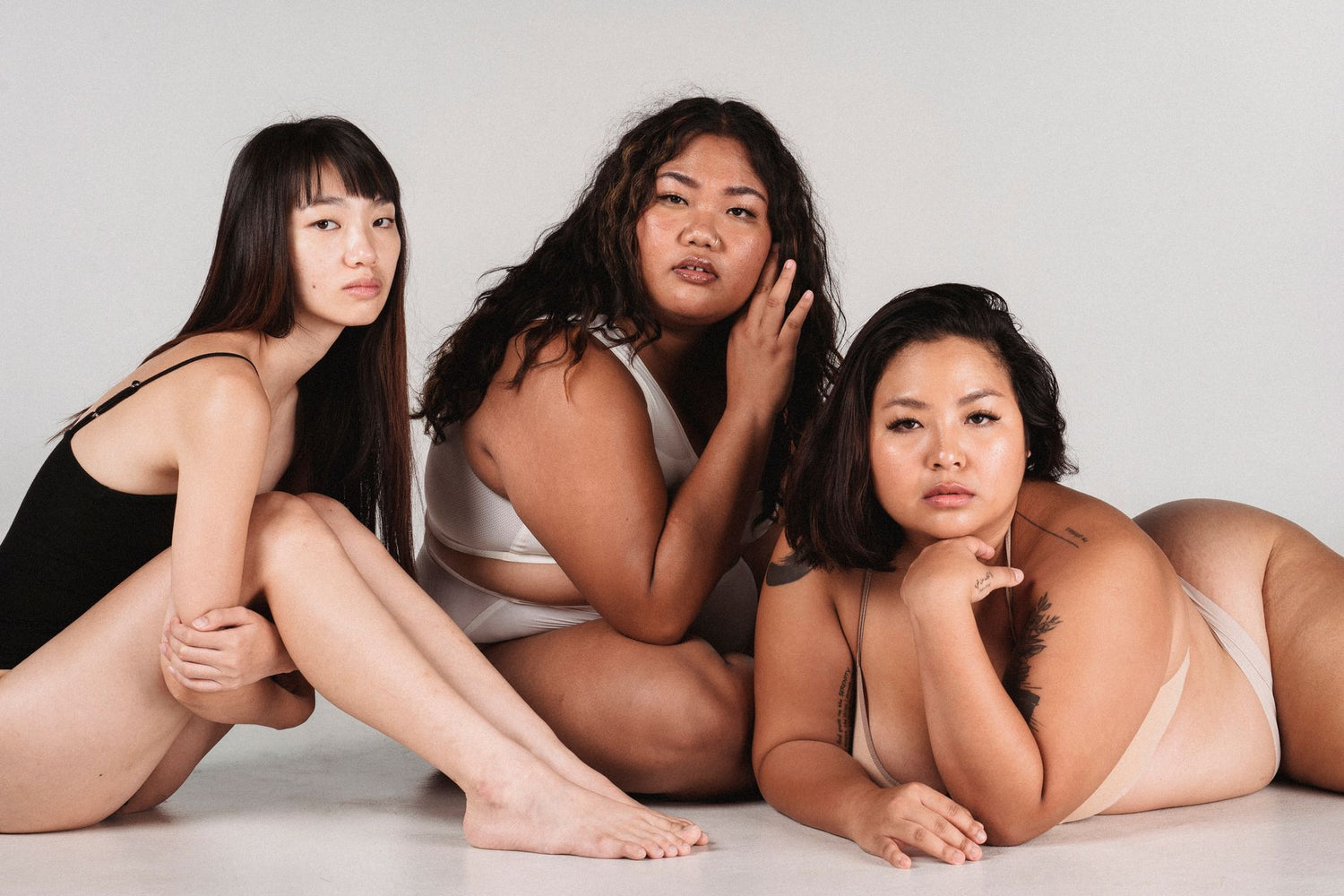
Somebody lied to you at some point. Not cruelly, maybe just carelessly. But the idea that there's a "normal" vulva out there, some tidy, symmetrical, tucked-in standard that yours should match? That's the lie.
Your vulva is yours. Nobody else on this planet has one exactly like it.
Here's what frustrates me about the conversation around vulva appearance: we've let porn, filtered photography, and a very narrow beauty industry write the script. And when real bodies don't match that script, people feel broken. They feel embarrassed. They consider surgery. According to the International Society of Aesthetic Plastic Surgery, 189,058 labiaplasties were reported in 2023, a 14.8% increase compared to 2019. That number tells a story, and it's not one I'm comfortable with.
What a Vulva Actually Looks Like (Spoiler: It Varies Wildly)

Let's get grounded in anatomy for a second, because language matters here. The vulva is the entire external genital area. The labia majora are the outer folds. The labia minora are the inner folds. The clitoral hood sits at the top, protecting the clitoris. The vaginal opening is at the bottom. All of these parts exist on a spectrum so wide it would honestly make your head spin.
Labia minora can range from barely visible to extending well past the labia majora. Neither is unusual. Both are healthy. Research published in 2025 exploring labia minora measurements across diverse groups confirmed what gynecologists have known for decades: there is no single "standard" size, shape, or symmetry. Asymmetry is not a flaw. It's the rule, not the exception.
Color varies too. Vulvas can be pink, peach, brown, deep purple, or a combination of several tones. Pigmentation often darkens with age, hormonal changes, or simply genetics. There's nothing wrong with any of it.
And clitoral hoods? Some are retracted and small, some are larger and more prominent. The clitoris itself ranges in size. None of these variations affect sensitivity, function, or health in any meaningful way.
Where the "Perfect Vulva" Myth Comes From
Here's what we know: the vast majority of vulva anxiety is culturally manufactured. Pornography overwhelmingly features a very narrow aesthetic, specifically smaller, more tucked labia minora, lighter pigmentation, minimal visible clitoral hood. That aesthetic is not representative of actual human bodies. It's a curated selection.
Social media and beauty filters have made things significantly worse. Even gynecological diagrams in textbooks historically skewed toward one look, quietly suggesting that "normal" anatomy has a single face.
The result? A 2013 study found that 43% of women surveyed considered their labia minora appearance important, and 14% believed their own looked abnormal, even though 71% of the same sample self-assessed as normal. That gap between knowing something is probably fine and actually feeling fine about it is where a lot of harm lives.
And that harm is real. Body dissatisfaction related to genital appearance has been linked to lower sexual confidence, reduced pleasure, and even avoidance of intimacy. When you're distracted by how something looks, you stop feeling what it feels.
Reclaiming How You See Your Own Body
This is the part where I tell you that loving your body is a practice, not a destination. But I won't dress it up in vague spirituality, because what you actually need are tools.
Start with exposure. Sounds simple, but most people have genuinely never seen a realistic range of vulvas outside of a clinical context. Projects like the Labia Library or books like "The Vagina Bible" by Dr. Jen Gunter show real, diverse anatomy without a filter in sight. Seeing variety normalizes variety. Your brain recalibrates faster than you'd think.
Second, language shapes experience. When you call something "weird" or "wrong," your nervous system responds to that framing. Try shifting to neutral descriptors: "mine is longer," "mine is asymmetrical," "mine is darker." These are observations, not verdicts.
Third, and this one matters: pleasure is a powerful antidote to shame. When you feel what your body can do instead of fixating on how it looks, the whole relationship shifts. Exploring your own anatomy with curiosity, whether through solo intimacy, clitoral vibrators, or simply a hand mirror and a calm afternoon, builds a kind of familiarity that shame cannot survive in. Familiarity and shame rarely coexist.
Pleasure and Anatomy: A Relationship Worth Nurturing
Every vulva also responds to touch differently. That's not a bug. It's the whole point.
Labia minora have a significant number of nerve endings, and their size and prominence can influence the kind of stimulation that feels best. A more prominent clitoral hood might mean indirect stimulation works better. A more exposed clitoris might prefer lighter, broader pressure. There's no universal technique because there's no universal anatomy. This is why mutual masturbation and open communication with a partner are so underrated. You're essentially sharing a user manual that only you can write.
If you're someone who wants to explore clitoral stimulation on your own terms, the Lem Clitoral Massager is designed with a gentle, targeted approach that works across a wide range of anatomies. It's not one-size-fits-all in philosophy, which I genuinely appreciate.

And if you're curious about vibrators for women that accommodate different sensitivities and body types, exploring a well-curated range makes that discovery feel like play rather than a pharmacy visit. That tone shift matters.
When to Actually Talk to a Doctor
Appearance alone is almost never a medical reason to do anything. But there are genuine signals worth paying attention to. Sudden changes in color, texture, or the appearance of bumps, sores, or thickening should be checked out. Persistent itching, burning, or pain during sex warrants a conversation with a gynecologist. These are health signals, separate entirely from the aesthetic anxiety most people carry.
Labiaplasty is a real procedure with real recovery, real risks, and real permanence. If you're considering it because of genuine physical discomfort (chafing, catching on clothing, discomfort during cycling or sex), that's a legitimate medical conversation to have with a specialist. If you're considering it because you've decided you look wrong? Please pause. Talk to someone first. A therapist who works with body image, ideally. What you think you need surgically is often something that heals differently.
Your body is not a problem to fix.
The Bigger Picture
Labia, clitoral hoods, pigmentation, symmetry, texture. All of it is just. your body being a body. The diversity isn't the anomaly. The single-standard myth is.
Unlearning that myth takes time. It takes looking at real bodies, reading honest resources, and letting pleasure be a teacher instead of an afterthought. If you want to go deeper on confidence and self-acceptance, the 25 affirmations for sexual healing and self-acceptance we put together are genuinely worth your time. Not because words magically fix things. Because repetition rewrites framing, and framing is where this all starts.
You deserve to feel at home in your own body. Not one day. Right now.
Want to make your journey even more exciting? I've handpicked some amazing toys and goodies at Hello Nancy that'll add extra sparkle to your intimate moments. (Here's a little secret, use 'dirtytalk' for 10% off!)
Frequently Asked Questions
Is it normal for one labia to be larger than the other?
Yes, completely normal. Labial asymmetry is actually more common than perfect symmetry. One side being larger, longer, or differently shaped than the other is a standard anatomical variation, not a sign of anything wrong.
Why is my vulva darker than the surrounding skin?
Genital skin naturally has more melanin-producing cells, which means it often appears darker than the inner thighs or stomach. Hormonal changes, puberty, pregnancy, and simply genetics all contribute to pigmentation. Darker vulvar skin is healthy and normal.
Can labia minora stretch or change shape over time?
Yes. Labia minora can change with age, hormonal shifts (especially around puberty, pregnancy, and menopause), and weight changes. These changes are natural. They don't signal damage or dysfunction.
What is considered a normal labia size?
There is no single "normal" size. Research shows labia minora length ranges from under 1 cm to over 5 cm, and all measurements within that range appear in healthy individuals. What matters is whether your labia cause you physical discomfort, not whether they match a visual standard.
Does vulva appearance affect sexual pleasure or sensitivity?
Not in a negative way. Variations in anatomy simply mean that different types of stimulation feel better for different people. Larger labia minora or a more prominent clitoral hood may respond better to certain angles or pressures. It's about learning your own body, not comparing it to anyone else's.
Should I be worried if my labia minora extend past my labia majora?
No. This is one of the most common vulva configurations there is. It only becomes a medical concern if it causes persistent physical discomfort like chafing, pain during exercise, or pain during sex. Appearance alone is not a reason for concern or surgery.
How can I feel more comfortable with how my vulva looks?
Exposure to realistic, diverse imagery helps significantly. Resources like the Labia Library or books by gynecologists like Dr. Jen Gunter show real anatomical range without filters. Reconnecting with your body through self-exploration, and focusing on sensation over appearance, also builds comfort over time.
Is labiaplasty safe and is it the right choice for me?
Labiaplasty is a surgical procedure with real recovery time, risks, and permanent results. If you're experiencing genuine physical discomfort, it's worth discussing with a specialist. If the motivation is primarily aesthetic, speaking with a therapist who specializes in body image first is strongly recommended. Many people find that body image work addresses the root concern more effectively than surgery.
Does pubic hair affect how a vulva looks or functions?
Pubic hair is a natural feature that serves a protective function. How much you have, its texture, and its color are all genetically determined. Grooming choices are entirely personal. There is no health benefit to removing it, and some studies suggest it may reduce friction and lower infection risk.