Add £8.88 to get Free Gift



Let's be real. Most of us were never actually taught how our own bodies work. Nobody sat us down and explained pleasure. We just... figured it out alone, half-confused, probably feeling a little guilty about it.
This guide exists to fix that.
Talking about how to orgasm isn't scandalous or overly clinical. It's just information you deserve to have. Whether you've never had one, struggle to reach one with a partner, or simply want to understand what's happening inside your body, you're in exactly the right place. No judgment, no textbooks. Just honest, warm, genuinely useful guidance.
What an Orgasm Actually Is (Without the Medical Jargon)

An orgasm is essentially your body's release of built-up sexual tension. Think of it like a deep, full-body exhale you didn't know you were holding.
Physiologically, it involves rhythmic muscular contractions in the pelvic region, a flood of feel-good neurochemicals like dopamine and oxytocin, and often a warm, spreading sensation that radiates outward. It doesn't always look like what you've seen in movies. Seriously, those performances set everyone up for unrealistic expectations.
For many people with vulvas, orgasms happen through clitoral stimulation, internal stimulation, or a mix of both. For people with penises, orgasm typically occurs alongside ejaculation, though they're actually two separate physiological events. Everyone's experience is different, and that's not a flaw. That's just human variation.
The Orgasm Gap Is Real, and It's Not Your Fault

Here's something that might immediately take the pressure off: research shows that women's orgasm rates during partnered sex range from 46% to 58%, compared to 70% to 85% for men (Frederick et al., 2024, Sexual Medicine). That gap is enormous. And it exists not because of biology, but because of how sex is typically structured, taught, and prioritized.
The orgasm gap is cultural.
Sex education historically centered penetration as the main event, which leaves out the clitoris almost entirely. A large portion of the clitoris is internal and not stimulated by penetration alone. So if you've spent years wondering why orgasm feels elusive, this is probably a significant part of the reason. The system failed you. Your body did not.
How to Orgasm Solo: Starting With Yourself

Solo exploration is the single most effective way to learn what your body responds to. Partners can be wonderful, but they can't read your mind. You need to know your own map first.
Start by creating a setting where you genuinely feel safe. Warmth, privacy, and zero time pressure matter more than people expect. A lot of people try to rush toward orgasm, which is actually counterproductive because your nervous system needs to feel calm and unrushed to let arousal build properly.
Exploration starts before you even touch your genitals. Take your time with touch across your whole body. Notice what creates warmth, what creates sensation, what feels flat. Slow breath helps enormously here. Shallow, tense breathing signals stress to your brain. Long, slow inhales signal safety and allow your body to open up.
When you do begin genital stimulation, start gently. For those with a clitoris, begin around the outer hood rather than directly on the exposed glans, which can be overly sensitive at first. Experiment with circular motions, light pressure, side-to-side strokes. There's no universal correct technique. Your body will tell you what it wants if you slow down enough to listen.
If you're curious about adding a toy to support your solo exploration, clitoral vibrators are an excellent starting point. Consistent, targeted stimulation can help you experience arousal and release in a way that's hard to replicate with hands alone, especially as a beginner.
Understanding Arousal: It Has to Come First

You can't orgasm without arousal. Full stop.
Arousal is the process where blood flows to your genitals, lubrication increases, nerve endings become more sensitive, and your brain starts filtering out distractions. It takes time. Especially for people with vulvas, full arousal can take 20 to 45 minutes. Trying to skip this stage and reach orgasm is like trying to sprint before your body has warmed up. The outcome is usually frustration.
Mental arousal matters just as much as physical. Your brain is, genuinely, your most powerful sexual organ. Fantasy, anticipation, reading something erotic, or simply imagining a scenario that excites you can dramatically accelerate and deepen physical arousal. Don't underestimate this.
If staying mentally present during sex or solo play feels hard for you, you're definitely not alone. staying present during sex is a skill that can be genuinely practiced and improved. It's worth reading up on.
How to Orgasm With a Partner

Partnered orgasms involve one extra ingredient that solo play doesn't: communication.
Telling your partner what feels good isn't awkward. It's genuinely the most effective thing you can do. A simple "a little slower" or "just like that" is enough. If verbal guidance feels uncomfortable at first, guide with your hand. Move their hand where you want it. Show, rather than narrate.
For people with vulvas in partnered sex, positions that allow for simultaneous clitoral stimulation dramatically increase the likelihood of orgasm. This can be a hand (yours or theirs), a small vibrator placed between bodies, or intentional grinding pressure. Penetration alone, for the majority of people with vulvas, does not produce orgasm. Knowing this removes an enormous amount of confusion and blame from partnered sex.
For people with penises, the main barriers to orgasm are often anxiety, performance pressure, or difficulty staying mentally present. Slowing down, reducing goal-orientation, and focusing on sensation rather than outcome tends to help significantly.
Exploring couples toys together can also introduce a playful, low-pressure dynamic that makes communication easier and arousal deeper for both partners.
Common Reasons Orgasm Feels Out of Reach

If orgasm has felt elusive, something specific is almost always behind it.
Stress and anxiety are the top culprits. A 2018 study published in PubMed identified stress and anxiety as the most commonly endorsed reasons for orgasmic difficulty during partnered sex among 452 women (Vannier & Rosen, 2018). When your nervous system is activated by stress, sexual response gets biologically deprioritized. That's just your body following its own survival programming, not a permanent state.
Shame and body image issues are deeply connected to orgasmic difficulty too. If part of your attention during sex is spent worrying about how your body looks, sounds, or smells, that mental bandwidth isn't available for pleasure. This connects directly to how confidence shapes sexual pleasure, which is something worth genuinely exploring.
Medication is also a real factor. Many antidepressants, particularly SSRIs, are known to delay or inhibit orgasm. If you suspect this applies to you, speak with your doctor. There are often adjustments or alternatives available.
Sometimes the reason is simply inexperience. Nobody is born knowing exactly what stimulation they need. It's a learning process, and you get to take your time with it.
Types of Orgasms: More Than One Path

There are more types of orgasm than most people realize, and no single type is superior.
Clitoral orgasms are the most commonly reported type for people with vulvas. They're often described as localized, intense, and relatively quick to reach once you understand what stimulation works for you. G-spot or internal orgasms are described as deeper and more diffuse, sometimes with a sense of pressure and fullness. Blended orgasms, which combine clitoral and internal stimulation, tend to be particularly intense. Many people experience cervical, nipple, or even entirely non-genital orgasms through sustained arousal and mindful body attention.
For people with penises, prostate stimulation can produce significantly more intense orgasms than penile stimulation alone. This is a fact that's frequently undersold.
The point isn't to chase the most impressive category. It's to explore and discover what resonates with your own body, without ranking the results.
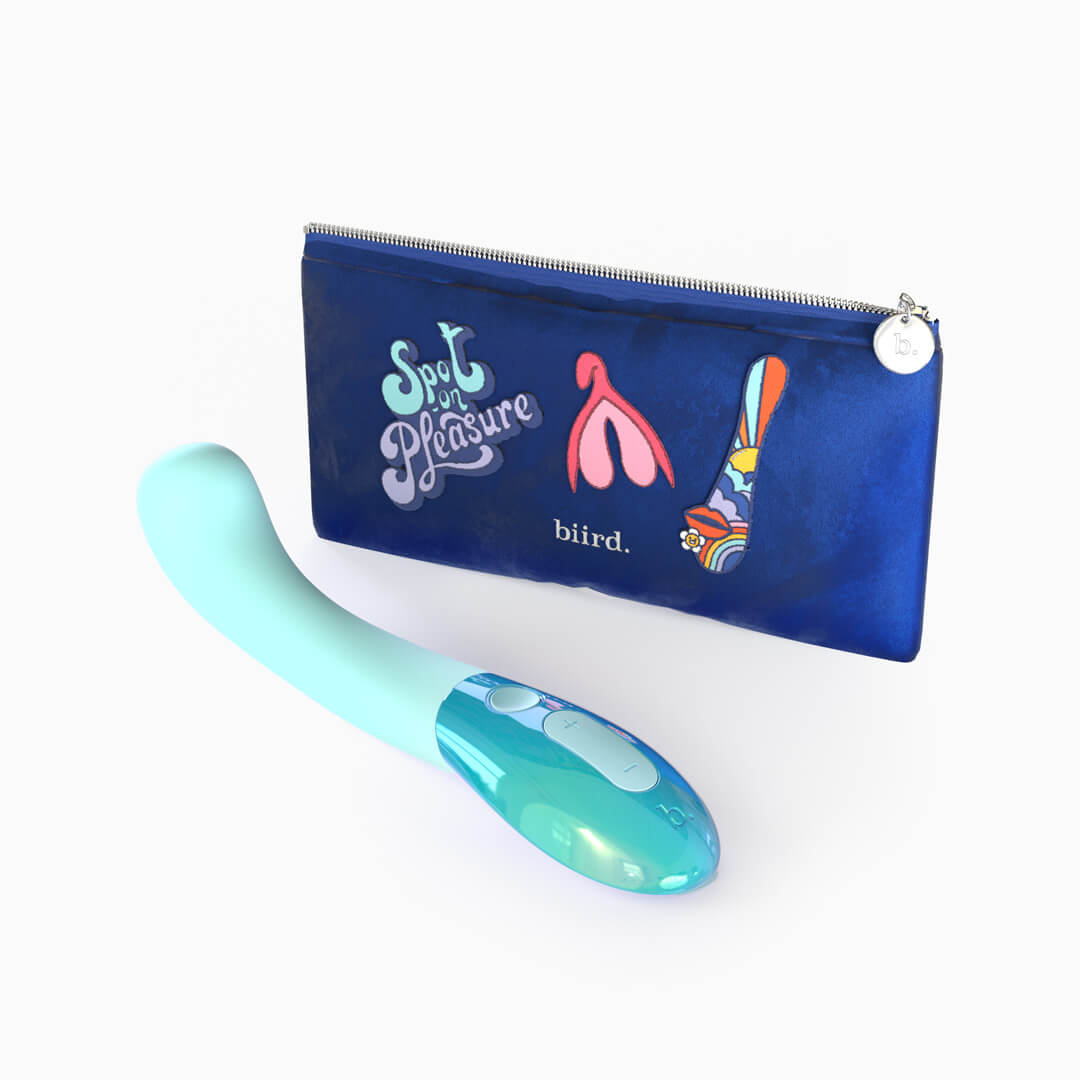
If you want to explore internal stimulation, the Gii Glow G-spot vibrator is a beautifully designed option worth considering. It's shaped specifically to target internal anatomy with precision and care.
Practical Tips to Actually Get There

Here's what actually helps, based on everything we understand about sexual physiology and psychology.
Remove the goal. This sounds paradoxical, but orgasm is most likely to happen when you're not fixated on achieving it. Focus on sensation instead. What feels good right now? Stay in that moment instead of monitoring progress.
Breathing is underrated. Deep, rhythmic breathing during arousal helps blood flow and signals safety to your nervous system. Many people accidentally hold their breath as arousal builds, which actually interrupts the process.
Consistency beats intensity. A steady, consistent rhythm of stimulation is far more effective than varying pressure and technique constantly. Once you find something that's working, stay with it.
Lubrication genuinely changes everything. Friction without lubrication reduces sensation and creates discomfort, both of which work against arousal. Use a good water-based lube generously and without embarrassment.
Give yourself time. Literally, schedule it. Many people find that orgasm becomes far more accessible when there's no clock pressure, no phone nearby, and no reason to rush. Pleasure is worth protecting on your calendar. You deserve that space.
The Role of Toys in Learning to Orgasm
Vibrators exist for a reason: consistent, precise stimulation that's genuinely difficult to replicate manually. For beginners, they can be profoundly helpful because they take the guesswork out of pressure and rhythm.
If you're exploring vibrators for women for the first time, start with something simple, quiet, and body-safe. The Lem clitoral massager is a wonderfully intuitive beginner option, shaped ergonomically and designed specifically for external clitoral stimulation.

Using a toy doesn't mean your body is broken or that you need one permanently. It means you're giving yourself an effective, low-pressure tool for learning. There's real wisdom in that.
Bottom Line
Orgasm isn't a performance. It's not a milestone you've failed to reach. It's a biological process that happens when your body feels safe, aroused, and unhurried. Most of the barriers are learnable and addressable.
Be patient with yourself. Explore without judgment. And remember: your pleasure matters just as much as anyone else's. It always has.
Want to make your journey even more exciting? I've handpicked some amazing toys and goodies at Hello Nancy that'll add extra sparkle to your intimate moments. (Here's a little secret, use 'dirtytalk' for 10% off!)
Frequently Asked Questions
Why can't I orgasm no matter what I try?
There are several common reasons, including chronic stress, anxiety, shame, body image issues, certain medications like SSRIs, or simply not yet knowing what stimulation works for your body. None of these are permanent. Identifying which factor applies to you is the first step, and most are genuinely addressable with the right approach and time.
How long does it take to orgasm for the first time?
There's no universal timeline. Some people experience orgasm quickly once they understand what stimulation they need, while others take weeks or months of exploration. The most important thing is removing time pressure entirely. Rushing actually delays orgasm because it keeps your nervous system in an alert state rather than a receptive one.
Is it normal not to orgasm during penetrative sex?
Completely normal. Research consistently shows that the majority of people with vulvas do not orgasm from penetration alone. The clitoris is the primary site of sexual pleasure and it requires direct stimulation. Adding manual or toy-based clitoral contact during penetrative sex dramatically changes the experience for most people.
Can you teach yourself to have an orgasm?
Yes, absolutely. Solo exploration is widely recommended by sex therapists as the foundation for learning orgasmic response. Starting in a private, unhurried setting and experimenting with different types of touch and pressure helps your brain and body build the neural pathways associated with sexual release.
Do vibrators help with learning to orgasm for beginners?
They genuinely can. Vibrators provide consistent, precise stimulation that's difficult to replicate manually, which makes the process of discovering your personal arousal pattern much faster. Many beginners find that experiencing orgasm with a toy first makes it easier to understand and replicate the sensation in other contexts.
How do I orgasm faster during sex with a partner?
Communication is the fastest route. Guiding your partner with verbal or physical cues removes guesswork. Beyond that, ensuring you're fully aroused before penetration or focused genital stimulation begins, adding clitoral stimulation during sex, and using slow deep breathing to stay present all contribute meaningfully.
What is the orgasm gap and does it affect me?
The orgasm gap refers to the significant difference in orgasm rates between men and women during partnered sex, a gap that research places at roughly 20 to 30 percentage points. It affects a large portion of women and people with vulvas and is primarily caused by cultural and educational gaps around female pleasure, not by biology.
Can anxiety stop you from having an orgasm?
Yes. Anxiety activates your sympathetic nervous system, the fight-or-flight response, which biologically competes with sexual arousal. Managing anxiety before or during sex through breathing, grounding techniques, or even just reducing time pressure can make a significant difference for most people.
What are the different types of female orgasm?
The most widely recognized types include clitoral orgasms (external stimulation), G-spot or vaginal orgasms (internal stimulation of the anterior vaginal wall), blended orgasms (both simultaneously), and less commonly, cervical, nipple, or non-genital orgasms achieved through sustained arousal. There's no hierarchy. Every type is valid.