Add £9.12 to get Free Gift



Somebody just posted the ring photo. You liked it immediately. And then you put your phone face-down on the table and just... sat there.
Engagement envy is one of those feelings that sneaks up on you before you even know its name. You're genuinely happy for your friend. And also, somehow, a little hollow inside. Both things are true at once, and that contradiction can feel confusing or even shameful.
Here's the thing nobody tells you: that hollow feeling isn't a character flaw. It's data.
What Engagement Envy Actually Is (And Isn't)
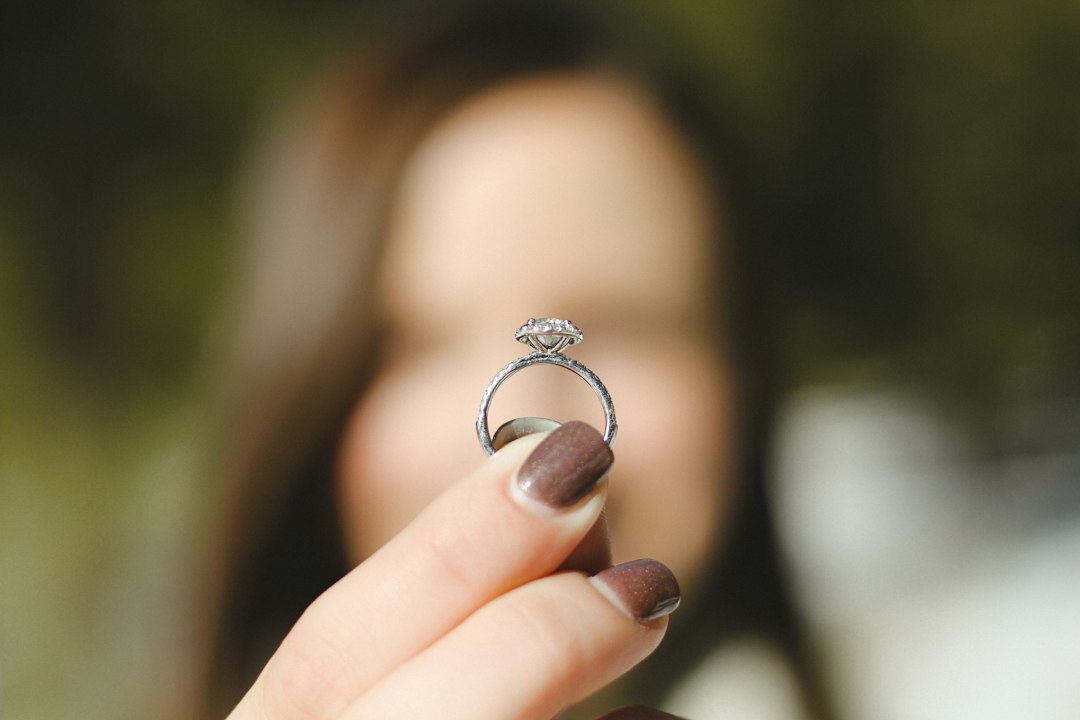
Engagement envy is the quiet ache you feel when someone else gets the relationship milestone you want. Or think you should want. Or aren't sure you want at all. It isn't about being a bad friend. It isn't about being petty or small. It's a very human response to upward social comparison, which researchers have been studying for decades.
Psychologist Leon Festinger first introduced social comparison theory back in 1954, and the core idea still holds: we measure our lives against the people around us. Seeing a friend hit a milestone you haven't reached can trigger a cascade of emotions, from longing to self-doubt to anxiety, especially when social media turns every engagement into a public announcement you can't avoid (Festinger, L., 1954, A Theory of Social Comparison Processes, Human Relations).
The key distinction is this: envy tells you what you want, not what you lack.
1. Your Timeline Is Not Running Late

Society hands us a script very early. Graduate. Date. Commit. Engage. Marry. And if you're not following that script on cue, the world has a way of making you feel like you missed the train.
You didn't miss the train. The train isn't real.
People get engaged at 22 and divorced at 27. People get engaged at 38 and build the happiest partnership of their lives. Milestone timing has almost zero correlation with relationship quality. What matters far more is whether the relationship is genuinely right. rushing a commitment because everyone around you is making one is one of the quieter ways people end up unhappy.
When you catch yourself feeling behind, try reframing. You're not late. You're on your own route. Those aren't the same thing at all.
2. Envy Is a Message, Not a Verdict

When envy shows up, most of us try to push it away. We tell ourselves to be grateful. We scroll past the engagement photo faster. We perform cheerfulness at the congratulations brunch and then feel quietly exhausted by the end of it.
But envy, like most uncomfortable emotions, doesn't disappear when you ignore it. It just gets louder.
A much more useful approach is to treat envy as a signal and get curious about what it's actually telling you. Ask yourself: Is this ache about wanting commitment specifically? Or about wanting to feel chosen? Or about longing for a stable partnership? Or about fear that love isn't coming for you? These are very different messages, and they each point to something worth paying attention to. The feeling isn't the problem. It's the starting point.
3. Your Relationship Is Not a Competition
Comparing your relationship to someone else's is like comparing your body to someone else's. It looks like information. It isn't.
Every relationship has its own internal logic, its own pace, its own specific texture. The couple who got engaged after six months of dating is navigating a completely different set of circumstances than you are. They might have had fewer hesitations. Or more financial pressure. Or one partner who proposed just to stop the other from leaving. You genuinely don't know. What you see from the outside is the ring and the happy photo. You don't see the conversations, the compromises, or the doubts.
If you're in a relationship and feeling the envy acutely, the real question to ask your partner isn't "why haven't you proposed yet?" It's a broader, more honest conversation: Where are we going? What does commitment look like for us? That conversation matters so much more than a diamond.
For single people feeling this particular ache, the comparison trap works differently but just as insidiously. It's easy to start believing that everyone else figured out something you haven't. They didn't. They're just further along one specific path. Yours is still unfolding.
4. Social Media Is a Highlight Reel, and Engagement Season Is Brutal
Research from Meier and Johnson (2022) found that upward social comparison on social media is strongly associated with increased envy and declining psychological wellbeing. Engagement announcements are basically purpose-built for this: they're among the most celebrated, most visible, most algorithmically-amplified posts on any platform.
You are not weak for being affected by this. The platforms are literally engineered to make you see the best moments of other people's lives in the most emotionally impactful way possible.
Here's a practical thing: muting is not unfriending. You can genuinely love someone and also decide that you don't need to see their engagement content in your feed every single day for the next eight months. That's not cruelty. It's self-awareness. Give yourself permission to manage your inputs without guilt.
5. Wanting More for Yourself Is a Good Thing
Engagement envy, stripped of the shame, is actually just desire. And desire is not your enemy.
Wanting deep commitment, wanting to be chosen, wanting a partnership that lasts. these are beautiful, human things to want. The only problem is when we let the wanting curdle into resentment, either toward the person who has what we want, or toward ourselves for not having it yet. Neither of those is fair, and neither of those helps.
So instead of managing the feeling away, try honoring what it points to. Maybe it's time to have a real conversation with your partner about where things are heading. Maybe it's time to honestly evaluate whether your current relationship is the one you actually want to commit to forever. Maybe it's time to invest in your own sense of self so that your happiness isn't so tethered to a relationship status. Or maybe it's just time to sit with the feeling for a minute, acknowledge it, and then put your phone back face-up.
You're allowed to want more. You're allowed to feel the gap between where you are and where you want to be. That gap isn't failure. It's just the part of the story you're still writing. ✨
And while you're doing that work. whether it's getting to know your own desires better, deepening intimacy with a partner, or simply investing in your own pleasure and wellbeing. couples toys can actually be a genuinely lovely way to reconnect and prioritize each other. Sometimes the most romantic thing isn't a ring. It's choosing each other on a regular Tuesday.
If you're in the season of loving yourself through the wait, the vibrators for women at Hello Nancy are designed with exactly that energy. Your pleasure doesn't have to wait for anyone else's timeline.

The Lem Clitoral Massager is one of those feel-good finds that reminds you your body is worth celebrating right now, not later, not when life looks a certain way. Just now.
And if you find yourself wanting to explore more of the clitoral vibrators available, that's a genuinely great place to start. Pleasure is never a consolation prize. It's the point.
Want to make your journey even more exciting? I've handpicked some amazing toys and goodies at Hello Nancy that'll add extra sparkle to your intimate moments. (Here's a little secret. use 'dirtytalk' for 10% off!)
Frequently Asked Questions
Is engagement envy normal in a relationship?
Completely normal. Feeling a pang of envy when someone else hits a milestone you want is a very human response rooted in social comparison. It doesn't mean your relationship is failing or that you're a bad partner. It just means you have desires worth paying attention to.
How do I deal with engagement envy when all my friends are getting engaged?
Start by giving the feeling some space instead of pushing it away. Ask yourself what the envy is actually pointing to: do you want commitment, a specific partner, or just to feel less behind? Muting engagement content on social media is also a practical and healthy step. You don't have to consume content that consistently makes you feel small.
Can engagement envy damage my relationship?
It can if it goes unexamined. If the envy pushes you to pressure your partner into a proposal before you've both genuinely talked about it, that pressure can create resentment and conflict. The healthier move is to use the feeling as a prompt for an honest conversation about where you both see things going.
What if I don't even want to get married but still feel engagement envy?
This is more common than people admit. Sometimes engagement envy isn't really about wanting a ring. It's about wanting to feel chosen, loved, or seen. Your specific desire for a committed partnership can look completely different from traditional marriage and still be entirely valid. The feeling is worth unpacking regardless of whether a proposal is your actual goal.
How do I stop comparing my relationship timeline to others?
The comparison instinct is hard-wired, so trying to eliminate it entirely is a losing battle. What works better is interrupting the comparison with a real question: what do I actually want, separate from what I think I should have by now? Anchoring your sense of progress in your own values rather than external milestones takes practice, but it's the most sustainable shift you can make.
Should I tell my friend I'm envious of their engagement?
Probably not in those exact words, especially right after the announcement. Your friend's engagement moment isn't the place for your emotional processing. Give yourself time to sit with the feeling first. If your envy is affecting the friendship long-term, a gentle, honest conversation might help. but lead with love, not grievance.
Does engagement envy go away on its own?
Sometimes. If it's a passing feeling tied to a specific announcement, it often fades naturally. If it's recurring and intense, it's usually a signal that something in your own life needs attention: a conversation, a decision, or a shift in how you're measuring your own worth. That kind of envy is worth exploring, not just waiting out.
Is it possible to be happy for someone and still feel envious of their engagement?
Absolutely. These two feelings coexist constantly in real human emotional life. Genuine joy for someone else and personal longing are not mutually exclusive. Feeling both at once doesn't make you a hypocrite. It makes you honest.