Add ¥2,003 to get Free Gift


Your mind goes somewhere else right when you need it most. Sound familiar?
It happens mid-kiss, or mid-touch, or somewhere deep into a moment that's supposed to feel good. Suddenly your brain is running a full commentary track. Am I doing this right? Do I look weird? Are they actually enjoying this? And just like that, you've left the room without moving an inch.
Anxiety during sex is more common than most people admit. Research estimates that sexual performance anxiety affects anywhere from 9% to 25% of men and 6% to 16% of women, making it one of the most frequent concerns brought to sex therapists regardless of gender or relationship stage (Therapy Group DC, 2024). But here's the thing nobody tells you: having anxiety during sex doesn't mean something is broken. It means your nervous system is doing exactly what it was designed to do. It's just doing it at a really inconvenient time.
Why Your Brain Pulls the Escape Hatch During Intimacy

Intimacy is vulnerable. Full stop.
When we get close to someone physically, we're also exposing ourselves emotionally, which is exactly the kind of situation the threat-detection part of your brain loves to overreact to. Your nervous system doesn't distinguish between "dangerous" and "emotionally risky." It sees vulnerability and it starts scanning for exits. The result? Overthinking, distraction, a sudden urge to mentally draft your grocery list. This isn't weakness. It's biology being unhelpful.
Sex therapists call this "spectatoring," a term coined by pioneering researchers Masters and Johnson, describing the experience of mentally stepping outside your own body to watch and judge yourself during sex. It's like being the director and the critic simultaneously, while also trying to be the actor. No wonder it kills the mood.
The anxiety loop works like this: you feel self-conscious, your body tightens, arousal dims, you notice arousal dimming, and then you feel more self-conscious. Round and round it goes. Understanding the loop is the first step toward interrupting it.
What Anxiety During Sex Actually Feels Like

Not everyone experiences this the same way. That's worth saying out loud.
For some people, it shows up as physical tension. Shoulders creeping toward ears, jaw going tight, difficulty breathing deeply. For others it's purely mental. A constant stream of self-evaluation that refuses to quiet down. Sometimes it's a mix: a racing heart that you can't tell is excitement or dread. And sometimes it manifests as numbness, a strange emotional flatness that makes the whole experience feel like you're watching it happen to someone else.
There's also the anticipatory kind. The anxiety that kicks in before anything even starts, when you know intimacy is on the table and your brain starts preloading worries. This can lead to avoidance, which then creates its own guilt and distance in a relationship.
All of these are valid. None of them make you bad at sex or bad at loving someone.
How to Actually Stay Present: Grounded Techniques That Work

Mindfulness isn't just for yoga retreats. It's one of the most evidence-backed tools for reducing sexual anxiety. A systematic review published in PLOS ONE found that mindfulness-based interventions significantly improved subjectively evaluated arousal, sexual satisfaction, and reduced fear linked with sexual activity. The key isn't emptying your mind. It's redirecting it, gently and repeatedly, to sensation.
Start with your breath. Seriously. One slow, deliberate exhale signals to your nervous system that you're safe. It sounds almost embarrassingly simple, but it physically downshifts your stress response. Do this before, during, whenever the spiral starts. You're not performing calm. You're creating it.
Next, try anchoring to sensation instead of narrative. When your brain starts narrating, bring your attention to what you can physically feel right now. The warmth of a hand. The texture of skin. The weight and rhythm of a body close to yours. You're not fighting the anxious thoughts. You're just choosing not to follow them. That small act of redirection, practiced again and again, is what genuinely shifts the experience over time.
Communication is also deeply underrated here. Telling your partner "I'm a little in my head tonight" is not a mood killer. It's an intimacy builder. It gives you both permission to slow down, laugh a little, and reconnect without the pressure of pretending everything is effortlessly perfect. If intrusive thoughts during sex are something you struggle with regularly, knowing your partner is a soft landing place makes a real difference.
Rebuilding Confidence Through Solo Exploration
Sometimes the best place to start isn't with a partner at all.
Solo exploration allows you to build a relationship with your own body without an audience. There's no performance. No evaluation. Just you, getting to know what you actually enjoy without the pressure of someone else watching or waiting. This is especially powerful if your anxiety is tied to body image or a fear of not being "enough." Reconnecting with pleasure on your own terms can quietly dissolve a lot of that self-judgment.
Clitoral vibrators designed for intuitive use, like the Lem Clitoral Massager from Hello Nancy, are a genuinely good starting point. Lem's soft, rounded shape and gentle rumbly vibrations make solo exploration feel approachable rather than overwhelming, which is exactly the kind of low-stakes entry point that helps rebuild confidence.
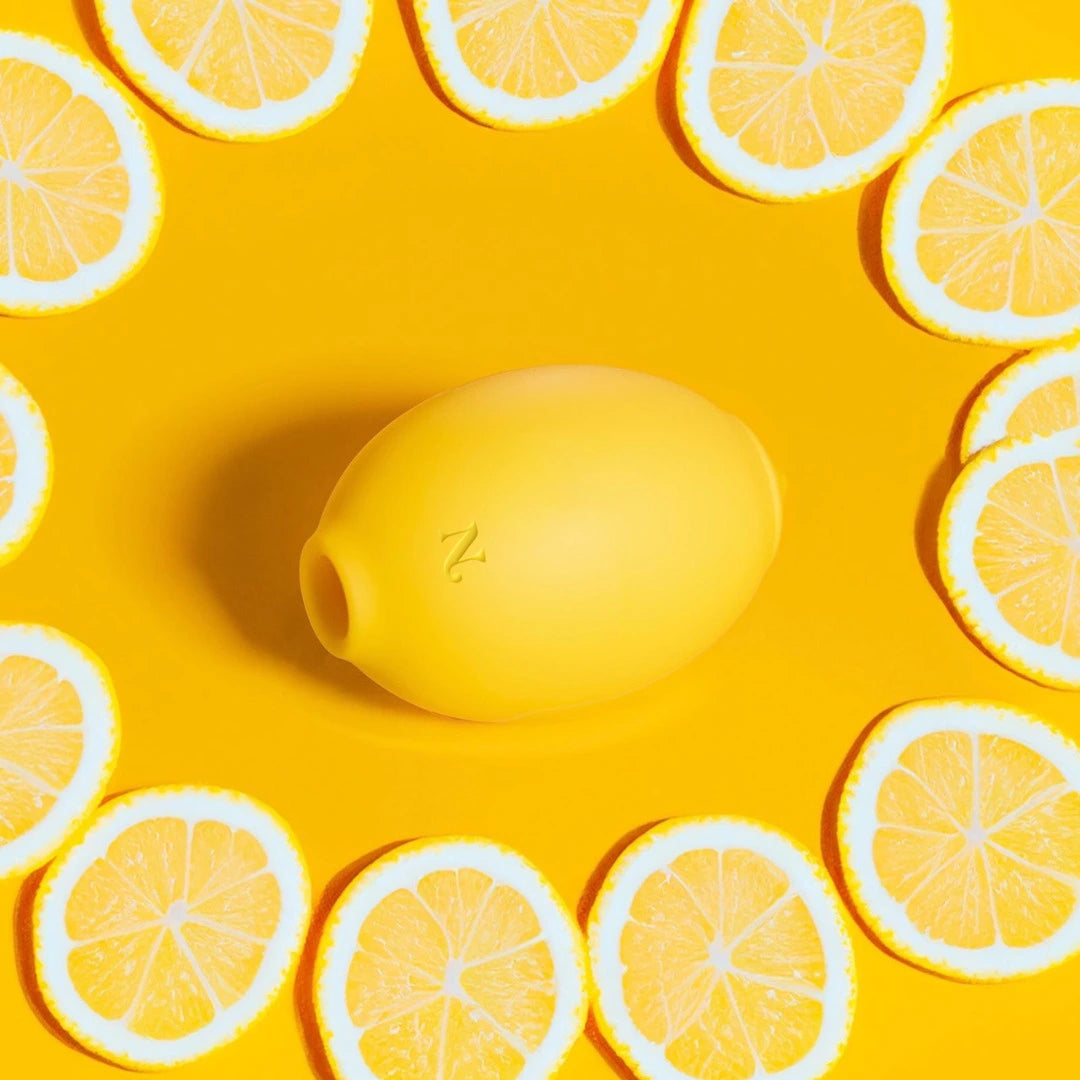
Over time, the confidence you build in your own company translates. Partners, positions, and situations feel less intimidating when you already have a solid sense of your own pleasure.
When It's About the Relationship, Not Just Your Brain
Sometimes anxiety during sex is a signal, not just a glitch.
If you consistently feel anxious only with a specific partner, or only in certain dynamics, that's worth paying attention to. Anxiety can be your body's way of flagging something that your rational mind is still processing. Maybe there's unspoken tension. Maybe there's a boundary that hasn't been named yet. Maybe the relationship needs more emotional safety before physical intimacy can feel genuinely relaxed. Learning how to stay present during intimacy is partly about your nervous system, and partly about the emotional environment you're building together.
That doesn't mean anything is doomed. It means the conversation is worth having. Couples who talk openly about sex, including the awkward and anxious parts, tend to report significantly higher satisfaction over time. And "talking about it" can start small. It doesn't have to be a formal relationship summit. It can be a five-minute check-in after a moment that felt off.
What Helps Over Time: The Longer Game
Anxiety during sex rarely vanishes overnight. That's the honest version.
But with consistent, gentle attention, it does shift. Therapy (especially sex-positive therapy or cognitive behavioral therapy) is genuinely effective and not just for people with severe dysfunction. Working with a therapist who understands sexual anxiety can reframe patterns you've carried for years. If individual therapy isn't accessible right now, there are solid self-help resources and even partner-based exercises like sensate focus, a structured touch practice originally developed by Masters and Johnson, that gradually reintroduce intimacy without performance pressure.
Building a broader sense of sexual confidence also helps. Exploring vibrators for women that you actually enjoy, reading about pleasure without shame, and normalizing the messiness of sex through conversation or community are all part of the picture. Your sexuality isn't a performance to be perfected. It's a practice to be lived.
Slowly, your nervous system learns. It starts filing intimacy under "safe" instead of "threat." And when that shift happens, even partially, the difference is real.
Wrapping Up
You're not the only one leaving your own body mid-moment.
Anxiety during sex is one of those deeply human experiences that almost nobody talks about in the moment, which makes everyone feel alone in it. But the path back to presence isn't mysterious. It's breath, sensation, honest conversation, and a willingness to be a little awkward while you figure it out. You deserve intimacy that actually feels like intimacy, warm, present, and real. That's not too much to ask for. It's the whole point.
Want to make your journey even more exciting? I've handpicked some amazing toys and goodies at Hello Nancy that'll add extra sparkle to your intimate moments. (Here's a little secret, use 'dirtytalk' for 10% off!)
Frequently Asked Questions
Is it normal to feel anxious during sex?
Completely normal. Research shows that between 6% and 25% of people experience sexual anxiety at some point, and many never talk about it. It doesn't reflect your desirability or your feelings for your partner.
Why do I overthink during sex and how do I stop?
Overthinking during sex is often your brain's threat-response system misreading emotional vulnerability as danger. To interrupt it, try anchoring your attention to a physical sensation, like warmth, pressure, or breath, rather than trying to silence your thoughts altogether. Redirecting is more effective than suppressing.
Can anxiety cause physical symptoms during sex?
Yes. Anxiety can cause muscle tension, reduced arousal, difficulty with erection or lubrication, and even physical numbness. These are physiological responses to stress hormones, not signs that you're broken or unattracted to your partner.
Should I tell my partner I have sexual anxiety?
Yes, and it doesn't have to be a heavy conversation. Even a simple "I get in my head sometimes" opens the door to more patience and less pressure. Couples who communicate about sexual anxiety tend to report better intimacy and higher satisfaction overall.
Does mindfulness actually help with sex anxiety?
It does, and there's solid research to back it up. Mindfulness-based interventions have been shown to improve arousal, reduce fear around sex, and increase overall sexual satisfaction. The practice doesn't require meditation experience, just a willingness to bring attention back to sensation, repeatedly.
What is spectatoring during sex?
Spectatoring is when you mentally step outside your own body and observe yourself during sex, often critically. The term was coined by sex researchers Masters and Johnson. It's one of the most common drivers of sexual anxiety and can significantly disrupt arousal and connection.
Can solo exploration help reduce anxiety during partnered sex?
Absolutely. Solo exploration removes the performance element and helps you build a genuine relationship with your own pleasure on your own terms. That self-knowledge and confidence tends to carry over into partnered intimacy, making it feel less like a test and more like an experience.
When should I see a therapist for sexual anxiety?
If sexual anxiety is affecting your relationships, causing you to avoid intimacy altogether, or significantly impacting your quality of life, a sex-positive therapist or cognitive behavioral therapist is worth seeking out. It's not a last resort. It's often the fastest route to genuine change.