


 Add ¥1,934 to get Free Gift


Most of us were never actually taught how to have a good relationship. We were handed fairy tales, romantic comedies, and maybe a few well-meaning but contradictory pieces of advice from our parents. No wonder so many of us end up confused, exhausted, or stuck.
The relationship you want isn't some impossible fantasy.
It exists, and the path to it is more practical than poetic. These 13 ways aren't about becoming someone else. They're about becoming more intentional with who you already are, what you need, and how you show up.
1. Know Exactly What You Want (Before You Go Looking for It)

You can't order from a menu you've never read. Before you try to build the relationship you want, you need to sit down and actually define it. Not in the vague, romantic sense of "someone kind and funny," but in the specific, honest sense of: what are your non-negotiables, what do your days look like together, and what does love feel like in your body when it's real?
Write it down.
This isn't about building a checklist that nobody could ever satisfy. It's about having clarity so that you stop defaulting to whoever shows up and feels "close enough." Clarity is not the enemy of romance. Clarity is what protects you.
2. Know What Kind of Partner You Want to Be
Here's the question nobody asks first: what kind of partner do YOU want to be? Most of us spend enormous energy auditing potential partners while barely examining ourselves. Shifting that focus inward is genuinely transformative. When you ask yourself "Am I someone I'd want to be with?", the answers get uncomfortable, specific, and deeply useful.
This isn't self-criticism.
It's self-awareness. Knowing your own patterns, your conflict style, your love language, your capacity for vulnerability, these things are the foundation. Your next relationship will be built on whoever you are right now, so it pays to know that person well.
3. Stop Performing. Start Being Honest.
If you hate Thai food, don't pretend to love it because someone cute loves it. If you find a hobby boring, don't fake enthusiasm for three months and then resent them when you're burned out from pretending. Brutal honesty in early dating is not rudeness. It's respect. For both of you.
The version of yourself you perform to be liked will eventually exhaust you.
And then you'll be stuck in a relationship with someone who fell in love with a character you can no longer sustain. Authenticity upfront is the kindest thing you can offer. It filters out mismatches and magnetizes the people who actually fit you.
4. Know Your Worth and Refuse to Negotiate It

Knowing what you deserve and actually refusing to accept less are two very different things. Most people can list their worth in theory. Far fewer can walk away from something that falls short of it in practice. This is where the work gets real.
Your standards aren't obstacles to love.
They're the architecture of it. When you hold to what you genuinely need, whether that's emotional availability, consistency, respect for your time, or something as specific as communicating without repeating the same fights in loops, you signal to yourself and to others that you take yourself seriously. People rise to meet standards when the standards are clear.
5. Fall in Love With Your Own Life First
This sounds like a cliché until you meet someone who has actually done it. There's a specific kind of energy that comes off a person who is genuinely happy alone. They're not lonely and pretending otherwise. They're not filling time. They're living, and a partner would add to that, not complete it.
Be so invested in your own life that a relationship would have to be genuinely good to compete with your solitude.
That standard changes everything you attract. It also guarantees you won't stay in something mediocre just to avoid being alone, which is the trap that swallows so many people who are otherwise brilliant at love.
6. Work on Yourself Before Expecting a Partner To
If you carry insecurity into a relationship and then quietly expect your partner to fix it, you're setting both of you up for a specific kind of misery. Not because you're broken. But because no one person can be the source of your self-worth. That's too much weight for any relationship to hold. Research in attachment theory has consistently shown that unresolved insecure attachment patterns significantly predict relationship dissatisfaction (Mikulincer & Shaver, 2007).
This doesn't mean you have to be "healed" before you can love someone.
It means you take ownership of your own healing. Therapy, honest self-reflection, learning to soothe yourself without outsourcing it entirely, these practices make you a better partner. They also make the relationship less fragile. When two people each carry their own emotional weight, the connection between them gets to be joy instead of a lifeline.
7. Communicate What You Actually Need
Your partner is not a mind reader. Not even a very good guesser. The mental image of a perfect partner who intuitively knows exactly what you need, exactly when you need it, without ever being told, is a fantasy that quietly destroys real relationships. Say what you need. Out loud. Specifically.
This is harder than it sounds for most people.
Vulnerability is uncomfortable. Asking for what you want can feel needy or demanding, especially if you grew up learning to shrink those needs. But the alternative is stewing in quiet resentment while expecting someone to notice something you've never said. That's not a relationship strategy. That's a recipe for distance. Clear, kind, direct communication is the most underrated intimate skill there is, and it works even when the conversation feels awkward at first.
8. Learn How to Fight Well
Every relationship has conflict. Every single one, including the good ones. The difference between relationships that last and relationships that collapse isn't the absence of fights. It's the quality of them. Do you argue to win, or do you argue to understand? Do you bring up yesterday's mistakes to win today's point, or do you stay focused on the actual issue?
Fighting well is a learnable skill.
Tell your partner what kind of support you need during conflict, whether you want them to listen while you vent or whether you want collaborative problem-solving. These are small but genuinely important distinctions. Couples who can stop cycling through the same relationship fights don't fight less. They fight smarter, with more care for each other's dignity.
9. Say Thank You. Every Day.
Gratitude sounds so simple that it's almost embarrassing to include it. But relationship experts across the board consistently point to it as one of the most powerful predictors of long-term satisfaction. Saying "thank you" for small things, for the coffee made, the errand run, the text answered, keeps the relationship from slipping into taking each other for granted.
Gratitude doesn't just feel good. It rewires the way you see your partner.
When you actively look for things to appreciate, you genuinely find more of them. That shifts your emotional baseline from neutral-to-critical into something warmer and more forgiving. And that shift accumulates over months and years into a completely different kind of relationship.
10. Stop Trying to Change Your Partner
You can absolutely encourage growth. You can share what matters to you, model the behavior you want to see, and have honest conversations about what's not working. What you cannot do, and should stop trying to do, is fundamentally change who someone is at their core. That's not love. That's a renovation project.
If you need someone to be substantially different to be happy with them, that's information.
Take it seriously. The most loving thing you can do for both of you is to be honest about fit. Sometimes fit isn't there, and no amount of patience or effort will manufacture it. Accepting people as they are, and deciding whether that person is genuinely right for you, is more respectful than years of quiet disappointment.
11. Prioritize Intimacy in All Its Forms
Intimacy isn't just physical. It's the 10pm conversation that goes somewhere unexpected. It's knowing how your partner takes their coffee and knowing what they're afraid of. It's the kind of closeness that builds slowly through consistent presence and genuine curiosity about each other. That kind of intimacy deserves tending, and it's easy to let it slip in the busyness of life.
Physical connection matters too, of course.
For many people, physical intimacy is deeply tied to feeling seen and desired. Keeping that spark alive takes intentionality. It also takes a willingness to communicate about what you want in the bedroom with the same honesty you bring to the rest of the relationship. There's a reason people who explore their own desires and feel comfortable expressing them, whether through conversation, play, or even the right couples toys, tend to report higher overall relationship satisfaction. Pleasure is part of partnership.
12. Choose Each Other Actively and Repeatedly
Long-term relationships require something that nobody talks about enough: the ongoing, active choice to be in them. The initial rush of falling for someone is not a renewable energy source. At some point it becomes a decision. A practice. A daily small yes to this person and this life.
That isn't less romantic than falling in love.
It's actually more. Choosing someone after you've seen their worst moods, their fears, their weird habits and their difficult days, that's the real thing. Make the choice visible too. Let your partner know they're chosen. Don't let the relationship run on autopilot and assume the love is understood. Say it. Show it. Repeat.
13. Get Clear on What "The Relationship You Want" Actually Means for You
This one loops back to the beginning on purpose. Because the relationship you want isn't a static destination. It evolves as you do. Who you were at 22 needed something different than who you are at 35. Checking in with yourself, and with your partner, about what you both actually want right now is not a sign that something's wrong.
It's a sign that you're both still paying attention.
The most successful long-term couples aren't the ones who found a perfect formula early and stuck to it rigidly. They're the ones who kept renegotiating, kept asking, kept choosing curiosity over assumption. That's the relationship worth building. Not a fixed picture from a magazine, but something real and alive and genuinely yours.
Want to make your journey even more exciting? I've handpicked some amazing toys and goodies at Hello Nancy that'll add extra sparkle to your intimate moments. (Here's a little secret. Use 'dirtytalk' for 10% off!)
If you're curious about where to start, the Berri edging clitoral massager is a quietly brilliant way to explore your own pleasure on your own terms. And for solo or partnered play that goes a little deeper, the Gii Glow G-spot vibrator is one worth bookmarking.
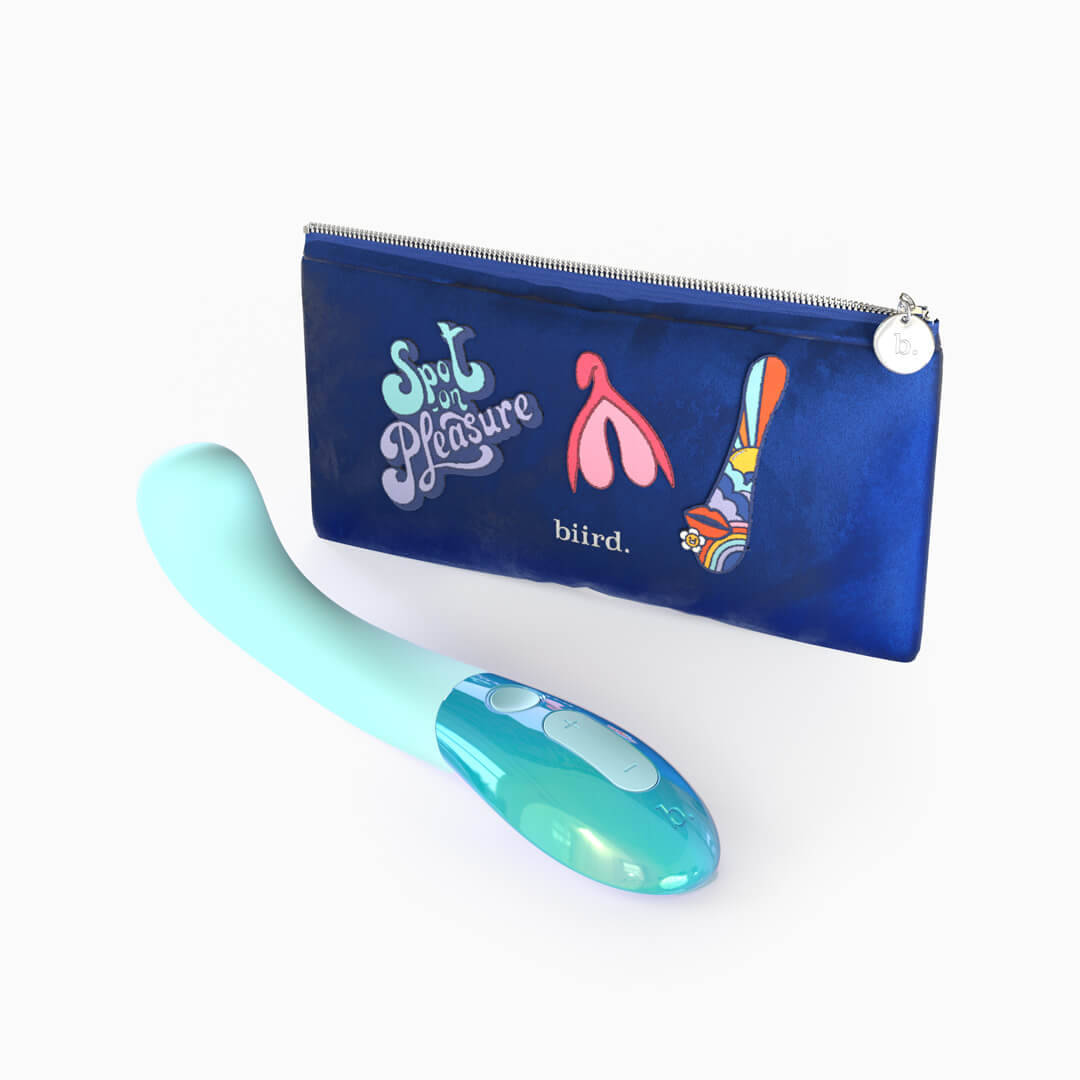
For those who love the idea of a little shared adventure, browsing the full range of vibrators for women at Hello Nancy is genuinely worth the scroll. Your pleasure matters, and so does your relationship.
Frequently Asked Questions
How do I know what kind of relationship I actually want?
Start by reflecting on past relationships and identifying what felt genuinely good versus what you accepted out of fear of being alone. Journaling about your non-negotiables, your values, and how you want to feel day-to-day in a relationship gives you a working blueprint to return to.
Can you get the relationship you want if your partner isn't willing to change?
You can't change a partner who isn't willing to grow. What you can do is communicate clearly about what you need, model the dynamic you want, and then honestly assess whether this person's authentic self is compatible with yours. If the answer is no, staying often causes more harm than leaving.
How do you communicate your needs in a relationship without seeming demanding?
Frame needs as information, not ultimatums. Saying "I feel disconnected when we go days without real conversation" lands very differently than "You never talk to me." Specific, calm, first-person statements open dialogue instead of triggering defensiveness.
What is the most important thing in building a healthy long-term relationship?
Consistent, honest communication paired with genuine mutual respect tends to outperform everything else over time. Chemistry fades and circumstances change, but a couple who can actually talk to each other, and who choose each other actively, can navigate almost anything.
How do I stop settling for less than I deserve in relationships?
The core shift is building a life you genuinely love being in solo, so that a relationship has to be truly good to be worth your time. When you're not desperate to fill a void, your standards become real because you're actually willing to enforce them.
How does gratitude improve a relationship?
Expressing gratitude regularly shifts your focus from what's frustrating to what's working, which genuinely changes your emotional experience of the relationship. It also signals to your partner that they're seen and valued, which builds the kind of safety that makes people want to stay and keep growing together.
Is it normal to want different things in a relationship at different life stages?
Completely normal. Who you are at 25 has genuinely different needs than who you are at 40, and that's healthy growth, not inconsistency. The key is to keep communicating those shifts with your partner rather than silently expecting them to keep up with a version of you they don't know has changed.
What role does self-worth play in attracting a healthy relationship?
Your self-worth acts as a filter. When it's high, you're less likely to tolerate behavior that undermines you, and more likely to recognize genuinely good treatment when it shows up. Building self-worth isn't about arrogance. It's about knowing what you bring to a relationship and refusing to pretend otherwise.


