Add 807.60؋ to get Free Gift


Your body has been carrying things you never asked it to carry. Shame from a throwaway comment someone made years ago. Guilt about wanting what you want. The quiet, persistent feeling that your pleasure is somehow too much, or not enough.
That ends here.
Self-affirmation isn't magic. It's science. Psychologist Claude Steele's foundational 1988 self-affirmation theory showed that when we repeatedly reinforce core truths about our self-worth, we genuinely reshape how we process threats to our identity. Applied to sexuality and sexual shame healing, that means: saying something kind to yourself, consistently, actually rewires the story you believe about your body and your desire.
So let's do exactly that.
Why Sexual Affirmations Work (And Why Yours Haven't Yet)

Most people try affirmations wrong. They say the words with zero belief, staring at a mirror at 6am, half-asleep, already rolling their eyes at themselves.
Here's the thing. Affirmations don't work through blind repetition. They work when you say them at the edge of discomfort. When the words feel slightly too good to be true, that's exactly when they're doing the most work. Your nervous system is meeting a new story and deciding whether to trust it.
Sexual shame runs deep. It often starts in childhood through religious messaging, clumsy parenting, or just absorbing a culture that simultaneously oversexualizes everything while treating actual personal pleasure as taboo. That's a lot of conditioning to unpack. Affirmations don't replace therapy, honest conversation with a partner, or the kind of inner work that takes real time. But they are an accessible daily practice that creates tiny, cumulative shifts. And tiny, cumulative shifts are how humans actually change.
Think of it like this: every time you say "my desire is valid," you're casting a vote for a different version of yourself. You don't need a majority right away. You just need to keep voting.
The 25 Affirmations: Sexual Healing & Self-Acceptance

These affirmations are grouped into themes because context matters. Use them as a morning practice, a journaling prompt, or something you whisper to yourself right when the shame voice gets loudest. That last one is honestly the most powerful timing of all.
Releasing Shame
Shame thrives in silence. The first step is just naming it, and then choosing something different.
"I release the shame I was taught to carry about my body and my pleasure."
Say that one slowly. Notice where in your body you feel resistance, because that's exactly where it lives.
"My sexuality is not a problem to be solved. It is a part of me that deserves care."
Shame often makes us treat our own desire as something broken or dangerous. This affirmation flips that script entirely. It moves you from problem-mode into care-mode, which is the only mode that actually heals anything.
"I am not what anyone else decided I should be in bed, in love, or in my body."
External definitions of your sexuality, whether from a past partner, a family message, or a cultural script, are just opinions. Loud ones, sometimes. But opinions nonetheless.
"I let go of the idea that my desires are wrong."
"I forgive myself for the times I abandoned my own pleasure to keep the peace."
That last one. Read it again. A lot of us learned to shrink ourselves sexually to avoid conflict or judgment. Forgiving that pattern is the beginning of claiming something new.
Embodiment & Body Acceptance
You cannot experience pleasure you don't believe you deserve. And you cannot believe you deserve pleasure if you're at war with the body that receives it. These affirmations bridge that gap.
"My body is worthy of pleasure exactly as it is, right now, today."
Not after you lose the weight. Not after the scar fades. Not when you feel more confident. Now.
"I trust my body to guide me toward what feels good."
"My body knows things. I am learning to listen."
This one pairs beautifully with actually slowing down during intimate moments. Whether solo or with a partner, try pausing and genuinely asking your body what it wants. The answer usually surprises people. If you're exploring solo pleasure, clitoral vibrators can be a beautiful tool for reconnecting with physical sensation on your own terms.
"I am not my body's flaws. I am my body's whole story."
"Pleasure is not a reward I earn. It is a right I already have."
That last distinction matters enormously. So many people unconsciously treat pleasure as something to earn through good behavior, a good body, or a good relationship status. It isn't. It's yours by default.
Desire & Permission
Wanting things is human. Specifically, wanting intimacy, sensation, connection, and pleasure is deeply, fundamentally human. These affirmations give you permission to stop apologizing for that.
"I am allowed to want what I want."
Simple. Radical. Say it like you mean it.
"My desires don't need justification. They need space."
"I can explore my sexuality with curiosity instead of judgment."
Curiosity is the antidote to shame. Where shame closes doors, curiosity opens them gently, without force. This is also the spirit behind resources like a BDSM checklist for beginners: not a rulebook, but a compassionate framework for exploring what you actually like.
"I give myself full permission to enjoy my body."
"Wanting pleasure makes me human, not selfish."
The shame around "wanting too much" is so common it's almost cliché. Almost. Because it still keeps so many people from having the experiences they genuinely want. Let this one sit with you.
Intimacy & Connection
Sexual healing doesn't happen in isolation. These affirmations support the vulnerable, sometimes terrifying work of letting another person actually see you.
"I deserve a partner who sees me, respects me, and wants my pleasure too."
"I communicate my needs and I trust that they matter."
If this one feels like a stretch, that's okay. Say it anyway. Especially if it feels like a stretch.
"I am safe to be vulnerable. My desire is not a weakness."
"Connection is something I am worthy of, fully and without conditions."
So many people approach intimacy with a hidden asterisk. "I'm worthy of connection, but only if I perform well, or look a certain way, or don't ask for too much." This affirmation removes the asterisk.
"I bring real value to intimate relationships, not despite my needs but including them."
This one is for everyone who learned to disappear in relationships. You are not a burden for having a body that wants things.
Reclaiming Your Narrative
Some of us have sexual histories that feel complicated. Past experiences that weren't what we wanted. Periods of time we'd rather not revisit. These final affirmations are about moving forward without abandoning yourself.
"My past experiences do not define my capacity for pleasure today."
Full stop. Whatever happened, your body is still capable of joy. Your nervous system is still plastic. Healing is still possible.
"I am writing a new story about my sexuality, and I choose the words."
"My healing doesn't have to be linear to be real."
This one is a lifeline. Healing rarely goes in a straight line. There are setbacks, confusing days, and moments where you feel like you've gone backwards. You haven't. It's all part of the same process.
"I am more than what was done to me or said about me."
"Every day, I choose to move toward pleasure, safety, and joy."
"I am healing. I am whole. I am enough, right now."
That last one is your anchor. Come back to it whenever the shame gets loud. Especially then.
How to Actually Use These (Without Feeling Ridiculous)

Let's be honest: standing in front of a mirror reciting affirmations can feel genuinely awkward. Especially when your inner critic is loud. Here's what actually works.
Write two or three of them in a notes app and read them first thing in the morning, before your brain fully boots up and the self-judgment kicks in. That pre-conscious window is surprisingly receptive. Another approach: choose one affirmation per week and use it as a journaling prompt. Write a full page about why it feels hard to believe. That resistance is the exact thing you're healing.
Some people find affirmations most powerful paired with physical practices. A warm bath. Deep breathing. Or even solo exploration with vibrators for women designed to help you reconnect with your body on your own terms. The body and the mind heal together, not separately.
Consistency matters more than perfection. You don't need to believe every word yet. You just need to keep showing up for yourself.
When Affirmations Feel Impossible
Some days the shame is louder than any affirmation. That's real, and it's worth naming.
If you find that certain affirmations consistently bring up distress, grief, or anger rather than the gentle discomfort of growth, that's information. It might be a signal that deeper support, like therapy with someone who specializes in sexual trauma or body image, would be genuinely useful. Affirmations are powerful, but they are a complement to healing work, not a replacement for it. If you've ever felt like you've lost your ability to orgasm or feel pleasure, know that this is more common than you think, and professional support exists specifically for this.
Be gentle with yourself. The goal isn't to perform healing. It's to actually experience it, at whatever pace your nervous system needs.
Wrapping Up
You deserve to feel at home in your own body. Not someday, not after you've fixed whatever you think is broken. Now.
These 25 affirmations for sexual healing and self-acceptance are tools. Use them messily. Use them on hard days. Use them when you roll your eyes at yourself halfway through. None of that diminishes their effect. What matters is that you keep choosing to speak kindly to yourself about this part of your life that so many people spend decades in silence about. That choice, made daily, is how real transformation happens.
You're already doing the brave thing just by being here.
Want to make your journey even more exciting? I've handpicked some amazing toys and goodies at Hello Nancy that'll add extra sparkle to your intimate moments. (Here's a little secret, use 'dirtytalk' for 10% off!)

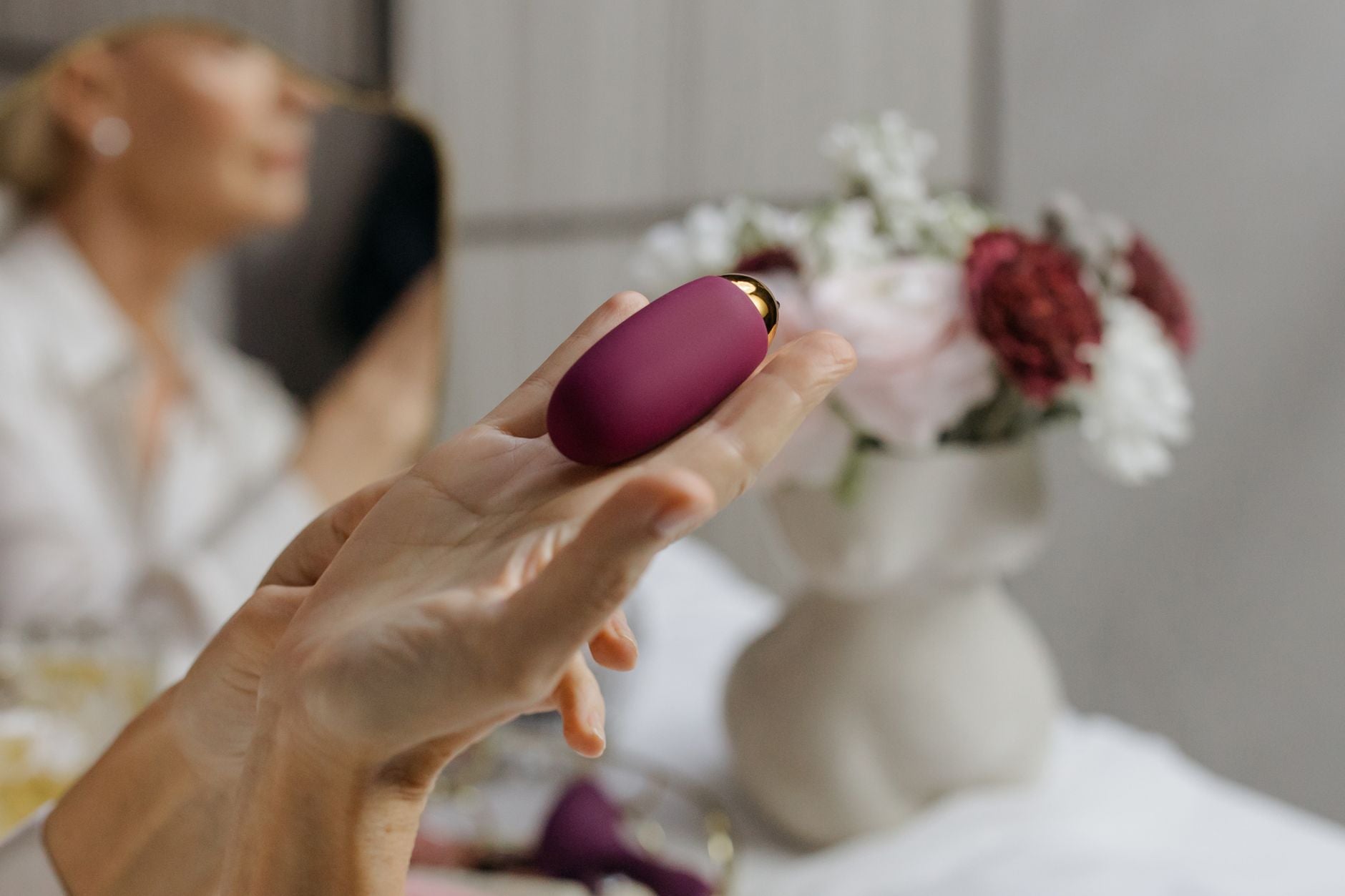
The Berri Edging Clitoral Massager is one I keep coming back to when talking about body reconnection. Its tapping stimulation pattern is genuinely different from anything else, and for people learning to listen to their bodies again, that slow, intentional sensation is kind of perfect. Pair it with your favorite affirmation and a candle and call it a ritual. You deserve that.
Frequently Asked Questions
What are sexual healing affirmations and how do they work?
Sexual healing affirmations are intentional, positive statements you repeat to yourself to gradually replace shame-based beliefs about your body, desire, and sexuality. They work through the principle of self-affirmation theory (Steele, 1988), which shows that consistently reinforcing core truths about your self-worth helps your brain process threats to your identity differently over time. They're most effective when practiced consistently, especially at moments when shame or doubt feels loudest.
Can affirmations really help with sexual shame?
Yes, but with an important caveat. Affirmations are a supportive tool, not a standalone cure. They work best alongside therapy, open communication with partners, and genuine inner work. Research on self-affirmation consistently shows that positive self-statements reduce the psychological impact of identity threats, and sexual shame is exactly that kind of threat. Think of affirmations as a daily vote for a healthier self-story.
How often should I use affirmations for sexual healing?
Daily practice is ideal, even if it's just one or two affirmations for a few minutes. Consistency matters far more than duration. Many people find the morning window, before the inner critic fully activates, to be the most effective time. You can also use them as journaling prompts or repeat them during mindful solo exploration.
What if affirmations feel fake or embarrassing to say?
That feeling is completely normal, and it's actually a sign the affirmation is challenging a real belief. You don't need to feel 100% convinced for an affirmation to work. The slight resistance you feel is where the growth happens. Try writing them down rather than saying them aloud if verbal practice feels too uncomfortable at first.
Are there affirmations specifically for healing from sexual trauma?
Yes. Affirmations like "My past experiences do not define my capacity for pleasure today" and "I am more than what was done to me" are specifically crafted for that kind of healing. That said, if you're working through sexual trauma, affirmations should ideally be used alongside professional therapeutic support, such as somatic therapy or trauma-informed sex therapy.
Can affirmations help with body image issues during sex?
Absolutely. Body image is one of the most common barriers to sexual enjoyment. Affirmations focused on embodiment, like "My body is worthy of pleasure exactly as it is, right now," directly address the disconnect between self-perception and self-acceptance. Pairing them with slow, mindful physical practices helps anchor the words in genuine bodily experience.
Do sexual affirmations work for people of all genders and orientations?
Yes. The affirmations in this article are written to be inclusive of all genders, bodies, and sexual orientations. Sexual shame, body image struggles, and the need for self-acceptance are universal human experiences. Every person deserves to feel at home in their body and entitled to pleasure.
How long does it take for sexual healing affirmations to make a difference?
There's no universal timeline, and healing is rarely linear. Some people notice subtle shifts in self-talk within a few weeks of consistent practice. Deeper changes in belief and behavior can take months or longer, especially when unraveling years of ingrained shame. Be patient with yourself. Small, steady progress is still progress.