


 Add ₱780.00 to get Free Gift


Something shifts after the first few months. You know exactly what I mean. That almost feverish quality of early love. where you couldn't stop thinking about them. starts to feel different, and nobody told you whether that's beautiful or terrifying.
So let's talk about it.
That giddy, all-consuming rush has a name: new relationship energy, or NRE. And the deeper, quieter warmth that follows? That's long relationship energy, or LRE. Both are real. Both are powerful. And understanding the difference might genuinely change how you move through love.
What Is New Relationship Energy (NRE)?

NRE is that euphoric, slightly unhinged state you enter when a relationship is brand new and everything about your partner feels like a revelation. Casey Tanner, MA, LCPC, CST, described it perfectly on The Everygirl Podcast: NRE and LRE are essentially "different cocktails of neurotransmitters that we are on at different stages of a relationship." You're not imagining the high. You're literally on a chemical cocktail.
FMRI studies have shown that early romantic love floods the brain with dopamine, adrenaline, and oxytocin. Dopamine drives that relentless craving to be near them. Adrenaline produces the racing heart and the butterflies. Oxytocin. often called the bonding hormone. deepens feelings of attachment and trust. Research has also found that new lovers carry significantly higher oxytocin levels in their blood than single people, and the higher those levels, the more likely a couple was to still be together six months later (Feldman et al., 2012).
There's also something fascinating happening in the prefrontal cortex during NRE. Activity there. the part of your brain that handles decision-making and personal judgment. actually decreases. Which explains why you maybe moved a little fast, texted a little too much, or convinced yourself that their questionable taste in music was endearing.
It's not weakness. It's neuroscience.
The Shadow Side of NRE Nobody Talks About

Here's the tricky part.
NRE feels so good that we sometimes mistake it for a measure of how "real" or "right" a relationship is. When the intensity starts to soften, panic sets in. People wonder if they've fallen out of love, if their partner has changed, or if something is fundamentally broken. But that fade isn't a failure signal. It's a transition. The brain simply cannot sustain that level of neurochemical output indefinitely. It would be exhausting. and honestly, a little dangerous.
Drs. Chandra Khalifian and Kayla Knopp, writing in Psychology Today, note that the honeymoon phase is "thrilling but fleeting" and that avoiding common pitfalls during this period requires mindfulness and intentionality. The biggest pitfall? Making huge life decisions. moving in together, quitting a job to follow someone, emotionally cutting off friends. from inside the NRE bubble. Your prefrontal cortex is essentially offline. Wait until it clocks back in.
And yet, NRE isn't just a trick your brain plays on you. It's also a window. The energy and attention you pour into someone during this phase can build genuine foundations. if you're paying attention to who they actually are, and not just who the dopamine is telling you they are.
What Is Long Relationship Energy (LRE)?

LRE is what romance novels skip right past.
Long relationship energy is the deep, secure, often quieter form of love that emerges when you've truly built a life alongside someone. It's knowing how they take their coffee without asking. It's the way they instinctively hand you the remote when you've had a terrible day. It's comfort so thorough it becomes invisible. and that invisibility is exactly why people underestimate it.
The neurochemistry shifts here too. Oxytocin and vasopressin become the dominant players. These hormones are associated with long-term bonding, trust, and what researchers call "companionate love." There's less adrenaline. The heartbeat steadies. And the brain. now with its prefrontal cortex fully back online. can actually evaluate your partner with clarity.
This is a gift, honestly.
Research consistently shows that companionate love. the kind embedded in LRE. is a stronger predictor of long-term relationship satisfaction than passionate love alone. It's also the kind of love that makes space for hard conversations, for growth, for genuine intimacy that goes beyond the electric charge of novelty. If you're navigating this transition, learning how to talk about sex and intimacy openly becomes one of the most powerful tools you have.
Why the Transition Between NRE and LRE Feels So Jarring
Nobody prepares you for the moment NRE starts to ease off. And our culture makes it worse.
Movies end at the "getting together" part. Songs are almost exclusively written about falling, not landing. We've absorbed a cultural script that frames the intensity of early love as love at its peak. So when you're no longer texting them every waking hour and you're... fine with that... it can feel like loss rather than evolution. It's not loss. It's maturation.
The shift can feel destabilizing for another reason too: NRE often papers over incompatibilities. When the chemicals settle and you're suddenly seeing your partner in full three-dimensional reality, that can be confronting. Some of what you discover is wonderful. Some of it requires actual negotiation. This is where couples either deepen or quietly start to drift. The ones who deepen are usually the ones willing to do the unsexy work of being honest with each other.
If you're in a long-term relationship and the spark feels like it has quieted, that doesn't mean it's gone. It means it changed form. Sometimes reigniting that sense of aliveness is about novelty and play. Things like exploring fresh foreplay ideas for long-term couples can remind you both that desire doesn't expire. it just needs new ways to express itself.
How to Thrive in Both Phases
Thriving in NRE means staying grounded while the dopamine rages.
Keep your friendships. Maintain your routines. Don't make permanent decisions from temporary emotional states. Enjoy the intoxication fully. and also stay curious about who this person actually is beneath the glow. Ask the deeper questions early: about values, about how they handle conflict, about what they want from life. The NRE phase is noisy, but those signals matter.
Thriving in LRE looks different. It asks more from you intentionally. When novelty naturally decreases, you have to become a more active participant in keeping the connection alive. Schedule dedicated time together not because you have to but because you're choosing to. Bring small gestures back: a text that isn't logistical, physical touch that isn't going anywhere. Invest in couples toys and shared experiences that bring playfulness back into the bedroom. Keep learning your partner. because people genuinely change, and so do their desires.
Experts across relationship psychology agree on one thing: LRE is not the consolation prize you receive after NRE runs out. It's the main event. The depth of knowing and being known by another person over time is something NRE simply cannot replicate. Both phases deserve celebration.
What This Means for Your Pleasure Life
Sexual desire follows the same arc as emotional connection. This matters.
During NRE, desire often feels automatic and urgent. Everything is new, everything is exciting, and vibrators for women and other pleasure tools might feel like fun extras rather than necessities. But during LRE, intentionality becomes the engine of a satisfying sex life. Desire in long-term relationships is often "responsive" rather than "spontaneous," meaning it follows arousal rather than preceding it. You might not feel desire until you're already in the moment. and that's completely normal.
This is exactly where exploring new sensations together pays off. Something like the Berri tapping clitoral massager offers a genuinely novel kind of stimulation. one that can reintroduce that sense of discovery that LRE sometimes needs.
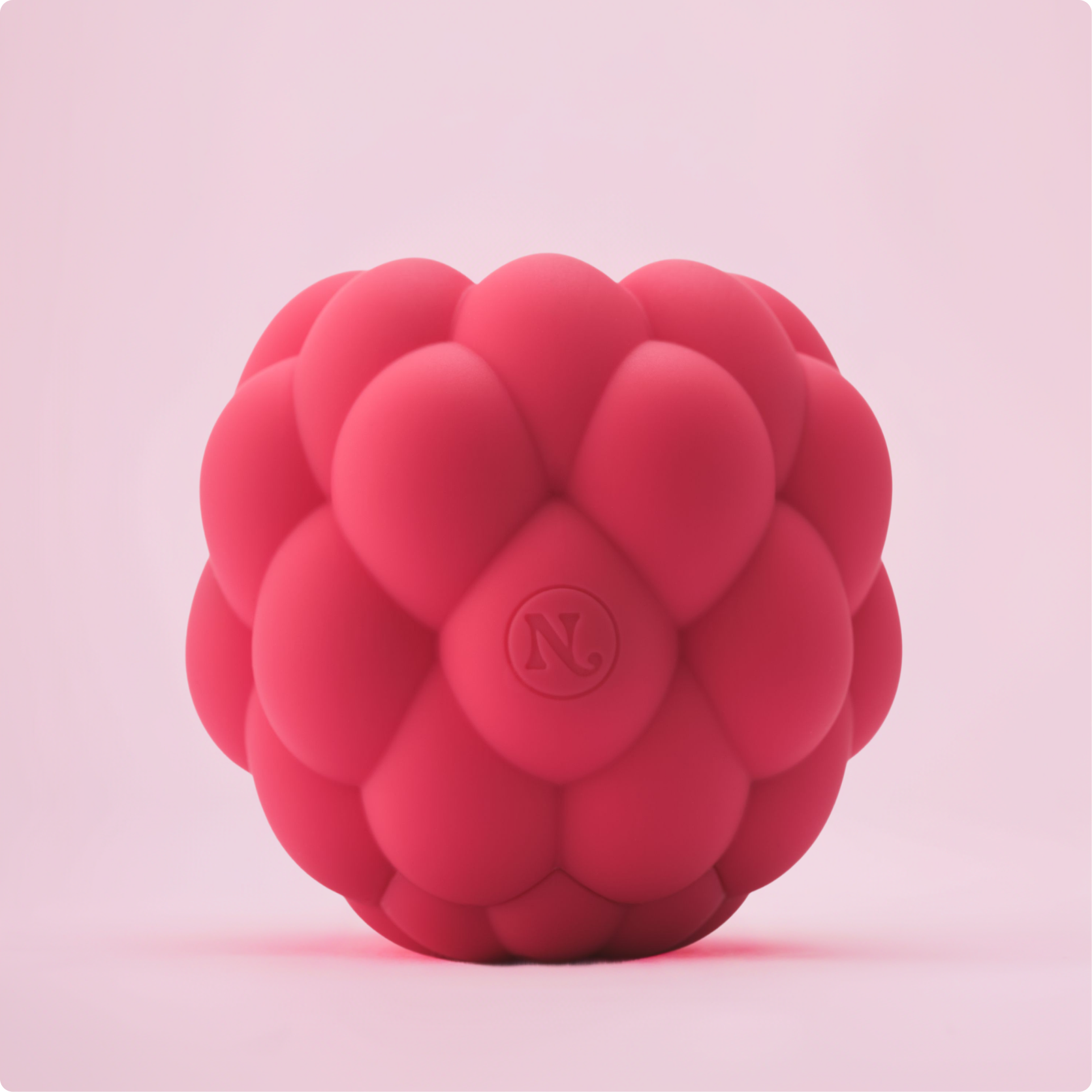
And if you're craving that sense of closeness and play that NRE naturally brings? The Namii 2 clitoral suction and vibration toy is a beautiful option to explore together. its dual-action design turns novelty into shared pleasure in the most intuitive way.
Desire is not a fixed thing. It shifts with life, with stress, with how connected you feel emotionally. Understanding NRE and LRE means understanding that your intimate life is allowed to evolve too. It doesn't have to look the same at year five as it did in month two. It just has to feel alive.
Wrapping Up
NRE is intoxicating. LRE is nourishing. You need both in a full life of love, and neither one is better than the other. The ache you feel when NRE fades isn't the end of something. It's the beginning of a different kind of closeness that actually asks you to show up. And when you do? That's where the real thing lives.
Want to make your journey even more exciting? I've handpicked some amazing toys and goodies at Hello Nancy that'll add extra sparkle to your intimate moments. (Here's a little secret. use 'dirtytalk' for 10% off!)
Frequently Asked Questions
How long does new relationship energy (NRE) typically last?
NRE typically lasts anywhere from a few months to around two years, though the timeline varies by person and relationship. Brain chemistry gradually normalizes, and the intensity softens as the relationship matures into a more stable form of connection.
Is it normal to miss NRE when you're in a long-term relationship?
Completely normal. The excitement of early love is genuinely pleasurable, and missing that feeling doesn't mean your long-term relationship is failing. It just means your brain remembers dopamine fondly. LRE offers different rewards. ones that are arguably more sustainable and meaningful.
Can you bring NRE energy back into a long-term relationship?
You can't replicate the exact neurochemistry of early love, but you can absolutely create conditions that activate dopamine again. Novel shared experiences, trying something new in the bedroom, or even traveling somewhere unfamiliar together can all trigger that sense of excitement. Novelty is the key ingredient.
What brain chemicals are responsible for NRE and LRE?
NRE is driven primarily by dopamine, adrenaline, and oxytocin. the chemicals of excitement, craving, and early bonding. LRE shifts toward oxytocin and vasopressin, which are associated with deep attachment, trust, and long-term pair bonding. The mix changes, but the connection remains chemically real.
Does NRE affect your decision-making in relationships?
Yes, significantly. During NRE, activity in the prefrontal cortex. the brain's judgment and decision-making center. actually decreases. This is why major life decisions made in the throes of early love sometimes don't hold up later. Experts recommend waiting until the initial intensity settles before making irreversible commitments.
Is long relationship energy a sign that romance is dead?
Not even close. LRE is a sign that your relationship has evolved into something with real roots. Research shows companionate love. the kind that characterizes LRE. is actually a stronger predictor of long-term satisfaction than passionate, NRE-style love alone. Romance looks different in LRE, but it's deeper.
How does NRE and LRE affect sexual desire?
During NRE, desire tends to feel spontaneous and automatic because novelty and neurochemicals drive it. In LRE, desire often becomes more "responsive," meaning it activates in response to arousal rather than preceding it. This is completely normal and can be nurtured with intentional intimacy and new experiences together.
Can NRE happen multiple times with the same person?
Milder versions of NRE-like excitement can be triggered again with the same partner through novelty, significant life changes, or reconnecting after a period of distance. It won't be identical to the first wave, but moments of rekindled spark are real and worth pursuing intentionally.
What is the difference between NRE and limerence?
NRE is a broader term describing the energized, euphoric state of a new relationship. Limerence is a more specific, intense psychological state characterized by obsessive thinking about another person and a desperate need for reciprocation. All limerence involves NRE-like feelings, but not all NRE becomes limerence.


