Add RM50.04 MYR to get Free Gift



Most of us spend years with partners before we realize we never actually talked about what we want in bed. Not really. And that silence? It's where compatibility quietly goes to die.
Sexual compatibility gets treated like something you either have or you don't. Either the chemistry is there, or you're doomed to awkward encounters and quiet resentment. But that framing is genuinely wrong. Research published in Psychology Today confirms that couples who actively communicate about desire report significantly higher sexual satisfaction than those relying on "natural chemistry" alone. You can build this. You just need to know how.
So let's get into it.
What Sexual Compatibility Actually Means

Sexual compatibility isn't about matching perfectly from day one. It's about how well two people can grow toward each other's desires over time. Think of it less like a lock-and-key situation and more like learning a new language together. Imperfect at first. Fluent eventually.
Compatibility lives in the overlap between what you each want, how you each communicate, and how willing you both are to adapt. A couple who talks honestly about mediocre sex will always outperform a couple with "great chemistry" who never addresses what's missing. That's the unsexy truth, and I'm here for it.
It also isn't fixed. Your desires shift. Your partner's shift. Compatibility is a moving target, which sounds stressful, but actually means there's always room to course-correct.
1. Start Talking About Sex Outside the Bedroom

Here's the thing about pillow talk. Most people only have it after sex, when the conversation is either blissed out or quietly awkward. Neither state is great for honest disclosure.
The real magic happens when you bring sexual conversation into neutral territory. Over dinner. On a walk. In the car, where eye contact is optional and honesty flows easier. Ask questions like "Is there something you've been curious about trying?" or "What's been feeling especially good lately?" Keep the tone light. Make it safe to answer without pressure.
Dr. John Gottman's research emphasizes that couples who invest in daily emotional connection and open communication thrive both emotionally and physically in their relationships. The bedroom doesn't exist in a vacuum. It's an extension of everything else you two build together. When talking about sex feels normal rather than loaded, everything else gets easier.
2. Make Desire Mapping a Ritual

Desire mapping is exactly what it sounds like. You each figure out what you actually want, then you share it.
This isn't about making a spreadsheet of kinks (though honestly, no judgment if that works for you). It's about getting curious about your own arousal patterns first, before bringing your partner in. What time of day do you feel most desire? What emotional state makes you open versus closed? What's on your "would love to try" list versus your "absolutely not" list? Once you've done that internal work, sharing becomes so much less intimidating. You're not confessing. You're informing. And there's a massive psychological difference between those two things.
If you want to explore the most common sexual fantasies and what they reveal, it's a genuinely illuminating starting point for this kind of self-reflection.
3. Understand the Difference Between Desire Styles

Not everyone gets turned on the same way, and this is one of the biggest compatibility landmines that nobody warns you about.
There are two main desire styles. Spontaneous desire shows up out of nowhere, like a craving. You're doing the dishes and suddenly you want sex. Responsive desire works differently. It needs context, mood, and often physical touch before it kicks in. Neither is broken. But if one partner has spontaneous desire and the other has responsive desire, it can feel like rejection when it's actually just a mismatch in timing.
Understanding your own desire style, and your partner's, completely reframes how you initiate and respond to each other. The spontaneous-desire partner learns to create conditions rather than just announcing they're in the mood. The responsive-desire partner learns that "I'm not feeling it yet" doesn't mean "I don't want you." It means "give it a minute and some context." This one realization can genuinely transform a relationship.
4. Bring Curiosity Into Physical Exploration
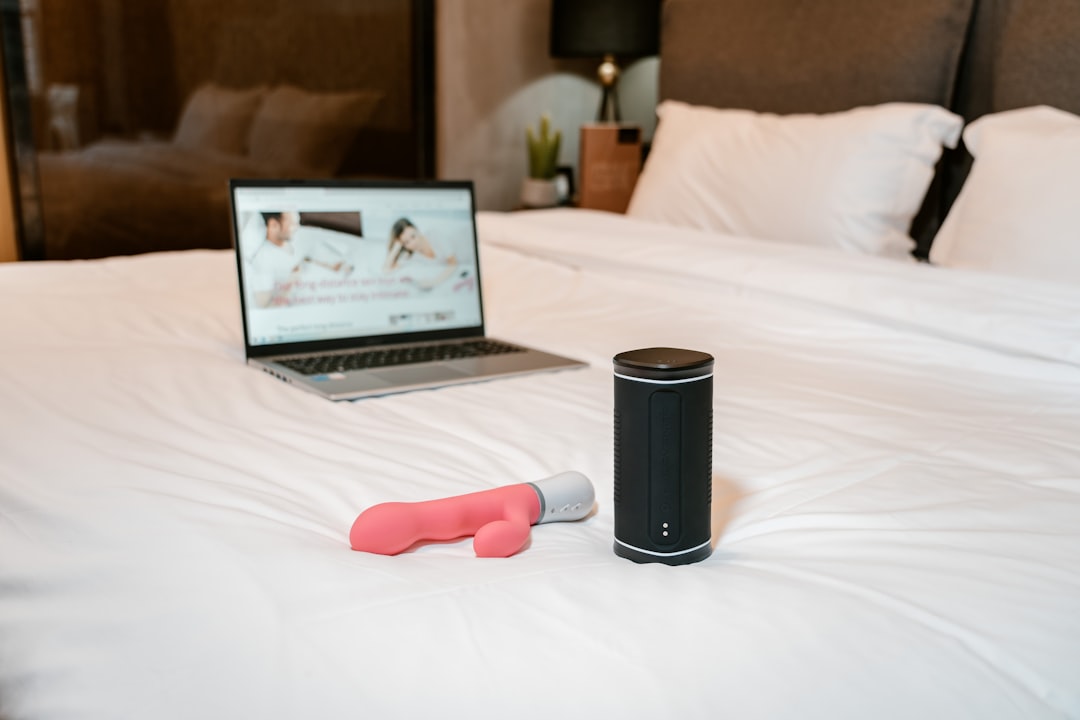
Compatibility grows fastest when both partners treat exploration as a shared experiment rather than a performance review.
This means dropping the expectation that every encounter has to be peak-level satisfying. Some sessions are for trying things. Some things will flop spectacularly and become funny stories later. That's completely fine. What matters is the spirit of curiosity you bring to it. Try something new together. Ask "what did you like about that?" afterward instead of "was that okay?" The first question invites expansion. The second invites politeness.
For those who want a physical starting point for exploration, couples toys can be a genuinely low-stakes way to introduce novelty without pressure. They shift the focus from performance to shared play, which is exactly the energy compatibility thrives on.

The Berri Edging Clitoral Massager is a beautiful example of something designed for exactly this kind of exploratory play. It's made for building sensation gradually, which fits perfectly into the spirit of slow, curious discovery with a partner.
5. Build Emotional Safety Like It's the Most Important Thing

This one sounds soft. It isn't.
Sexual vulnerability requires emotional safety as its foundation. You cannot open up physically with someone who makes you feel judged, dismissed, or unseen. And the cruel irony is that people often avoid talking about this part, because admitting "I don't feel safe enough to be vulnerable with you" feels like an accusation. But it's actually the most useful data point a relationship can have.
Building emotional safety means responding to disclosures without mockery. It means not weaponizing intimate confessions later in arguments. It means checking in after a new experience, not just assuming everything was fine. Research from the Gottman Institute shows that emotional devotion and physical intimacy are deeply intertwined. You cannot fully develop one without investing in the other. When your partner knows their desires won't be laughed at or ignored, they share more. And sharing more is where real compatibility is built. It's not a byproduct of safety. It's the direct result of it.
6. Revisit and Renegotiate Regularly

Compatibility isn't a destination. It's an ongoing negotiation between two people who are both constantly changing.
What worked last year might feel stale now. What scared you before might intrigue you today. This is why periodic check-ins about your sex life aren't a red flag. They're a sign of a mature, intentional relationship. Think of it like a quarterly review, but one you actually look forward to.
You can keep these conversations light. "Is there anything you've been wanting more of lately?" or "Is there anything we should dial back?" Simple questions, asked with genuine curiosity, go a very long way. If you want to dig deeper into the non-negotiables that actually matter in a relationship, it's worth understanding what your baseline standards are before you can meaningfully negotiate beyond them.
It's also worth knowing that sexual compatibility challenges don't automatically mean incompatibility. Sometimes it just means you're overdue for a real conversation. One honest hour can undo months of quiet drift.
The Role of Self-Knowledge in All of This
You can't bring clarity to a partner if you're still foggy about your own desires.
Self-exploration isn't a solo indulgence. It's genuinely a contribution to your relationship. When you understand your own body and arousal patterns, you give your partner something to actually work with rather than guessing in the dark. Clitoral vibrators are often a great starting point for this kind of self-discovery, helping you learn what sensation, pressure, and rhythm your body responds to before translating that into shared experience.
Knowing what you like also makes it far easier to communicate it, which loops back to every single point above. Self-knowledge and partnership compatibility are not separate projects. They're the same project.
Wrapping Up
Sexual compatibility is not a trait. It's a practice. And like any practice, you get better at it when you show up consistently, stay curious, and keep the conversation going even when it feels a little awkward. Especially when it feels a little awkward. The couples who thrive sexually long-term aren't the ones who were naturally matched from the start. They're the ones who kept choosing to figure it out together. You can be one of those couples. You just have to decide it's worth the conversation.
Want to make your journey even more exciting? I've handpicked some amazing toys and goodies at Hello Nancy that'll add extra sparkle to your intimate moments. (Here's a little secret. Use 'dirtytalk' for 10% off!)
Frequently Asked Questions
Can sexual compatibility be built over time, or is it purely about initial chemistry?
Sexual compatibility absolutely can be built and developed. Research consistently shows that couples who communicate openly about desire and experiment together report higher satisfaction than those relying on initial chemistry alone. Chemistry fades. Skill and communication compound.
What is the biggest barrier to sexual compatibility in long-term relationships?
Avoidance of honest conversation is usually the biggest culprit. Many couples stop talking about sex after the early excitement fades, which leads to unspoken needs, growing distance, and eventual resentment. Regular, low-pressure check-ins prevent that drift before it becomes a problem.
What does it mean to have different desire styles in a relationship?
Spontaneous desire arises without much prompting, while responsive desire requires context, mood, or physical touch before it activates. Neither is a dysfunction. When partners understand which style each of them has, they stop misreading initiation differences as rejection and start working with each other's rhythms instead.
How do I bring up sexual needs without making my partner feel criticized?
Timing and framing matter enormously. Bring it up outside the bedroom in a calm, neutral moment. Use "I've been curious about trying..." language rather than "You never..." framing. Framing desires as additions rather than corrections keeps the conversation collaborative instead of corrective.
Can couples with very different libidos still be sexually compatible?
Yes, with communication and creativity. Libido differences become a dealbreaker mainly when they go unaddressed. Couples who talk openly about frequency, alternatives, and what feels fulfilling to each person can find a rhythm that works. Incompatibility of libido is rarely the real issue. Silence about it usually is.
Does using sex toys improve sexual compatibility between partners?
They can, when approached with the right mindset. Introducing vibrators for women or shared toys into partnered play shifts the dynamic from performance to exploration. That shift in intention, more than the toy itself, is what tends to improve connection and compatibility.
How often should couples check in about their sex life?
There's no universal rule, but a genuine check-in every few months works well for most couples. It doesn't need to be a formal conversation. A casual "is there anything you've been wanting more of lately?" covers a lot of ground and keeps desires from silently drifting apart over time.
What role does emotional intimacy play in sexual compatibility?
A foundational one. Sexual vulnerability requires emotional safety to flourish. When partners feel genuinely seen and not judged, they open up more, share more, and engage more fully. Dr. John Gottman's research confirms that emotional devotion and physical intimacy reinforce each other directly. You can't fully separate them.