Add $94.08 to get Free Gift



Nobody sat you down and walked you through this. Most of us figured it out half by accident, in the dark, wondering if we were doing it "right." Let me be the friend who finally has that conversation with you.
Masturbation for women is one of the most normal, healthy, and genuinely useful things you can do for yourself. And yet, the silence around it is deafening.
Here's a number that stopped me mid-scroll: research shows that 95% of women orgasm during solo play, compared to only 69% during partnered sex (a 2017 study of 1,055 women). That gap is not a coincidence. When you're alone, you control every variable. The pressure, the pace, the angle. Nobody else's ego is in the room.
So yes. This guide exists. And it's going to be thorough.
Why Masturbation Actually Matters (Beyond the Obvious)

Let's start with the "why" because this isn't just about pleasure. It's about your physical and mental health.
A study published in the International Journal of Sexual Health found that masturbation actively helps alleviate psychological distress in women. When you become aroused, your brain releases dopamine and epinephrine. Both are mood-boosting chemicals that can ease anxiety, lift depression, and genuinely improve your day (Rowland et al., 2020). Think of it less like an indulgence and more like a form of self-care that actually works.
Sleep improves too. Orgasm triggers a release of oxytocin and prolactin, hormones that promote relaxation and deeper sleep. Pain relief is real. Muscle tension releases. Pelvic floor circulation increases.
Your body was designed for this.
Getting Comfortable: Setting the Scene

Before you touch anything, you need to feel safe. That sounds obvious, but it's the step most guides skip entirely.
Privacy matters more than you think. Lock the door. Silence your phone. Give yourself actual, uninterrupted time. Rushing kills arousal faster than almost anything else.
Temperature, lighting, and even scent can shift your nervous system out of "alert" mode and into "receptive" mode. A warm room, soft light, or a familiar playlist can do more work than any technique. Your brain needs to believe it's okay to feel good right now. So make your environment prove it.
Some people like complete silence. Others need background noise or music. Neither is wrong. Pay attention to what your body responds to, because that data is gold for future you.
Know Your Anatomy First

You can't navigate somewhere you've never mapped.
The clitoris is the star of the show for most women. And it's much bigger than it looks from the outside. The visible part (the glans) is just the tip. The internal structure extends several inches inward in a wishbone shape, wrapping around the vaginal canal. This is why some women experience intense pleasure from certain penetrative angles — they're stimulating the internal clitoral structure, not just the vaginal wall.
The labia, the vaginal entrance, the G-spot (located about two inches inside on the front wall), and even the cervix can all be sources of sensation. You don't need to explore all of them at once. Start with what feels most accessible.
Old-school sex ed taught us almost nothing useful about this. Consider this your catch-up session.
Techniques to Actually Try
There's no single "correct" way. But here are the approaches that consistently work across different bodies and comfort levels.
External Clitoral Stimulation
For the majority of women who need clitoral stimulation to orgasm, this is the most direct route. Use one or two fingers to apply gentle circular or up-and-down pressure on or around the clitoral glans. Start soft. Pressure and speed can increase as arousal builds.
Some people prefer stimulating directly on the glans. Others find it too sensitive and prefer to work through the hood or to the sides. Both are completely valid. Your nerve endings are unique to you.
Internal Stimulation
If you're curious about vaginal or G-spot stimulation, lubrication is your best friend. The vagina self-lubricates, but adding extra lube (especially water-based) reduces friction and dramatically increases comfort. Insert one or two fingers and experiment with a "come hither" motion toward the front wall to find the G-spot. It often feels slightly ridged or spongy.
Combined Stimulation
This is often where the most intense orgasms happen. Combining external clitoral stimulation with internal stimulation at the same time activates more of the clitoral structure simultaneously. It takes a bit of coordination. But once you find the rhythm, you'll understand why people talk about blended orgasms as a whole different category.
Grinding and Pressure
Not everyone uses fingers at all. Many people masturbate through indirect pressure, grinding against a pillow, mattress corner, or rolled towel. This provides diffuse, broad stimulation rather than targeted pressure. It works especially well for people who find direct clitoral contact too intense initially.
Bringing Toys Into the Mix
Hand techniques are great. But toys can get to places and sensations that fingers simply can't replicate.
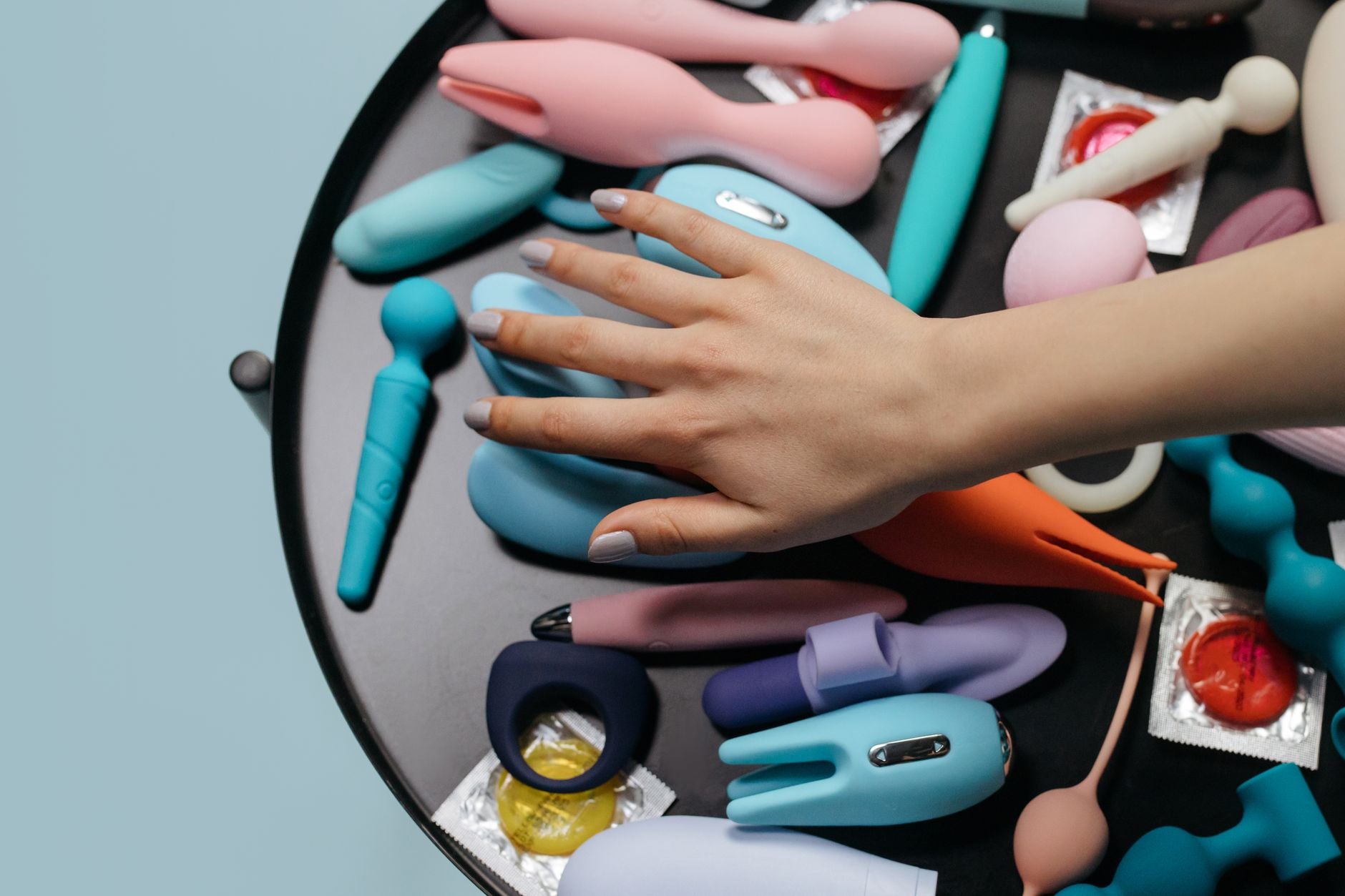
For clitoral vibrators, the key is vibration intensity and shape. If you're exploring solo stimulation for the first time, something small and easy to control works best. The Berri Edging Clitoral Massager is a tapping-style toy that delivers rhythmic pulses instead of constant vibration. It's genuinely different from anything you might have tried before and surprisingly effective for people who find traditional vibrators too intense.
Namii 2 combines clitoral suction with vibration. The suction mimics oral stimulation by creating gentle air pressure pulses around the clitoris, rather than touching it directly. A lot of people find this easier to orgasm from than any other toy type.

For internal exploration, a curved G-spot vibrator like the Gii Glow takes the guesswork out of angle and reach. The curved tip targets the front wall of the vagina with very little effort on your part.
If you're curious about all the options available, vibrators for women come in far more shapes and functions than you might expect. The right one genuinely changes things.
Breathing and Staying Present
This is the part nobody talks about but every therapist will tell you matters enormously.
Most people hold their breath during arousal without realizing it. Shallow, held breathing activates your sympathetic nervous system (the stress response), which actually works against orgasm. Deep, slow breathing does the opposite. It keeps you in your parasympathetic state, where arousal can build fully.
If your mind starts wandering to your to-do list, that's normal. Bring it back. Gently. Without judgment. Arousal isn't a tap you can force on. It's more like a fire you tend.
Stay curious about what you're feeling rather than goal-oriented about the outcome. Ironically, that's often when the best outcomes happen.
Common Obstacles and How to Move Through Them

Feelings of shame, guilt, or embarrassment are incredibly common, especially for people raised in environments where female sexuality was treated as inappropriate or invisible.
Shame is learned. Which means it can be unlearned.
A really useful starting point is reading or listening to content from sex educators and therapists who normalize female pleasure. For practical technique guides that feel empowering rather than clinical, our complete guide to manual sex techniques covers a lot of ground you might find helpful. Knowledge consistently outperforms embarrassment.
If you struggle to orgasm, you're not broken. Anorgasmia (difficulty reaching orgasm) is experienced by roughly 10-15% of women and is often linked to stress, medication side effects, or simply not yet knowing what works for your body. Exploration, time, and sometimes professional support from a sex therapist can all help.
Some people take thirty minutes. Some take five. Neither is wrong.
Masturbation Within Relationships
Let's clear something up immediately: masturbation doesn't mean your relationship isn't satisfying.
Solo pleasure and partnered pleasure are different experiences that serve different functions. Masturbation is self-knowledge. And self-knowledge makes you a far better communicator in partnered sex. When you know what works for your body, you can guide your partner toward it. That's not a threat to intimacy. It builds intimacy.
Some couples incorporate masturbation into shared sexual experiences, either through mutual masturbation or by watching each other. If that interests you, couples toys and wearable options like the Pixie remote-controlled panty vibrator can bridge solo and partnered pleasure in really playful ways.
Aftercare for Yourself
This applies to solo experiences too, not just partnered ones.
After orgasm (or even after an arousal session that didn't lead to orgasm), your body is in a vulnerable, open state. Some people feel sleepy and warm. Others feel emotionally tender or even briefly sad, a well-documented phenomenon sometimes called "post-coital dysphoria." If that happens to you, it's physiological. It's real. It passes.
Hydrate. Rest if you need to. Maybe journal. Give yourself the same gentleness you'd extend to someone you love.
Your pleasure matters. Full stop.
Wrapping Up
Learning how to masturbate as a woman is really just learning how to be in conversation with your own body. It's messy and exploratory and sometimes frustrating and completely, entirely worth it. You deserve to know what makes you feel good. You deserve the kind of self-knowledge that comes from actually exploring without shame.
Start where you are. Use what you have. Be patient with yourself.
The rest figures itself out.
Want to make your journey even more exciting? I've handpicked some amazing toys and goodies at Hello Nancy that'll add extra sparkle to your intimate moments. (Here's a little secret, use 'dirtytalk' for 10% off!)
Frequently Asked Questions
How do I masturbate for the first time as a woman?
Start in a private, relaxed environment where you won't be interrupted. Begin by exploring your external anatomy with your fingertips, focusing on the clitoral area with gentle pressure and slow movements. There's no right outcome for a first session. The goal is simply to pay attention to what feels good.
Is it normal for women to masturbate every day?
Completely normal. Frequency varies enormously from person to person, and daily masturbation is not harmful as long as it isn't interfering with daily responsibilities or relationships. Some research shows the most common frequency among women who masturbate regularly is two to three times per week, but there is no universally "correct" number.
Why can't I orgasm when I masturbate?
Difficulty reaching orgasm (anorgasmia) is very common in women and is usually not a physical problem. Stress, anxiety, unfamiliarity with your own body, certain medications, and even shallow breathing can all prevent orgasm. Slowing down, using lubrication, experimenting with different types of stimulation, and removing time pressure can all help significantly.
What is the best masturbation technique for women who have never orgasmed?
Focus on external clitoral stimulation first, as this is the most direct route to orgasm for the majority of women. Use slow, gentle circular or up-and-down pressure and build gradually. Adding a vibrator designed for clitoral stimulation can significantly help, since consistent vibration maintains the arousal curve without requiring precise manual control.
Should I use lube when masturbating?
Yes, especially for any internal stimulation. Natural lubrication varies by hormonal phase, hydration level, and arousal state. Adding a water-based lubricant reduces friction, increases comfort, and makes the whole experience more enjoyable. Even for external stimulation, lube can make sensation feel softer and more natural.
Does masturbation affect your period or hormones?
Masturbation does not negatively affect your menstrual cycle or hormonal balance. Some people actually find that orgasm helps relieve menstrual cramps through uterine contractions and endorphin release. Hormonal fluctuations across your cycle can influence libido, which is why many people notice stronger desire at certain points in their cycle.
Is it okay to masturbate while in a relationship?
Absolutely. Masturbation within a relationship is healthy and common. It's a form of self-knowledge that often improves partnered sex, because knowing your own body helps you communicate what you need. It is not a sign that anything is missing from your relationship.
What is the best sex toy for female masturbation beginners?
For most beginners, a compact clitoral vibrator is the easiest starting point because it targets the area most reliably linked to orgasm. Look for something with adjustable intensity so you can start gentle and build up. If you find direct vibration too intense, a suction-style toy (like the Namii 2) offers a different sensation that many people find easier to orgasm from.
How long should masturbation take for women?
There is no standard time. Some people reach orgasm in five minutes. Others take thirty or more. The average time to orgasm for women is longer than for men, and this is completely normal. Removing time expectations is one of the most effective things you can do to improve your experience.